
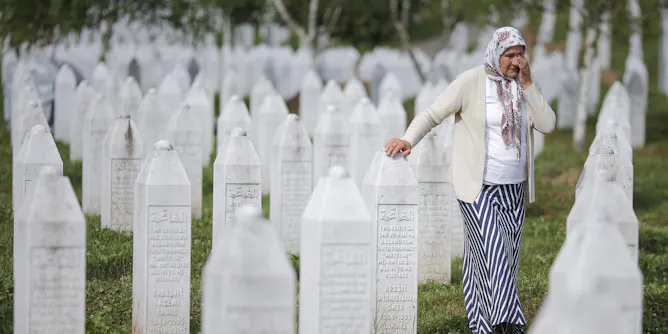
The Dayton Accords were not perfect. But they stopped the Bosnian war, enabled accountability for atrocities, and offered millions the chance to rebuild their lives.
Articles on Srebrenica massacre
Displaying 1 - 20 of 31 articles
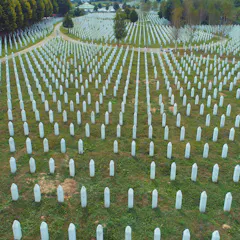
Thirty years after Srebrenica, our legal definition of genocide is still far too rigid.
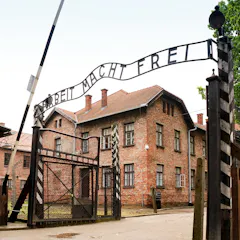
Why have so few atrocities ever been recognised as the ‘crime of crimes’?
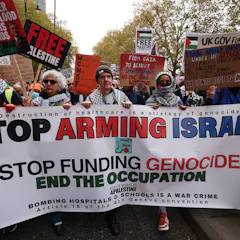
An expert in international law explains what constitutes genocide.
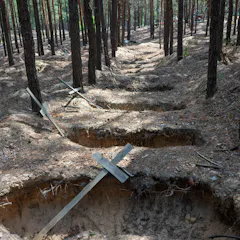
‘An underground map of atrocity that stretches across the planet’s surface’.
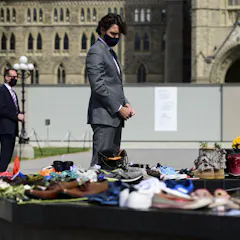
Canada has officially recognized eight genocides that have happened around the world. It has not done the same for its own treatment of Indigenous children who they sent to Indian Residential Schools.
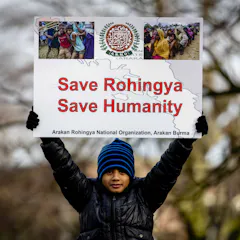
The Rohingya case before the International Court of Justice is politically and legally significant.
Kofi Annan’s tenure began after the reintroduction of two important international security lexicons – peacebuilding and human security.
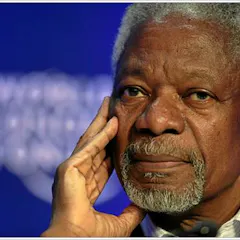
While his appointment as UN Secretary-General was a huge breakthrough, Kofi Annan also led the organisation through some of its ugliest moments.
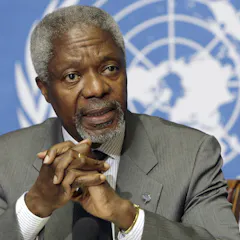
Kofi Annan was the first UN employee to rise to the position of Secretary General but his tenure also had a darker side.
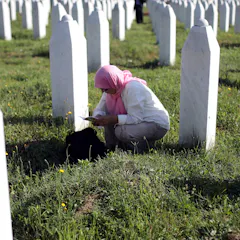
The massacre of 8,000 Muslim Bosniaks in a few days in 1995 must never be forgotten.

Geospatial data offers a powerful new way to see the world. But these high-tech images can be misleading or incomplete.
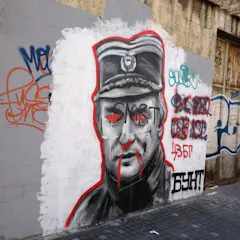
Last of the big trials for UN International Criminal Tribunal for the Former Yugoslavia, but what about high-ranking officials from the other side?
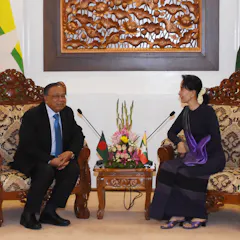
Refugees’ rights are protected by international law. Why are the Rohingya being returned home?

Former commander of the Bosnian Serb army Ratko Mladic has been found guilty of war crimes and crimes against humanity. Survivors of the atrocities have today welcomed the long-awaited news.
Bosnian Serb general found guilty of genocide.
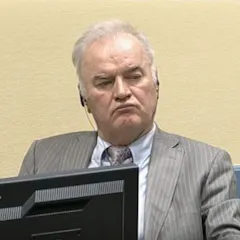
Forensic science of the dead helps to convict the living responsible.
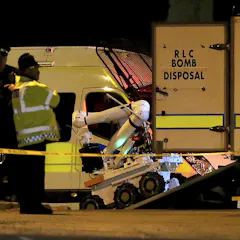
Robots are a twin-edged sword. Used badly, they may one day perpetrate genocide and war crimes. Used well, they can prevent them.
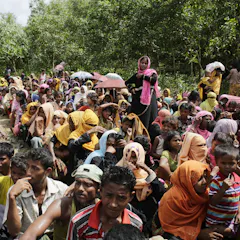
Genocide doesn’t begin with mass murder. It’s a long, insidious process that can be stopped before it’s too late.

In many countries sports like football brings people together, but in Bosnia it re-emphasises the divides.
Top contributors
-

Professor in International Law, Bournemouth University
-
Professor, Lancaster Law School, Lancaster University
-
Professor of Law, Conflict and Global Development, University of Reading
-
Senior Lecturer in International Relations, Goldsmiths, University of London
-
PhD in machine ethics, University of Canterbury
-
Professor, Durham Law School, Durham University
-
Professor of Modern South-East European History, De Montfort University
-
Associate Professor in Modern European History, University of East Anglia
-
Professor of International Law, The University of Western Australia
-
Professor Emeritus of Ecosystem Science and Sustainability, Colorado State University
-
Research Associate, International State Crime Initiative, Queen Mary University of London
-
Professor and Vice Dean and Executive Director, Centre for the Study of United Nations, Jindal Global Law School, O.P. Jindal Global University
-
Professor/Senior Research Fellow, Centre for Advancement of Scholarship, University of Pretoria
-
Professor of Law, University of Essex
-
Associate Professor of History, Hunter College