

Viral vectors are modified viruses that trigger an immune response without causing infection. The vector that’s used in several COVID-19 vaccines was created decades ago by Canadian Frank Graham.
Articles on Sputnik V
Displaying all articles
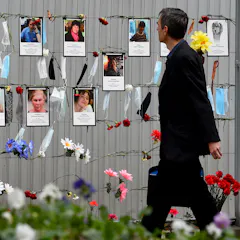
Another wave of COVID-19 in Russia is undermining public health and threatens economic recovery. But widespread mistrust of institutions will stymie the country’s efforts to move past the pandemic.
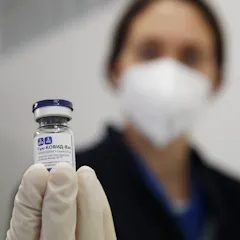
What kind of vaccine is Sputnik V, how does it work, and what data are we missing?
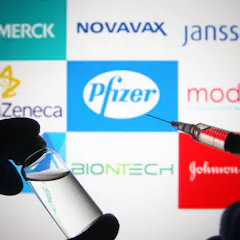
Various companies use different ingredients and different delivery systems in their COVID-19 vaccines. Researchers are investigating whether it’s better for individuals to mix what’s available.
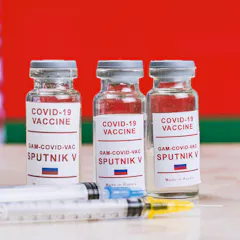
Sixteen countries authorised the use of Russia’s Sputnik V vaccine before phase 3 clinical trial results were published.

While Serbia’s Covid-19 infection rate continues to be worrisome, the country has shown the ability to vaccinate a higher proportion of its population than EU nations.
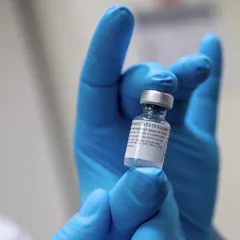
The COVID-19 vaccination programme requires stringent data collection and transparency.
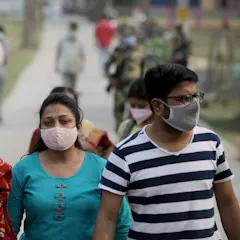
Britain moves to protect itself from the B1617 variant, which vaccines may be less effective against.
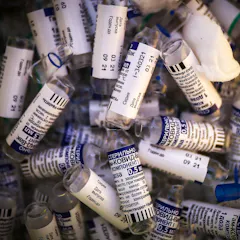
It’s cheap and easy to store, but the Russian vaccine does not yet have approval in Europe.
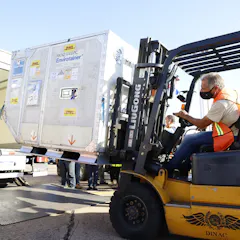
The global vaccine rollout has not been free from geopolitical rivalries and point-scoring.
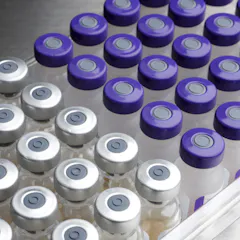
Vaccines that use harmless viruses as a delivery mechanism are vulnerable to being attacked by our immune system – but experimenting with how they are given could get around this.
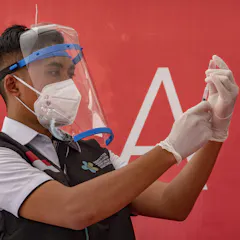
With richer countries having bought up most of the leading western vaccines, others are looking to India, China and Russia for supplies.

Early data shows that vaccines work for older people who are more at risk of severe COVID-19.
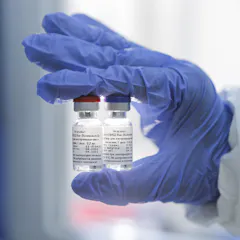
Another day, another politicised vaccine.
Top contributors
-

Associate professor, GEM
-
Professor of Health Service Operations, School of Pharmacy & Medical Sciences, University of Bradford
-
Associate Professor in Viral Immunology, University of Birmingham
-
Professor in Global Development, SOAS, University of London
-
Honorary Associate Professor, UCL
-
Distinguished University Professor, Department of Pathology and Molecular Medicine, McMaster University
-
Research Fellow, New York University
-
Professor of Immunobiology, London Metropolitan University, and Visiting Professor of Biomedical Science, University of Hertfordshire
-
Senior Lecturer in Biochemistry and Cell Biology, University College Cork
-
Associate Director, Center for Expanding Viewpoints in Higher Education, Tufts University
-
Reader, Global Development Institute, University of Manchester
-
Lecturer, School of Medical Sciences, Faculty of Medicine and Health, University of Sydney
-
Deputy Director of the HUMLOG (Humanitarian Logistics and Supply Chain Management Research) Institute, Hanken School of Economics
-
Professor of Medical Microbiology, School of Medical Sciences, Faculty of Medicine and Health, University of Sydney
-
Associate Professor of Biology, Rochester Institute of Technology