

Communities almost never see a boost in job or income growth after taxpayers subsidize a new sports facility.
Articles on Sports stadiums
Displaying all articles
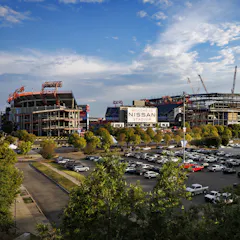
Research has repeatedly found that stadiums generate little economic benefit, while subsidy referendums often fail when put before voters. Yet team owners continue to receive billions in tax dollars.
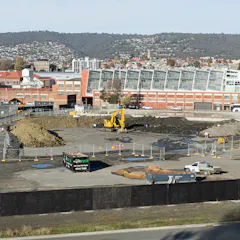
Venues built for mega sporting events often have very large cost overruns. Perhaps Tasmania could learn a lesson from Beijing’s Bird’s Nest stadium.
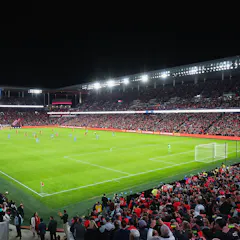
The newest stadium in St. Louis is a case study in ‘patient capital.’
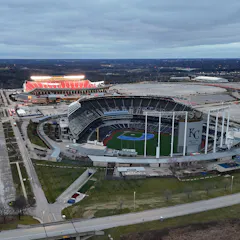
It turns out that handing over taxpayer dollars to billionaire owners tends to be far less popular among regular citizens than among well-connected government officials.

Most publicly funded stadium projects are boondoggles. The Hobart AFL stadium is worse than that.

The cost of a Tasmanian team joining the AFL can be justified on economic and social grounds.

Saturday’s soccer match was afflicted by a deadly cocktail of a stadium packed to the brim, violent fans and the use of tear gas by police. Here’s how the disaster could have been avoided.

Study after study has shown that stadiums are terrible public investments. Taxpayers rarely want to pay for them. So why do governments keep subsidizing them?

The relaxed rules allow Brisbane to bid to host the Olympics at a much lower cost than previous host cities have had to bear. But who really benefits?
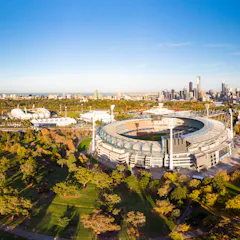
The main sporting venues in Australian capitals have had an upgrade in recent times, with the notable exception of Sydney, where leaders seem mired in indecision and political bickering.

As the contentious Sydney Football Stadium redevelopment shows, Australians want their sports grounds to be of benefit to the whole community, not just sports fans and the elite.
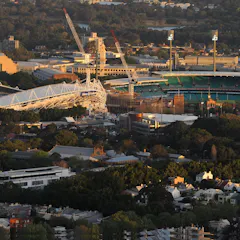
The Australian Open tennis and the recent Ashes Test cricket series show why our sporting stadiums need to be “climate-proofed” to deal with extreme heat.
Top contributors
-

Senior Lecturer Sport Business Management, Western Sydney University
-
Professor of Economics and Accounting, College of the Holy Cross
-
Head Of Department in Department of Sport & Event Management, Bournemouth University
-
Professor of Nursing, University of Technology Sydney
-
Professor, School of Economics, The University of Queensland
-
Professor, Southern Cross University
-
Industry Professor and Chief Economist, University of Technology Sydney
-
Professor of Government, The University of Texas at Austin
-
Professor of Family Enterprise, Washington University in St. Louis
-
Emeritus Professor, Centre of Policy Studies, Victoria University
-
Professor of Economics, Kennesaw State University
-
Professor of Economics, University of Tampa
-
Lecturer in Enviromental Law, Macquarie University
-
Associate Professor of Economics, University of Tampa
-
Deputy Dean, School of Business, Western Sydney University