

The program’s expenses are rising rapidly as baby boomers retire and health care costs grow.
Articles on Spending priorities
Displaying 21 - 40 of 45 articles

Republicans and a few Democrats say the Build Back Better plan would increase the already fast pace of inflation.

More Americans are getting benefits, and more of the people getting benefits are eligible for higher levels of support.

When the federal government doesn’t intervene during downturns, the states often cut school spending. In turn, teachers may earn less or lose their jobs. And three in four teachers are female.
US cities and states are responsible for the vast majority of K-12 funding.

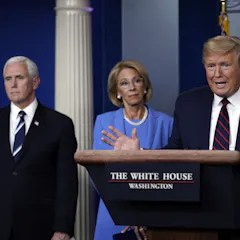
The Education Department is reinterpreting rules Congress wrote for how public school systems should share federal dollars with private schools.

This pillar of the American safety net originated as a solution to the paradox of hunger in the midst of plenty.
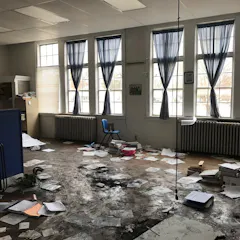
Often schools close out of a belief that taking this step will save money and help students. Whether or not those benefits materialize, there are downsides for the locals.
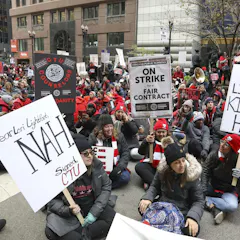
Research suggests that kids benefit when there are fewer of them in a classroom. But quickly reducing class size can cause new problems as schools scramble to hire new teachers.

Stressing out about potentially losing benefits can prolong financial instability. Solving this problem will help low-paid workers and everyone else.

The White House proposed these cuts for three years in a row. That clashes with longstanding bipartisan leadership regarding rights for all people with disabilities.

Cutting the program formerly known as food stamps would hurt low-income Americans and the whole economy.
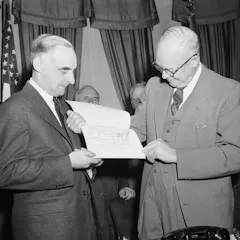
Despite all their anti-tax sentiments, Republicans from Hoover to Trump have embraced this levy on sales at the pump.

SNAP and its precursors have weathered plenty of efforts to shrink the safety net. Its decades of bipartisan support make it likely to survive this one.

The long-awaited $1.5 trillion plan fails to address some major obstacles to private investment.
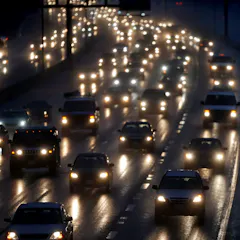
The $1.5 trillion plan he’s proposing would do the most for ventures that don’t really need the government’s help and ignores some major obstacles to private investment.
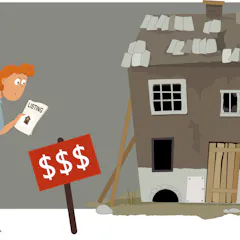
Slashing government spending on housing and scrapping a key financing option for new units would make it harder than ever for low-income Americans to keep a roof over their heads.

The neediest suburbs get a much poorer deal in Sydney than in Melbourne. A new study provides a suburb-by-suburb breakdown of state investment, including what facilities and services have been funded.

With some tinkering, a federal tax credit that encourages developers to create new units that low-income Americans can afford to rent might yield other benefits.
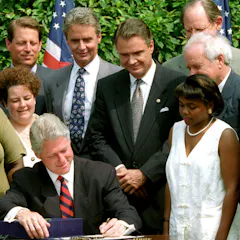
Trump’s rationale for cutting the Temporary Assistance to Needy Families program rests on a myth at odds with contemporary data.
Top contributors
-

Professor of Economics and Director of the Private Enterprise Research Center, Texas A&M University
-
Associate Professor of Political Science, University of Richmond
-
Professor of Public Administration, Binghamton University, State University of New York
-
Research Fellow, Adjunct Professor of Law, Georgetown University
-
Associate Dean of the College of Community and Public Affairs, and Professor of Public Administration, Binghamton University, State University of New York
-
Graduate Research Fellow of Sustainable Design and Construction, Stanford University
-
Executive Associate Director of the Private Enterprise Research Center, Texas A&M University
-
Professor of Economics, University of Michigan
-
PhD Candidate, Global Projects Center, Stanford University
-
Associate Professor in Urban Geography, The University of Melbourne
-
Associate Dean For Global One Health, College of Veterinary Medicine & Biomedical Sciences; and Director, Pandemic and Biosecurity Policy Program, Scowcroft Institute for International Affairs, Bush School of Government and Public Service, Texas A&M University
-
Associate Professor of Political Science, University of Maryland, Baltimore County
-
Assistant Professor, Texas A&M University
-
social scientist | human geographer, The University of Melbourne
-
Director, Scowcroft Institute of International Affairs and Executive Professor, Texas A&M University