
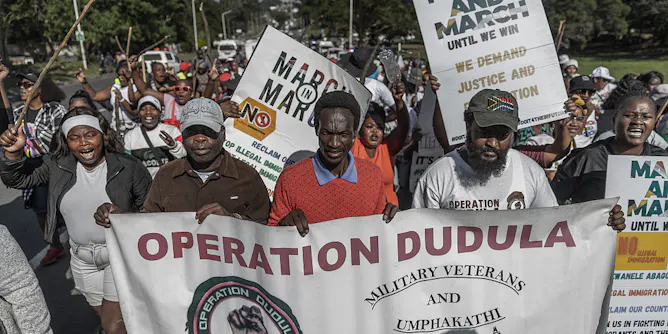
Organisations behind the wave of xenophobia use the language of participation, community and people’s power to justify marginalisation.
Articles on South African townships
Displaying all articles
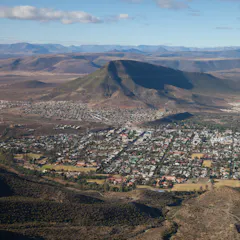
83.6% of the 367 residents in the survey said that they did not want the historic town’s name to be changed.
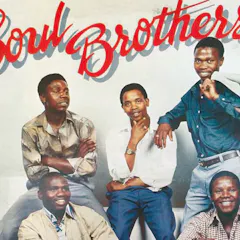
The book tells the inside story of how they changed the sound of urban pop.

It’s about more than wasteful destruction; it’s a way of restoring dignity to marginalised young lives.
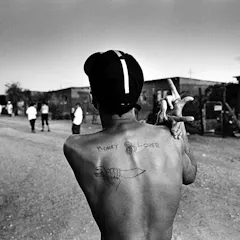
The study revealed a link between youth, troubled behaviour and a lack of access to recreational spaces in marginalised communities.
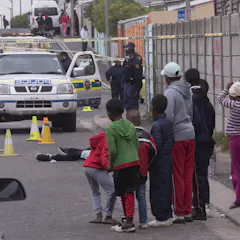
Findings show that in the face of marginalisation and social exclusion, youth in gangs think that they have no options except violence to prove that they are ‘real’ men in their communities.
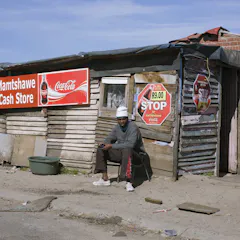
Many unemployed young people are engaged in a variety of economic activities. These may not necessarily be recognised as a form of self employment or informal employment.
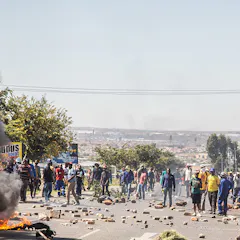
The problem in municipalities is not that the wrong people are being chosen. It is that the wrong people are doing the choosing – not only of candidates but of what they do if elected.
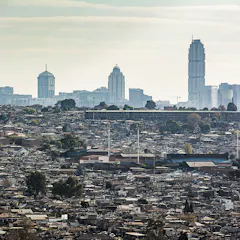
In the country’s insider politics, the majority who try to survive outside the formal economy are talked about, but are never heard.
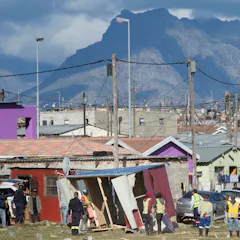
Despite millions of free homes built since 1994, spatial inequality in South Africa remains high. A study evaluating a programme to boost rentals in well-located areas found mixed results, however.
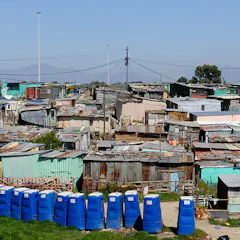
Glaring capacity gaps aside, the failure to curb COVID-19 is not so much due to a lack of technical know-how but to a particular view of the world.
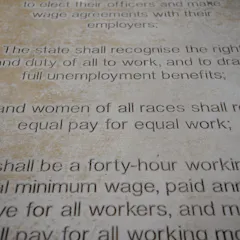
The Freedom Charter process was an imperfect but impressive attempt at capturing the will of the people and articulating an alternative vision to apartheid South Africa.
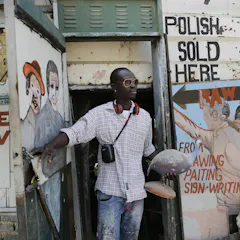
Young black men are often viewed through a criminal lens. A new book based on an 11-year-long study of adolescent men in a South African township upends the stereotypes.
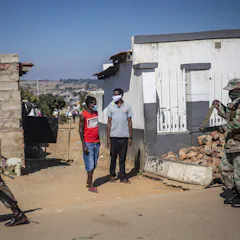
Ramaphosa’s call for a new social compact will fall on deaf ears unless there are some fundamental changes to the way in which the pandemic is being managed.
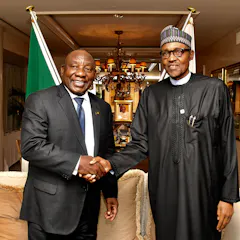
South Africa and Nigeria need to lead policy debates on long term measures to address migration in Africa.
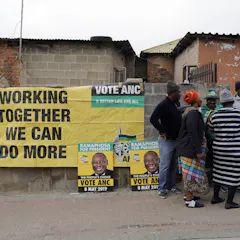
The survey findings show that people who had taken part in protests over the last five years were more likely to vote for opposition parties.

Politicians oppose toll roads on Johannesburg’s highways, yet they are textbook example of progressive taxation that favours the poor.
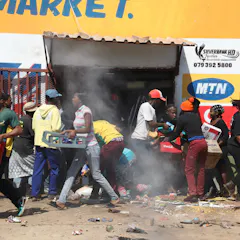
Framing xenophobic violence as a question of immigrant victimisation invites divisions between neighbours.

Reggae in South Africa has lost its visibility and prominence inside the country after apartheid. But local artists have built up extensive international links.
Top contributors
-

Professor of Political Studies, University of Johannesburg
-
Centre for Social Development in Africa, Faculty of Humanities, University of Johannesburg
-
Professor, University of Fort Hare
-
Senior Lecturer, University of the Witwatersrand
-
Associate Professor, University of Utah
-
Associate professor, University of Johannesburg
-
Associate Professor of Psychology, University of the Witwatersrand
-
PhD, chargée de recherches, Agence Française de Développement (AFD)
-
Associate Professor, School of governance, Hamad Bin Khalifa University
-
Lecturer in Communication Science, University of Johannesburg
-
Jan Smuts Professor of International Relations and Director of the African Centre for the Study of the United States (ACSUS), University of the Witwatersrand
-
Senior Lecturer in Communications and Media, University of Johannesburg
-
Associate of the Gordon Institute for Business Science, University of Pretoria
-
Senior lecturer, University of Edinburgh
-
Research Director: Developmental, Capable and Ethical State (DCES) research division, and Coordinator of the South African Social Attitudes Survey (SASAS), Human Sciences Research Council