

The album Follow the Sun shows how South African jazz draws from diversity to speak fluidly across borders.
Articles on South African jazz
Displaying 21 - 40 of 44 articles

Makeba, who would have turned 90 on 4 March 2022, was a hugely influential artist and an icon of African liberation and identity.

Her celebration of black life, black beauty and black humanity through her films and music was subversive.

The saxophone legend played much more than jazz - he delighted in layering styles and genres.

Jazz star Sipho ‘Hotstix’ Mabuse has turned 70. In 50 years, his music career has come to help define South African politics and popular culture.
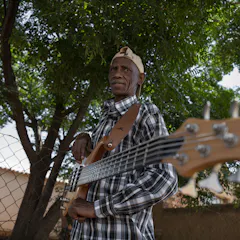
His bass guitar was a shaping sound of South African jazz and of the band Malopoets, whose huge influence has been poorly documented.
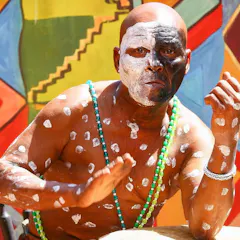
He did not so much play the drums, as become the drum. His influence was felt through his trailblazing percussive work and his many collaborations.
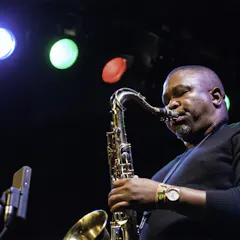
Despite devastating setbacks like his studio being vandalised, the saxophonist and teacher believed that music can heal - part of a vision that shaped a future generation of jazz artists.
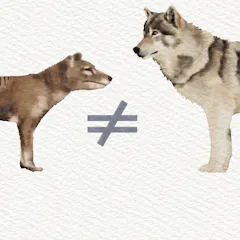
The Tasmanian tiger’s superficial appearance was so similar to a wolf’s that European colonisers assumed it was a threat and hunted it to extinction.
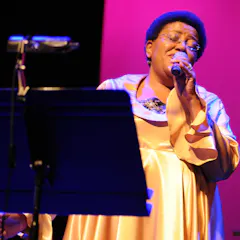
She was the glue that bound younger artists together, helping them navigate the volatile terrain of the music industry.

Both choirs and classical music were childhood influences on a stellar career that would leave behind major new recordings in these areas.
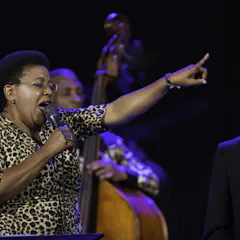
She was a vocalist who sang in every style – from Carmen to UShaka – with equal mastery, popularising classical forms and epitomising ‘the new South Africa’.

The revered trombonist, composer and cultural activist never wished to be ‘the state composer’ but remained political until the end, in service of the people.

His talent took him across the world - he was Ray Charles’ regular drummer - and the music he was exposed to sparked innovation when he returned home.

The magazine grew to be the largest circulation publication for black readers in South Africa, and expanded to include East and West African editions.
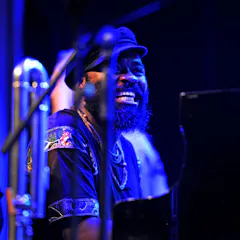
Since the lockdown in South Africa several jazz musicians have begun to harness online platforms in novel ways.
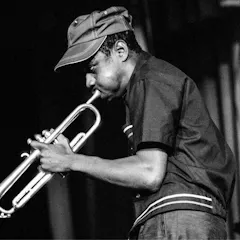
A rare set of photographs of South Africa’s most famous jazz ensemble, the Blue Notes, has added valuable insights to the music archive

The politics of Jonas Gwangwa’s music have stayed constant over the years, and are also apparent in the eight albums he has released in South Africa since returning from 30 years of exile.
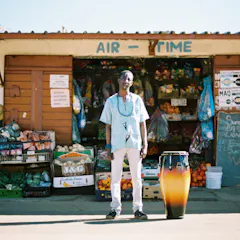
For a musician anywhere, surviving and prospering within the genre called jazz has never been easy, and it still isn’t.

Explorations of form and sound in jazz are essentially political. They challenge the status quo in society by interrogating categories and barriers.
Top contributors
-

Associate of the Gordon Institute for Business Science, University of Pretoria
-
Senior Lecturer, South African College of Music, University of Cape Town
-
Post-Doctoral Fellow, Stellenbosch University
-
Music lecturer, University of the Witwatersrand
-
Extraordinary Professor, Stellenbosch University
-
Senior Lecturer, Department of Anatomy and Developmental Biology, Monash University
-
Professor, School of Biological Sciences, Monash University
-
Professor Emeritus, Social Anthropology, University of the Witwatersrand
-
Lecturer, University of Fort Hare
-
Associate professor, University of KwaZulu-Natal
-
Poet and lecturer in Creative Writing, University of the Witwatersrand
-
Lecturer in Musicology, University of South Africa
-
Associate Professor in the Department of Journalism, University of the Witwatersrand
-
Exhibitions
-
Professor of Interdisciplinary Studies and African Studies, University of Pretoria