
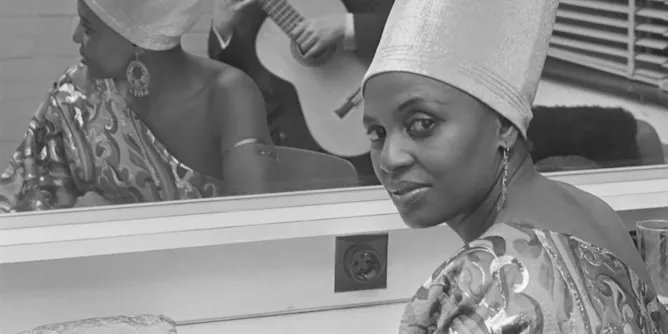
The song was written hot, as the news of the massacre reached the world. Its creators spanned the continent.
Articles on Hugh Masekela
Displaying all articles

With a story as harrowing as the times he lived in, he was a singular voice in the country’s rich jazz history.

African artists with major US industry support have the advantage - now more than ever.

The legendary As-Shams jazz label has released the first of several compilation albums recovered from its archive.

The album Follow the Sun shows how South African jazz draws from diversity to speak fluidly across borders.

Makeba, who would have turned 90 on 4 March 2022, was a hugely influential artist and an icon of African liberation and identity.

Schooled in music through church, he was driven by a fierce sense of belonging to Lesotho where he was born, and neighbouring South Africa.

The gift of his images lies in their depiction of the social worlds that apartheid sought to destroy, but that live on through the photographs.
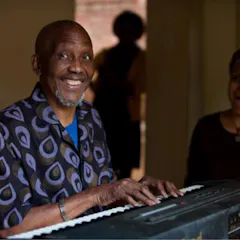
Musician Ndikho Xaba rejected boundaries. He lived and played what he believed – uncompromisingly

The politics of Jonas Gwangwa’s music have stayed constant over the years, and are also apparent in the eight albums he has released in South Africa since returning from 30 years of exile.
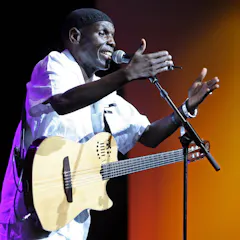
Oliver Mtukudzi has left the world his greatest prized possession – the gift of song.
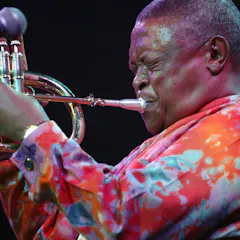
The protest song “Stimela” remains as much a song about present and future aspirations, as it is of the past.
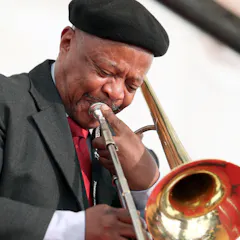
South African jazz veteran Jonas Gwangwa has been getting recognition for the pivotal role he played in ‘singing down apartheid.’

Hugh Masekela’s itinerary-in-exile was loud and clear in his songs.
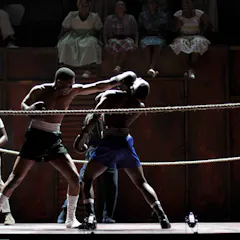
The returned musical “King Kong” embodies the germinating seeds of two potential and mutually exclusive South Africas.
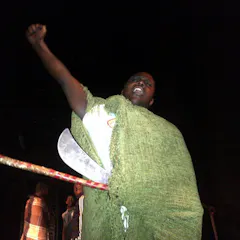
Two musicals set in working class mining communities – one in the UK and the other in South Africa – have diametrically opposed messages: one of hope; the other, despair.
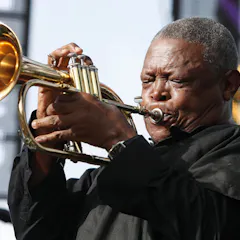
Concert organisers began to compete for government contracts. Often these contracts came with conditions as to who, among musicians, was desirable at government events.
Top contributors
-

Associate of the Gordon Institute for Business Science, University of Pretoria
-
Postdoctoral Research Fellow in Ethnomusicology, Stellenbosch University
-
Professor of Development Studies, University of Fort Hare
-
Associate Professor (Archaeology), University of South Africa
-
Associate Professor, Department of Music, University of Venda
-
Ph.D. fellow in European Research Council (ERC) project "Apartheid- The Global Itinerary: South African Cultural Formations in Transnational Circulation 1948-1990", led by Prof. Louise Bethlehem, Hebrew University of Jerusalem
-
Associate professor in Cultural Studies and English, Hebrew University of Jerusalem
-
Professor Emeritus, Social Anthropology, University of the Witwatersrand
-
Senior Lecturer, South African College of Music, University of Cape Town
-
Professor, University of Fort Hare
-
Professor of Music, Wesleyan University
-
Senior Lecturer (Radical Humanities Laboratory, University College Cork), University College Cork