
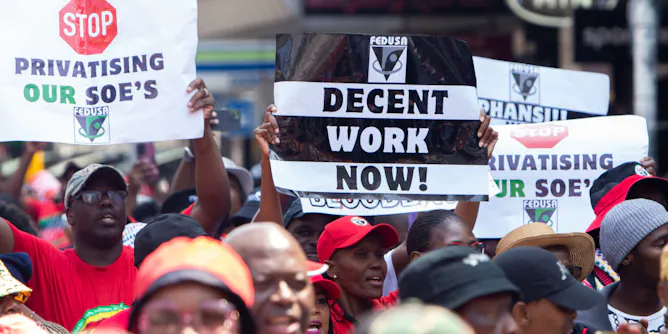
Elites have often shaped or manipulated state policies in ways that protect their interests and reinforce inequality.
Articles on social protection
Displaying all articles

South Africa’s Working for Water programme addresses environmental issues and provides temporary jobs. But it’s not equipping participants for stable employment.

Digitalising social protection overcomes several inefficiencies – but also creates barriers that prevent access for millions of people.
Budget credibility is crucial for Mozambique’s economic development and public trust.
Victims of witchcraft accusations face alienation or exclusion from their communities.
Social protection on its own doesn’t shift the dial. Radical economic policies are needed to tackle poverty and inequality.

Earnings of laid-off workers in southern Europe are 30% lower five years later, while in northern countries the decline is less than 10%. The differences are largely due to the likelihood of finding a new job.

As Zimbabwe heads for 2023 presidential elections, there are key things voters should watch out for in the social protection promises made by candidates.

A new report on the ongoing impact of the pandemic on social service providers in Victoria found jobs and labour force participation are far from fully recovered.
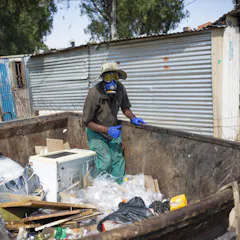
Basic income must be embedded within a broader strategy of economic reform, aimed at increasing the social wage and improving working conditions.
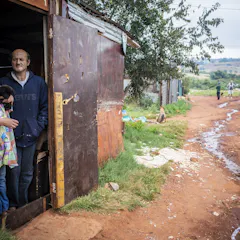
There is no substance to the view that poor people are lazy and prefer to live on handouts from the state rather than seek work.
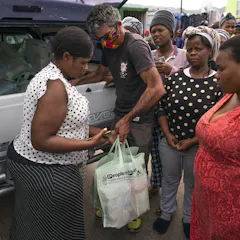
Early in the pandemic, countries had to address several questions as the virus spread and lockdowns became inevitable.
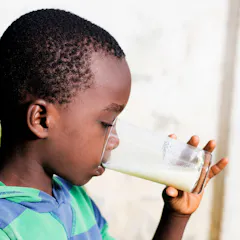
Poor nutrition stunts children’s growth and hollows out their life chances.
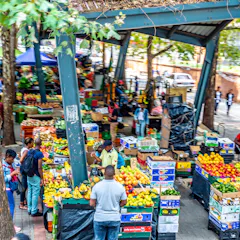
Several groups of people are at high risk of hardship, especially those who have effectively become unemployed because of the lockdown.
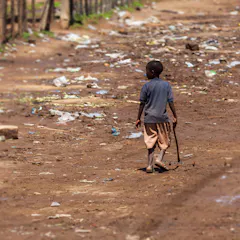
Child poverty has important psychological and social consequences. This means solutions need to cover very many different angles.

Free maternal services introduced in Kenya in 2013 had the immediate impact of increasing access. But it exposed a divide in which the richest 20% of women were the biggest beneficiaries.
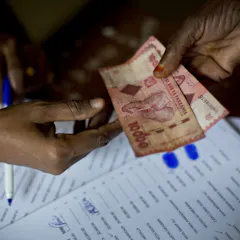
The case of Zanzibar shows that, given certain political conditions, even low-income countries in Africa can introduce and pay for a universal pension programme.
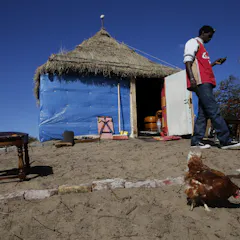
There is no one perfect package for alleviating poverty, but there is agreement on what the elements should be. Combination and sequence of interventions varies, depending on context and beneficiaries.
Top contributors
-

Research Fellow, Institute of Development Studies
-
Senior lecturer, University of the Witwatersrand
-
Postdoc, University of Copenhagen
-
Assistant Professor of Economics, University of Mannheim
-
Assistant Professor of Finance, Universidad Carlos III
-
Assistant Professor, University of British Columbia
-
Senior Research Fellow, Co-Deputy Director, Centre for the Study of Global Development, The Open University
-
Economista en la Dirección General de Economía y Estadística, Banco de España
-
Research scientist, African Population and Health Research Center
-
Senior Researcher, PhD (Econ.), VATT Institute for Economic Research
-
Professor of Social Development Studies, University of Johannesburg
-
Lecturer, Development Studies, The University of Melbourne
-
Senior researcher, Children's Institute, University of Cape Town
-
Principal Research Fellow, Institute for Humanities and Social Sciences, Australian Catholic University
-
Lecturer in Economics, University of Venda