
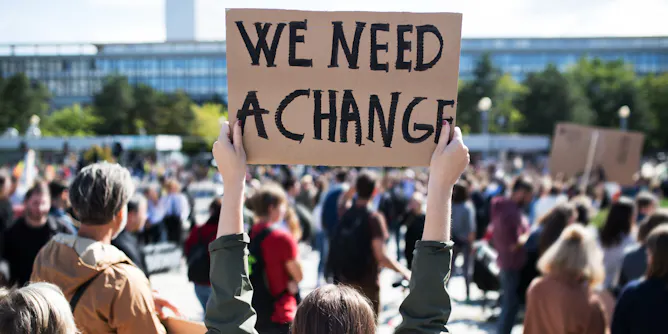
The actions of today’s leaders on climate change will determine how much more vocal youth will become in 2020.
Articles on Social justice
Displaying 321 - 340 of 485 articles
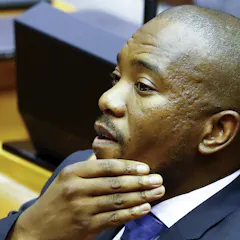
There is no moral equivalence between apartheid’s use of race categories and their continued use by the democratic government.
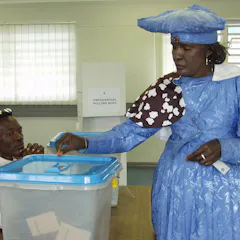
For the first time since independence, Namibia’s ruling party has suffered electoral setbacks in the midst of economic and political crisis.

Unity for the wrong reasons reduces social cooperation to whatever happens to benefit a particular person or group, making it a zero-sum game.

When the University of Cape Town discovered skeletons in its archive that had been unethically obtained and used, they set about restoring justice to the bones and the community they came from.

Mining companies and some heritage consultants don’t understand the sacredness attached to ancestral remains, and the meaning of land in African communities.
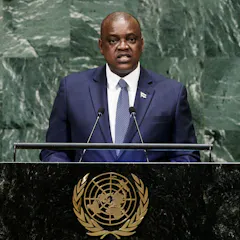
Serious challenges lie ahead for Botswana’s governing party as it celebrates retaining power.
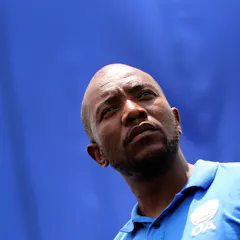
Mmusi Maimane’s resignation highlights one of the core problems of democratic South Africa - the assumption that the only way to do anything is the way white men did it in the past.

The book depicts how Onkgopotse Tiro’s time at Turfloop amounted to a revolutionising political script for generations to come.
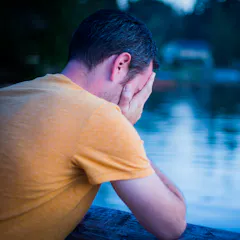
A work placement is integral to a degree in social work. But many people who have a history with the justice system would be denied a working with children check, which most placements require.

The role and efficacy of the traditional crime-prevention measures in Iraye-Oke are widely acknowledged by people who live in the area.
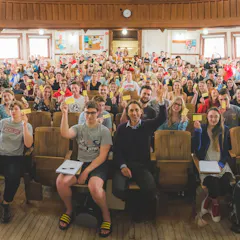
A science researcher’s work gets twisted by a conservative news site; he considers this his wake-up call to educate as many students as possible about the importance of science to our world.
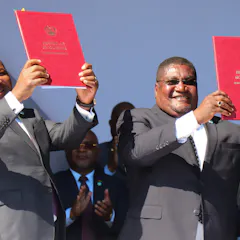
The splintering in Renamo has its origins in the unexpected death last May of Afonso Dhlakama, its leader of 39 years.
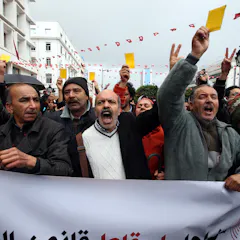
Western perceptions of what’s happening in Tunisia differ sharply with Tunisia’s daily reality: the truth is that its political transformation is in trouble.

Cameroon’s English speaking people suffer gross marginalisation and are treated as second-class citizens by the Francophone government.
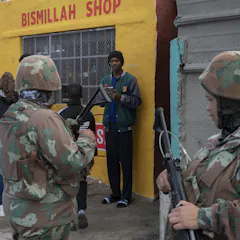
Using the military continuously in internal roles for which it is not structured, funded or trained simply speeds up its decline.

The dilemma for Zuma and his legal team is this: by putting him on the witness stand, there is a risk that he would be found wanting, especially in terms of the detail of any matter.

During the apartheid period in South Africa – 1948 to 1994 – a lively intellectual culture of opposition emerged on some of the country’s university campuses and within the broader anti-apartheid movement…

What should be done to ensure that the SDGs actually change countries’ development trajectories? Here are four practical steps.
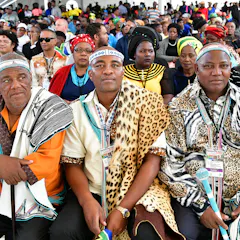
The contested law also defines the jurisdiction of traditional leaders in terms of territory. But traditional community boundaries are actually set by personal relationships.
Top contributors
-

Extraordinary Professor, Department of Political Sciences, University of Pretoria
-
Emeritus Associate Professor in Public Law, UCT. Visiting Adjunct Professor, WITS School of Governance; Director, Africa Programme, University of Cambridge Institute for Sustainability Leadership, University of Cambridge
-
Professor of Political Studies, University of Johannesburg
-
Professor of International Human Rights Law, Centre for Human Rights, and acting SARChI Chair in International Constitutional Law, University of Pretoria
-
Associate Professor in Public Law, University of Cape Town
-
Professor and Research Theme Leader of the Flourishing Life Research Theme, University of the Free State
-
Chief Research Specialist., Human Sciences Research Council
-
Professor of Sociology, University of the Witwatersrand
-
Head of Department, Public and Environmental Law Department, University of Limpopo
-
Professor of Political Science and Chair of the South African Research Initiative in Gender Politics, Stellenbosch University
-
Research Director: Developmental, Capable and Ethical State (DCES) research division, and Coordinator of the South African Social Attitudes Survey (SASAS), Human Sciences Research Council
-
Professor of Social Development Studies, University of Johannesburg
-
Professor of African legal pluralism, University of the Western Cape
-
Professor/Senior Research Fellow, Centre for Advancement of Scholarship, University of Pretoria
-
Professor of Urban Governance, University of the Witwatersrand