
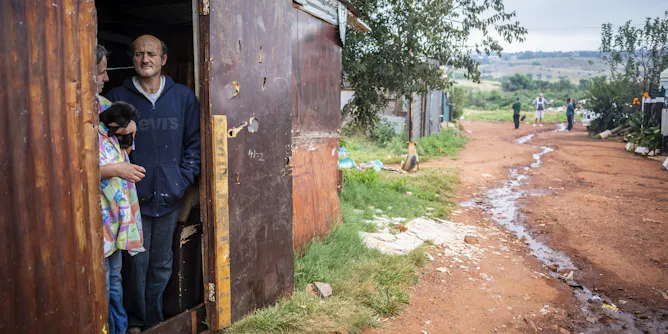
There is no substance to the view that poor people are lazy and prefer to live on handouts from the state rather than seek work.
Articles on Social justice
Displaying 221 - 240 of 485 articles
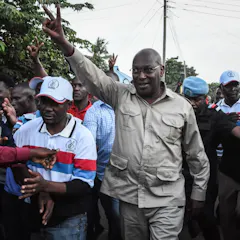
Despite the relative political stability over the years, Tanzania needs a new constitution to address contemporary challenges and strengthen institutions.
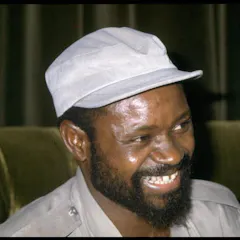
Frelimo, which governs Mozambique, has squandered the enormous political capital it enjoyed at independence. It now remains in power through violence, intimidation, harassment, and threats.
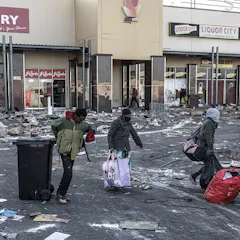
South Africa can’t possibly remain the same country in the aftermath of this mayhem. There are just too many storms ahead to simply continue unchanged.
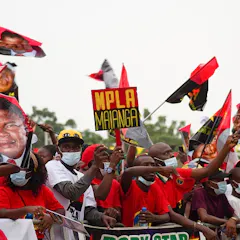
Angola needs a mixed electoral system. This would promote accountability through the direct election of representatives from constituencies.
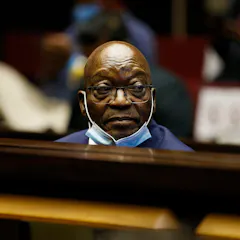
South Africa has many problems. But, as Jacob Zuma has found out, the strength of its rule of law and the independence of its judiciary should not be underestimated.

The Malawi court’s decision provides a roadmap for future challenges to the death penalty in other southern African countries.
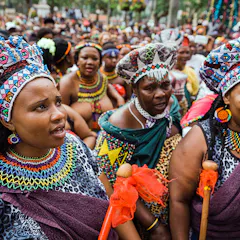
Denying people the right to opt out of the traditional court system conflicts with the notion of customary law as a voluntary and consensual system of law.
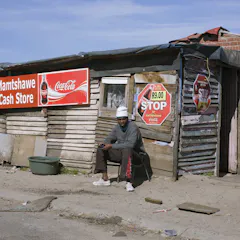
Many unemployed young people are engaged in a variety of economic activities. These may not necessarily be recognised as a form of self employment or informal employment.
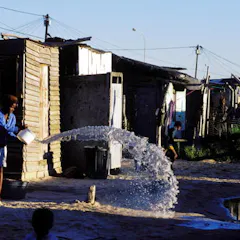
The new governing elite mistakenly believes that the goal of a democratic South Africa is simply to extend to everyone what whites enjoyed under apartheid.

Ethiopian history shows that the demands of its young people can’t go unaddressed for long.
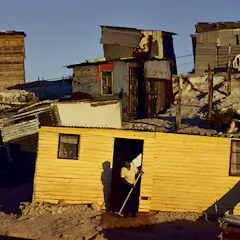
Rethinking capitalism requires that the primary focus should be on the distribution of economic power as the potential leading causal factor driving inequality.
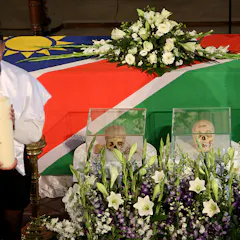
German’s commitment of €1.1bn for development projects in Namibia over 30 years is too cheap a price to pay for remorse.

The Southern African Development Community does not have a remarkable record of military interventions in civil conflicts in the region.
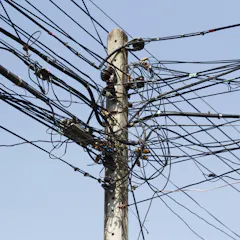
When policymakers reduce electricity scarcity to a few factors like theft and vandalism, to be solved with technology and stiff penalties, they miss other factors that contribute to electricity theft.
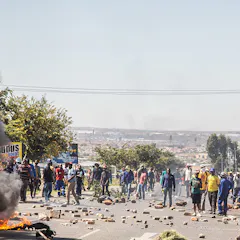
The problem in municipalities is not that the wrong people are being chosen. It is that the wrong people are doing the choosing – not only of candidates but of what they do if elected.

The appointment of judges has hitherto been an obscure and oftentimes clandestine affair. This has produced incompetent judges and led to claims that the judiciary is beholden to the executive.

The recent spate of military takeovers, most recently in Chad, highlights a developing trend by armed forces in Africa which overtly subvert constitutional governance.
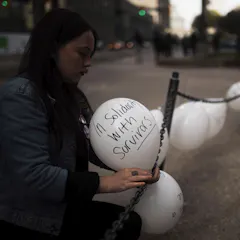
The solution to a defective, sexist Criminal Code ban can be found in the Youth Criminal Justice Act.
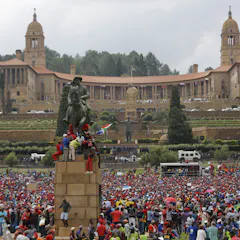
To build a political culture that supports democracy in South Africa, civic education needs to move beyond voter education.
Top contributors
-

Extraordinary Professor, Department of Political Sciences, University of Pretoria
-
Emeritus Associate Professor in Public Law, UCT. Visiting Adjunct Professor, WITS School of Governance; Director, Africa Programme, University of Cambridge Institute for Sustainability Leadership, University of Cambridge
-
Professor of Political Studies, University of Johannesburg
-
Professor of International Human Rights Law, Centre for Human Rights, and acting SARChI Chair in International Constitutional Law, University of Pretoria
-
Associate Professor in Public Law, University of Cape Town
-
Professor and Research Theme Leader of the Flourishing Life Research Theme, University of the Free State
-
Chief Research Specialist., Human Sciences Research Council
-
Professor of Sociology, University of the Witwatersrand
-
Head of Department, Public and Environmental Law Department, University of Limpopo
-
Professor of Political Science and Chair of the South African Research Initiative in Gender Politics, Stellenbosch University
-
Research Director: Developmental, Capable and Ethical State (DCES) research division, and Coordinator of the South African Social Attitudes Survey (SASAS), Human Sciences Research Council
-
Professor of Social Development Studies, University of Johannesburg
-
Professor of African legal pluralism, University of the Western Cape
-
Professor/Senior Research Fellow, Centre for Advancement of Scholarship, University of Pretoria
-
Professor of Urban Governance, University of the Witwatersrand