

Restrictions on media coverage and the use of sexual history in court would be more effective changes.
Articles on Sentencing
Displaying 21 - 40 of 65 articles

Until the justice system reckons with its systemic racism, pre-sentencing reports will fail to shift the way the courts see Black offenders.

The right to a fair trial means cutting the funding of cultural reports will simply shift the burden. Lawyers will find other ways to put the same information before a judge.

Integrated offender management is a better way of dealing with shoplifters than prison.

Why is the $50 million going to the government and not to those who overpaid for bread? The answer is complicated.

Research on developing brains has helped bring about a sea change in attitudes toward juvenile life without parole. But many people who committed crimes as minors are still serving such sentences.

A 25-year old sex offender was given a 10% discount on his sentence due to his age, and ended up getting home detention. But is 25 really too young to understand the gravity of sexual assault?

New Zealand came very close to having an independent sentencing council to help set sentencing guidelines for crimes. For the sake of consistency, it might be time to revive the idea.

Artificial intelligence could help create transparency and consistency in the legal system – our model shows how.

The prosecution and death sentences handed out to two British and one Moroccan national fighting alongside Ukrainian troops contravenes the Geneva Conventions.

Experts help explain the context around the murder of Ahmaud Arbery, and subsequent trial and convictions of Gregory McMichael, Travis McMichael and William Bryan.

In a New Zealand legal first, mass-murderer and terrorist Brenton Tarrant is jailed for life with no chance of parole.
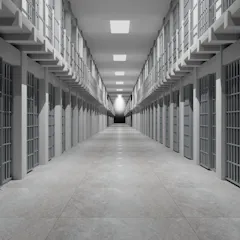
New Zealand and Australia have no prisoner transfer agreement. By negotiating one, we could deport the Christchurch terrorist and help resolve the trans-Tasman prisoner problem in the process.

A whole life sentence has never been imposed in New Zealand but it seems likely the prosecution will call for one for the Christchurch gunman.
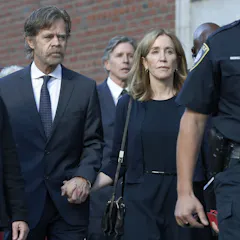
The fallout from the Huffman case has been intense, with much anger centered on the light punishment meted out to a white A-list celebrity versus the excessive charges levelled at Black defendants.

Governments impose harsh restrictions to the freedom of sex offenders after their sentence. But there’s no evidence to support that ‘doing more of the same’ improves community safety.
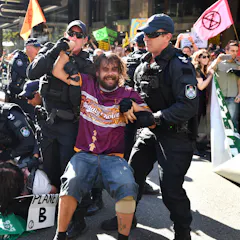
The courts have provided little guidance on whether politically-motivated crimes are better or worse than crimes from ‘common criminals’.

The US is unique in its criminal punishment policies – as the recent sentencing of neo-Nazi James Fields Jr. demonstrates.

How do jurors use different kinds of information about mental illness when making sentencing decisions? An experiment finds that neurobiological evidence could harm or help defendants.

The British justice secretary’s proposal to make short prison sentences a last resort is the right idea at the worst possible time.
Top contributors
-

Professor of Criminology, Australian National University
-
Senior Lecturer, The University of Western Australia
-
Associate Professor, Institute of Criminology, University of Cambridge
-
Professor of Law, Auckland University of Technology
-
Senior Lecturer, Political Science and International Relations, University of Canterbury
-
Professor (Practice), Faculty of Business and Economics, Monash University
-
Emeritus Professor in Law and Criminal Justice, Adelaide University
-
Arie Freiberg is a Friend of The Conversation.
Emeritus Professor of Law, Monash University
-
Lecturer, School of Social Sciences and Psychology, Western Sydney University
-
Professor of Law, University of Waikato
-
Professor in Community and Criminal Justice, De Montfort University
-
Senior Lecturer in Criminology & Criminal Justice, Brunel University of London
-
Judge in Residence, Melbourne Law School, The University of Melbourne
-
Professor of Psychology; Member of the Strategic Research Centre for Social and Early Emotional Development, Deakin University
-
Reader in Criminology, University of Liverpool