
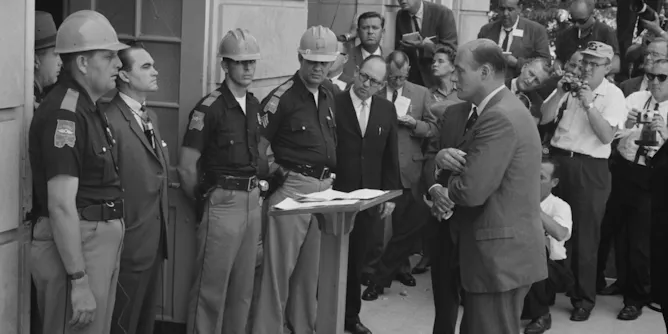
A demagogue playing the media to legitimise extreme movements and radical right-wing causes? The US has been here before.
Articles on Segregation
Displaying 101 - 119 of 119 articles

With some tinkering, a federal tax credit that encourages developers to create new units that low-income Americans can afford to rent might yield other benefits.
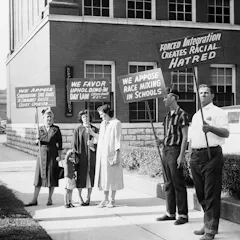
A mostly white community in Alabama is being allowed to secede from its mostly black school district. Parents are claiming school quality is at stake, but is it really just segregation in disguise?
The national pastime is more than just a sport. In this roundup, we feature stories about baseball’s relationship to race, politics, the media and health.
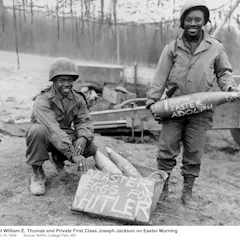
When war broke out, Black Americans fought in segregated units to serve their country. The breath of freedom they experienced in Europe flamed the fight for equality when they returned home.
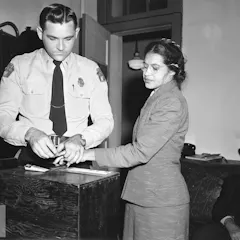
How far we’ve really come since two very different individuals took a stand against racism 60 years ago.

And it’s largely to do with sex, death and moving house.

Mixed neighbourhoods won’t necessarily make people friendlier.
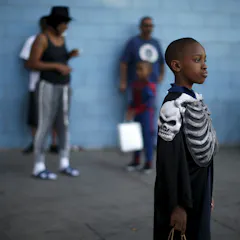
On the 20th anniversary of Bill Clinton’s promise to “end welfare as we know it,” a social work scholar asks why child poverty is still such a problem in the U.S. and what race has to do with it.
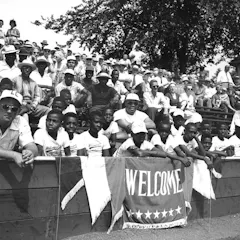
Charleston’s Cannon Street YMCA All-Stars thought they’d have a chance to compete for a spot in the coveted Little League World Series. But South Carolina’s Little League director had other ideas.

The ‘Jesus’ controversy is often considered a watershed moment in the Beatles’s career. And yet it remains largely misunderstood.

The rhetoric of racial purity is full of suggestive terms like illness, weakening and dilution. These imply the medicalisation of the nation.

Some economic models tell us that segregation is inevitable. Is it really?
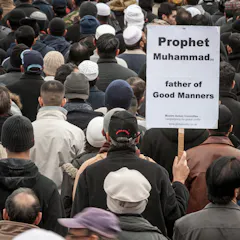
Segregation is a major concern for many British people - but there’s not as much evidence for it as you might think.
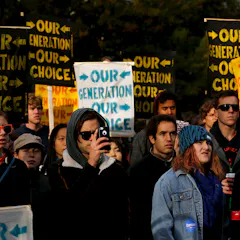
On Martin Luther King Jr.’s birthday, five educators reflect on recent campus protests and describe concrete actions universities can take to bring opportunity to all.
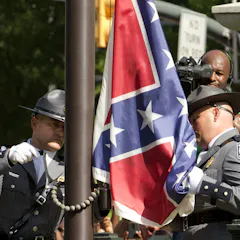
Symbols can unite and divide. How religion helped turn division over the Confederate flag into consensus.

Including faith schools as part of a broader network is a surer way of bringing communities closer together.
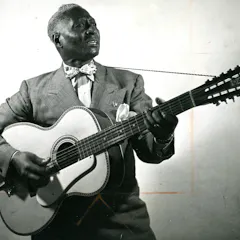
Lead Belly: The Smithsonian Folkways Collection depicts the fully-formed artist – a blues musician, yes, but also a performer of string-band, country and pop songs.
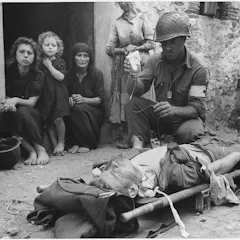
Until 1950 the Red Cross segregated blood. It was thousands of African-Americans during World War II who forced the Red Cross to include them as donors and helped pave the way for activism of the 1960s.
Top contributors
-

Professor of Journalism, Indiana University
-
Professor of Law, University of South Carolina
-
Professor of Urban and Environmental Policy and Planning, Tufts University
-
Professor Emeritus of Law and Adjunct Professor of Political Science, Case Western Reserve University
-
Professor of Sociology, Eastern Michigan University
-
Professor of Law, University of Richmond
-
Professor of Public Policy and Urban Affairs, Northeastern University
-
Professor of Education and Demography, Penn State
-
Associate Professor of Social Work; McSilver Faculty Fellow, New York University
-
Professor of Sociology, University of Bristol
-
Associate Professor of Africana Studies and History, Bowdoin College
-
Adjunct Lecturer of American Studies, University of Maryland, Baltimore County
-
Distinguished Professor of Political Science, Brooklyn College
-
Professor, African American and African Studies, University of Virginia
-
Research Fellow, Adjunct Professor of Law, Georgetown University