
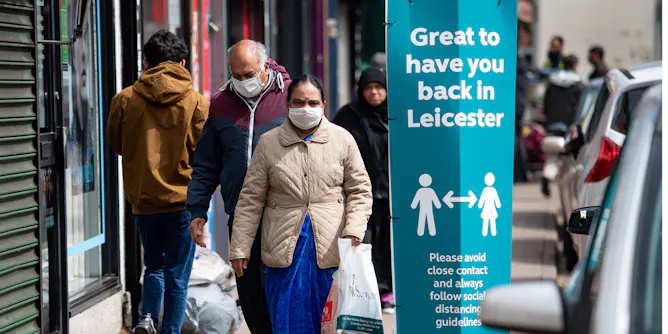
Cramped living conditions, a lack of social distancing and informal businesses staying open during lockdown may have come together to drive up the city’s infection rate.
Articles on Second wave
Displaying 21 - 33 of 33 articles
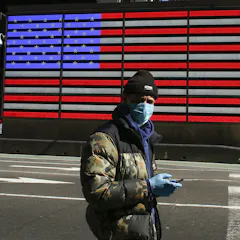
The recent spike in new coronavirus cases in the US is not due to a second wave, but simply the virus moving into new populations or surging in places that opened up too soon.
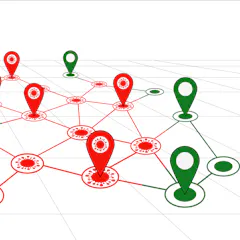
As provinces throughout Canada start to enter Phase 2 of its reopening, mathematical models can help predict and control the spread of COVID-19 with the help of contact tracing.

Over the past week, we’ve seen more than 100 new cases of coronavirus in Victoria. What’s going on?
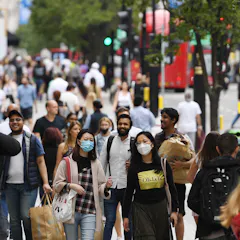
There is no evidence that COVID-19 will occur in waves.

Many people delayed routine doctor visits during social distancing. Now that distancing guidelines have eased, people still are concerned about going to the doctor. Here, two doctors offer guidance.
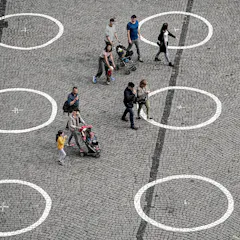
K is all about the super-spreaders.

This winter, the field of respiratory viruses will be crowded.

The national curve is made up of much smaller local curves with their own peaks at different times – but deaths are still definitely falling.
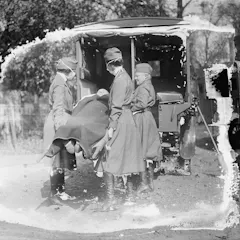
Differences in the viruses’ biology and societal contexts mean there’s no guarantee today’s pandemic will mirror the ‘waves’ of infection a century ago.
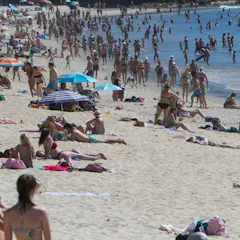
Getting the control measures right is critical.

Testing and isolating cases only after they develop symptoms might not be enough to prevent further outbreaks of COVID-19. Sentinel surveillance, by testing randomly in the community, can go further.
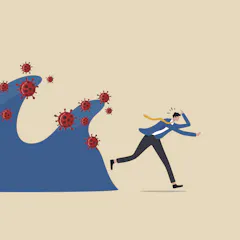
When an outbreak is brought under control, it’s possible only a small proportion of the population has been infected and gained immunity. This can set the scene for a second wave of infections later.
Top contributors
-

Professor of Biostatistics and Epidemiology, Adelaide University
-
Associate Professor, Computing & Information Systems; Director, Melbourne Data Analytics Platform, The University of Melbourne
-
Deputy Director of the Centre for Tuberculosis Research, Reader in Tuberculosis and Social Medicine, Liverpool School of Tropical Medicine, Liverpool, UK; and Honorary Research Associate at Karolinska Institutet, Stockholm, Sweden, and, University of Liverpool
-
Professor of Mathematics and Statistics, University of Strathclyde
-
Professor of Global Health, Liverpool School of Tropical Medicine
-
Professor in Work and Employment, Nottingham Trent University
-
Lecturer in Organisational Behaviour and Human Resource Management, Nottingham Trent University
-
Head of School of Population Health and Professor, Infectious Diseases Dynamics and Interventions, UNSW
-
Research Assistant Professor of Epidemiology, University of Michigan
-
Lecturer in Management, University College Cork
-
Dean Faculty of Health Sciences and Professor of Vaccinology at University of the Witwatersrand; and Director of the SAMRC Vaccines and Infectious Diseases Analytics Research Unit, University of the Witwatersrand
-
Professor of International Public Health, London School of Hygiene & Tropical Medicine
-
Department Chair & Associate Professor, Family & Community Medicine, Temple University
-
Clinical Associate, Tufts University
-
Postdoctoral Researcher, Immunology and Infectious Diseases, Harvard University