

Could a 10-minute meeting between teachers and principals reduce teacher turnover? A researcher explores the possibilities.
Articles on science teachers
Displaying all articles

A new survey finds science classes are frequently being taught by non-science teachers.
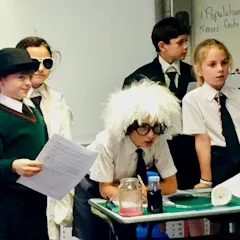
In trials teaching Einsteinian physics in schools, our most astonishing discovery was that children were not astonished: they just took the ideas in their stride.

Teachers are right in selecting age-appropriate scientific models and teaching these in age-appropriate ways – even though the science they present isn’t the whole story.

In our research, we offer teachers the chance to hone their skills in their teaching discipline, such as art. Those part of the program say it makes them better teachers, and more likely to stay.

By improving trainee physics teachers’ content knowledge and skills, we make them better.

For many learners science, and especially chemistry, remains a textbook phenomenon.

Many students in Australia don’t have access to specialist teachers in science and maths, and the problem is only getting worse.

The affective domain - motivation, interest and values and their inter-relationships - forms an integral component in facilitating learners’ construction of physics knowledge.
For science to have an impact there must be a genuine will to implement its advances. This requires promoting a greater understanding of science in broader society.
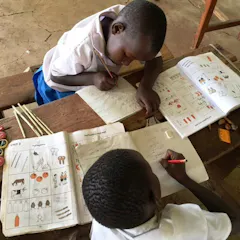
Good quality education fuels an economy. South Africa needs to increase its supply of science and technology university graduates. But instead it’s lowering the bar, especially when it comes to maths.

Because being a good teacher is about more than just subject knowledge.

Science that students learn in context - rather than science as isolated knowledge items - can deliver both scientific literacy and positive learner interest.

With the current demands from industry for STEM graduates, how many are going to give up high paying jobs in industry for the short term sugar-hit of $15,000 and the stress of the classroom?
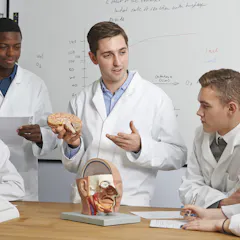
Lack of confidence, negative attitudes and low student participation rates are just a few of the challenges maths and science teachers face.
Top contributors
-

Honorary Associate, School of Physics, University of Sydney
-
Professor & Head, School of Science & Mathematics, Mauritius Institute of Education
-
Senior Lecturer in Science Education (Chemistry), Sheffield Hallam University
-
Professor, Director of DST-NRF Centre of Excellence in Catalysis c*change, University of Cape Town
-
Visiting Lecturer, University of the Witwatersrand
-
Senior Lecturer, Mathematics Education Department, Mauritius Institute of Education
-
Professor Emeritus Melbourne Graduate School of Education, The University of Melbourne
-
Associate Professor, University of Cape Town
-
Clinical Senior Research Associate, MRC Epidemiology Unit, University of Cambridge
-
Associate Dean Learning and Teaching, College of Science & Engineering, James Cook University
-
Industry Fellow, University of Technology Sydney
-
Emeritus Professor, ARC Centre of Excellence for Gravitational Wave Discovery, OzGrav, The University of Western Australia
-
Senior Lecturer, Visual Arts Education, Edith Cowan University
-
PhD candidate. Sydney University Physics Education Research (SUPER) group, University of Sydney
-
Assistant Professor of Educational Leadership, University of Tennessee