
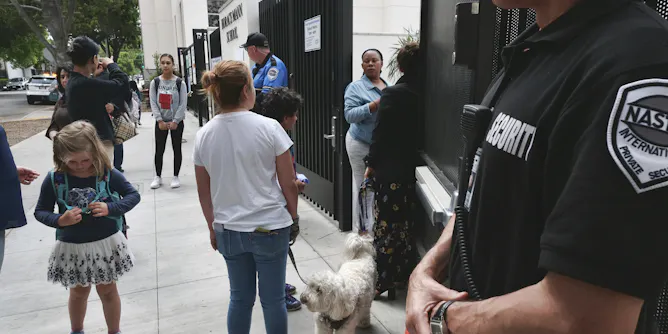
Efforts to ‘harden’ school buildings could distract from the need to focus on human behavior and what’s known about school shooters.
Articles on School safety
Displaying 41 - 59 of 59 articles
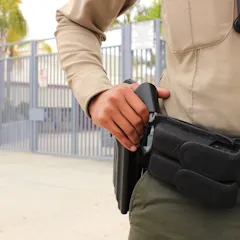
About one-third of America’s primary schools have a school police officer on hand. Do these officers make schools safer, or are they turning primary schools into mini police precincts?
Zero tolerance policies in America’s schools are declining, but you might not be able to tell since so many practices get lumped under the ‘zero tolerance’ label, a school discipline expert says.

School shooters typically show warning signs long before they become killers, but educators are sometimes ill-equipped to act on what they see, two researchers who are analyzing mass shooters say.
Although new evidence shows mixed results for “restorative justice” practices, that’s no reason for schools to stop looking for alternatives to school suspensions, a school safety scholar argues.

While school suspensions are meant to deter violence and other troublesome behavior, some students see being suspended as something that makes them more popular and tough, a researcher has found.
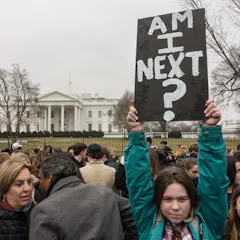
The Parkland school shooting not only spurred unprecedented national protests for gun control – it also prompted debates about the best ways to keep students safe.
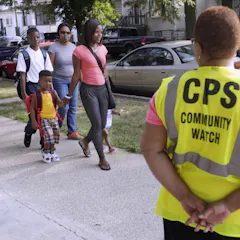
Following a fatal beating of a student, Chicago started a Safe Passage program in 2009 to ensure students get to and from school safely. Nine years on, how is it working?
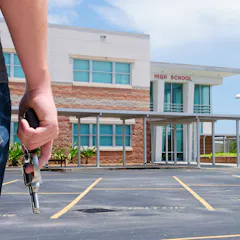
As a federal school safety commission searches for ways to lessen school violence, a psychology professor advises the commission that focusing on violence in entertainment media is a waste of time.
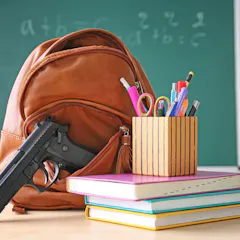
After Education Secretary Betsy DeVos said a school safety commission won’t focus on guns, a school safety scholar says the commission may miss an important part of the discussion.

While many school shooters suffered peer rejection of some sort, research doesn’t support the idea that peer rejection is the culprit behind shootings, a scholar argues.
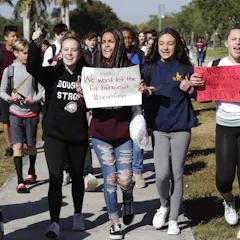
Former Education Secretary Arne Duncan has called for a school boycott to change the nation’s gun laws and make schools safer. A scholar who studies protest explains how the boycott could work.
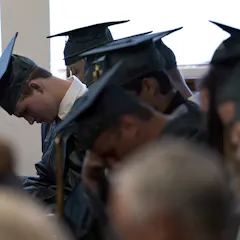
The Santa Fe High School shooting underscores the need for an educational approach to school violence and to examine how students deal with the ‘status tournament of adolescence.’
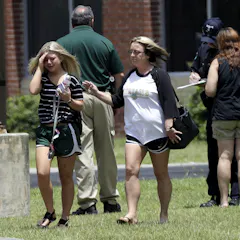
School climate and culture are just as important, if not more, than security measures when it comes to preventing school violence, a scholar argues.

A new law and Maryland calls for an expanded law enforcement presence in Maryland schools. But lack of funding and inadequate training could potentially undermine the initiative.
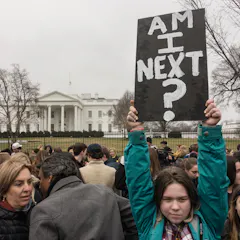
A recent cut to federal funding for school safety research could hurt efforts to make schools more secure, a scholar warns.
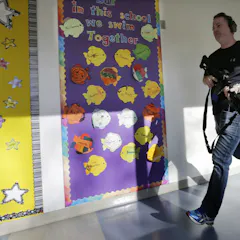
While emergency drills may help schools feel safer, they contain underlying and often unintended moral messages about the nature of school and life itself.
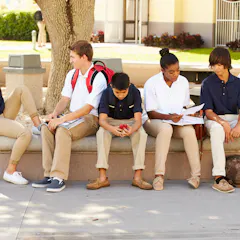
Researchers spent 16 years at a high school and observed security tighten and then loosen up again. What they found is that tighter security had the opposite of the intended effect.
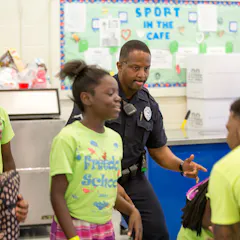
Police in schools are being asked to deal with a range of issues, such as being a mental health counselor for a traumatized child. It is unfair to the police and can be harmful for children.
Top contributors
-

Associate Professor of Educational Leadership and Policy, University of Florida
-
Professor of Criminal Justice, Metropolitan State University
-
Associate Professor of Criminal Justice Sciences, Illinois State University
-
Professor of Criminal Justice, Hamline University
-
Professor of Sociology & Criminal Justice, University of Delaware
-
Ph.D. student in Criminal Justice and Creator of the K-12 School Shooting Database, University of Central Florida
-
Professor Gender and Childhood Sexuality, University of KwaZulu-Natal
-
Associate Professor of Criminal Justice, State University of New York Oswego
-
Professor of Educational Psychology, University of Connecticut
-
Ph.D. Candidate in Sociology, Stanford University
-
Professor, University of Sydney
-
African Population and Health Research Center
-
Stefan A. Riesenfeld Professor of Law and Professor of Sociology, University of California, Berkeley
-
Professor of School Psychology, University of South Florida
-
Professor of School Psychology, Licensed Psychologist, Health Service Psychologist, Michigan State University