

Alison Watt’s grandmother was diagnosed with ‘puerperal insanity’ and institutionalised not long after giving birth to her father. He didn’t meet her – or know she was alive – until his early 20s.
Articles on Schizophrenia
Displaying 21 - 40 of 120 articles

Humans have attempted to understand and treat mental illness for centuries – from ancient Greek medicine, Middle Ages exorcisms and the rise of asylums, to modern medical breakthroughs.

The international Hearing Voices Movement has spent the past decades campaigning to destigmatise a surprisingly common phenomenon.

Learning new rules requires the suppression of old ones. A better understanding of the brain circuits involved in behavioral adaptation could lead to new ways to treat schizophrenia and bipolar disorder.

Why was Susanna Kaysen really hospitalised? Her memoir Girl, Interrupted turns 30 this year. It investigates whether she was ‘mad’, or medicalised for a ‘chaotic’ life that defied gender norms.

Based on Anne Deveson’s 1991 memoir about her son’s experience with schizophrenia, this play can be achingly sad. But it also offers hope.

Cannabis use is linked to poorer memory, attention and mental health.

The recent review found that both high and low frequency cannabis users were six times more likely to develop schizophrenia.

Early intervention programs for young people with psychosis might cost more initially, and require more intensive support for longer periods, but they’re worth the investment.

Conservatorships significantly restrict people’s ability to make decisions for themselves. Other options can provide support while maintaining respect for autonomy.

Blood samples help doctors know whether a treatment is effective or not – and this device can provide this information almost instantly.
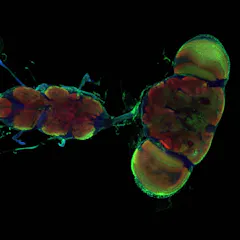
Adaptable neurons are tied to learning and memory but also to neurological disorders. By studying fruit flies, researchers found a mechanism that controls neuroplasticity.

People with schizophrenia are almost three times more likely to die from COVID-19 than those without the serious mental illness, making it second only to age as a risk factor for mortality.
Research on the genetic basis of mental illness has so far largely excluded anyone who is not of European heritage.

Media reporting often unfairly stigmatises people with mental illness and promotes the stereotype that mental illness causes violent behaviour. New guidelines offer tips for more responsible reporting.

Those with a diagnosis of schizophrenia may be more likely to interpret metaphorical thoughts literally.

Physical health conditions and socioeconomic disadvantage are both major reasons for this gap.

Some antipsychotics with the worst side-effects are the best at treating symptoms.

It is essential that scientists seek to understand the unique experiences of individuals with schizophrenia.
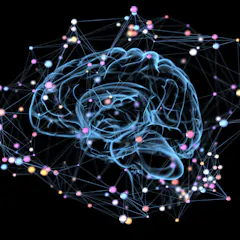
Sections in the brain called “senders” and “receivers” are responsible for directing neural traffic, and we are now a step closer to understanding how they work.
Top contributors
-

Associate professor and Royal Society Research Fellow, Department of Psychiatry, University of Oxford
-
Doctor and Clinical Researcher, King's College London
-
Associate Professor, Brain and Mind Centre, University of Sydney; University of Canberra
-
Professor of Clinical Neuropsychology, University of Cambridge
-
Professor of Psychiatry, The University of Melbourne
-
Co-Director, Health and Policy, Brain and Mind Centre, University of Sydney
-
Institute Manager, Órama - Institute for Mental Health and Wellbeing, Flinders University
-
Professor of Cognitive Neuropsychology, University of Hertfordshire
-
Professor of Psychology, The University of Melbourne
-
PhD Researcher, Cardiff University
-
Scientia Professor & Head of the School of Psychiatry, UNSW
-
Professor, The University of Queensland
-
Professor of Psychiatry, Monash University
-
Winthrop Professor of Psychiatry, School of Psychiatry and Clinical Neurosciences, The University of Western Australia
-
Clinical Associate Professor, Imperial College London