
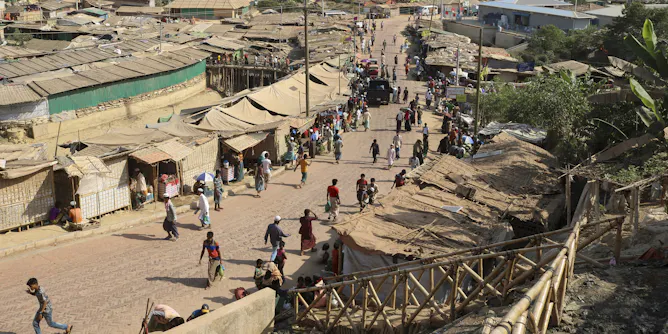
The International Court of Justice is expected to deliver its ruling in the genocide case against Myanmar next month.
Articles on Rohingya refugees
Displaying all articles

Since 2021, Myanmar has descended into civil war, repression, poverty and economic turmoil.

Where traditional advocacy fails, a more creative approach is giving new life to Rohingya resistance across the globe.
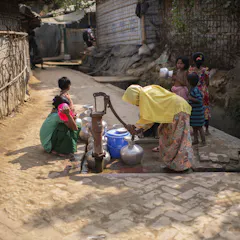
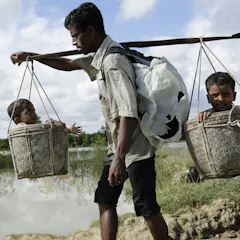
Hundreds of thousands of minority Muslims fled Myanmar in 2017 amid a government crackdown. Seven years on, they remain in refugee camps.
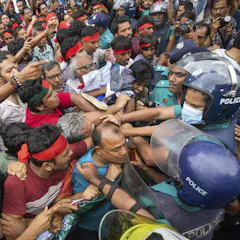
Bangladesh’s interim government must balance demands for justice from its citizens with the urgent needs of Rohingya refugees. If it succeeds, it will be monumental for the global refugee governance.
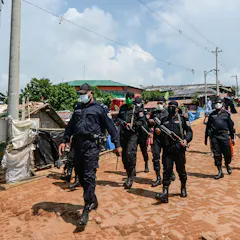
A curfew has sealed Rohingya refugees inside camps run by armed criminal gangs. Here’s what Australia and other nations should be doing to help.

Capturing biometric data helps UN agencies and other groups avoid the risk of fraud and increase efficiency. But the practice is complicated and has created security risks for vulnerable groups.
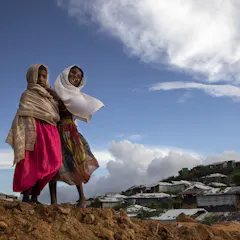
As conflicts last longer, the number of refugees and other displaced people is on the rise.

Canada’s new Indo-Pacific strategy must include providing assistance to Rohingya women who have suffered sexual violence.
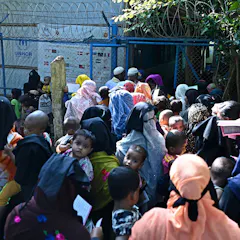
The international response to the refugee crisis in Ukraine has been impressive. But humanitarian aid is falling short to help refugees in other countries such as Bangladesh, Yemen and Ethiopia.
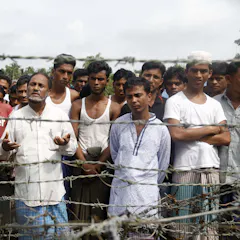
The situation in refugee camps in Bangladesh may offer some lessons for communities hosting Ukrainian refugees.

Even once the war in Ukraine ends, the millions of people who fled from their homes might not be quick to return. The faster the war ends, the more likely it is they will go back.

A transcript of episode 9 of The Conversation Weekly podcast, including an update on the situation for Rohingya refugees in Myanmar living in camps in Bangladesh.
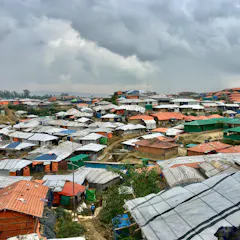
For these extremely vulnerable populations, the pandemic has added pressure to already strained living conditions and healing processes.
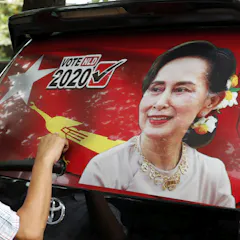
The constitutional change needed to further democratise Myanmar is impossible without the military’s consent, so achieving major political transformation through the election alone seems unlikely.
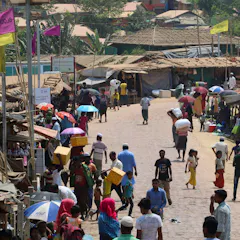
COVID-19 is spreading quickly in Bangladesh. An outbreak in the refugee camps that house some 1 million Rohingya Muslims in cramped, unsanitary quarters would be calamitous.
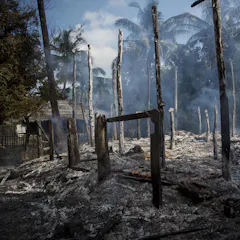
The International Court of Justice ordered Myanmar to protect its Rohingya minority and preserve any evidence relevant to the genocide charges against it. But compliance is not guaranteed.
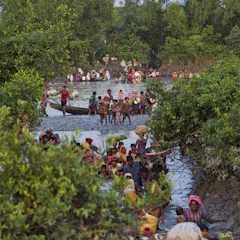
Dozens of Muslim-majority countries are asking the UN’s International Criminal Court to investigate and prosecute a 2017 massacre in Myanmar that killed an estimated 10,000 Rohingya Muslims.
It will take a global effort to slow the rise in
atrocities against religious groups.
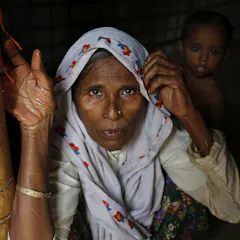
The current repatriation deal signed by Myanmar and Bangladesh fails to guarantee the safety and citizenship of the Rohingya people or address issues of justice for crimes perpetrated against them.
Top contributors
-

Head of School for Physics, University of Sydney
-
Senior Professorial Lecturer of Global Governance, Politics and Security, American University School of International Service
-
Associate Professor of Information Systems & Analytics, Miami University
-
PhD Candidate, Kent Law School, University of Kent
-
Assistant Professor, Michigan State University
-
Associate Instructor, Indiana University
-
Senior Lecturer in Politics and International Relations, University of Dundee
-
Lecturer, School of Political Science and International Studies, The University of Queensland
-
Doctoral Student, College of Community and Public Affairs, Binghamton University, State University of New York
-
Associate Professor in Anthropology and Sociology, North South University
-
Professor of Intersectional Justice, UCL
-
Professor of International Law, Fletcher School of Law & Diplomacy, Tufts University
-
PhD Candidate, Gender, Sexuality and Women Studies, Western University
-
Professor of Social Policy, University of South Wales
-
Weinstein Chair of International Studies, Professor of Political Science, University of Richmond