
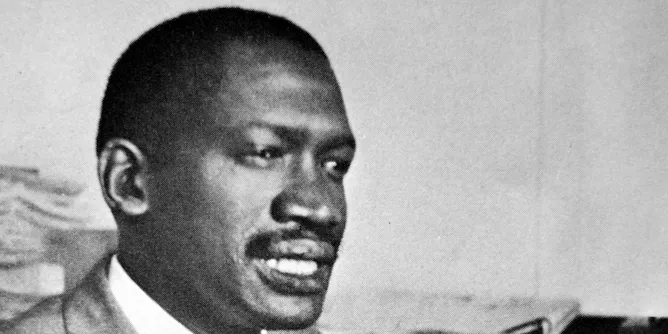
Robert Sobukwe was committed to individual rights, a key tenet of liberalism.
Articles on Robert Sobukwe
Displaying all articles
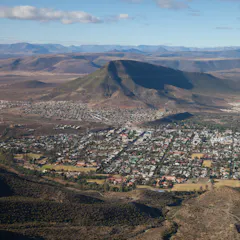
83.6% of the 367 residents in the survey said that they did not want the historic town’s name to be changed.
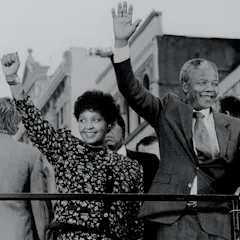
Would South Africa have been torn apart by civil war without the myth of Nelson Mandela?
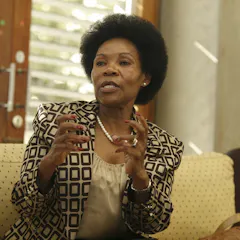
Justice Mokgoro’s advocacy for group solidarity and reconciliation is discernible in several of her judgments.
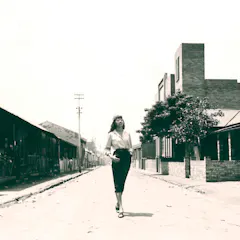
The Drum journalist was a rare woman in a male-dominated world. Her autobiography has now been published after her death.
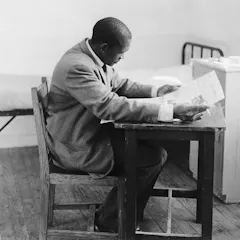
Robert Sobukwe was once perceived to possess more revolutionary potential than Nelson Mandela.
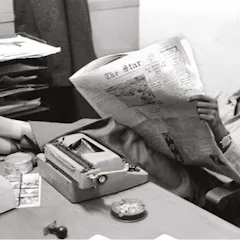
Abundantly talented and flawed, apartheid-era writer Can Themba wasn’t afraid to put his body on the line for a story.
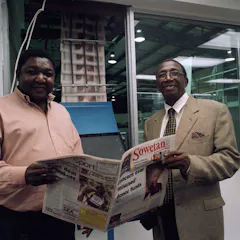
Klaaste was distressed by what was happening in black communities, where residents faced state terror and political violence. He sought to restore values such as self-help and neighbourly conduct.

Metaphors are not used for their own sake in politics, but as part of a strategy to persuade a particular audience to accept a point of view, and act accordingly

Jackson Mthembu’s death drives home the seriousness of the COVID-19 pandemic in the country.
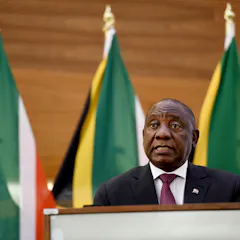
The country’s national interest and human rights remain the two topics bedevilling South Africa’s foreign policy.
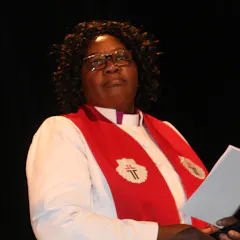
Bishop Purity Malinga is the first woman to be appointed Presiding Bishop in the Methodist Church of Southern African in over 200 years.
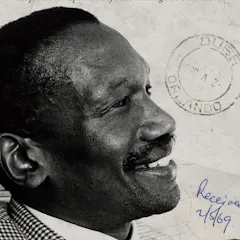
A collection of prison letters provides a peek into the suffering of South African liberation hero, Robert Sobukwe.

If South Africans are to make the radical changes they must to become truly great, the new generation will have to find a way of understanding the country’s past in its profound complexity.

Robert Sobukwe developed the philosophy of African nationalism to even higher intellectual heights. The lesson for humanity was his ideological stand that there is only one race - the human race.
Human population groups worldwide are highly homogeneous genetically. They are in fact 99.5% similar and their anatomical features vary in an uncorrelated fashion over the landscape.
Top contributors
-

Professor of Public Affairs, Tshwane University of Technology
-
Emeritus Professor, University of Cape Town
-
Distinguished Reserach Professor, Southern Centre for Inequality Studies, University of the Witwatersrand
-
Honorary Professor of International Relations, University of the Witwatersrand
-
Political Scientist, University of the Western Cape
-
Lecturer in Afrikaans linguistics, University of Pretoria
-
Brill Professor of Women’s, Gender, and Sexuality Studies, Penn State
-
Executive Dean and Full Professor, Faculty of Management and Law, University of Limpopo
-
Senior Research Fellow, Institute for Humanities in Africa, University of Cape Town
-
Associate Professor in the Department of Journalism, University of the Witwatersrand
-
Postdoctoral researcher, University of Johannesburg
-
Professor of English linguistics, University of Amsterdam
-
Senior lecturer in African Studies, Yale University
-
Professor of Public Theology in the Department of Beliefs and Practices, Faculty of Theology, at the Vrije Universiteit Amsterdam (Free University of Amsterdam), Vrije Universiteit Amsterdam
-
Associate professor of Psychology, Duquesne University; Independent Social Research Foundation