
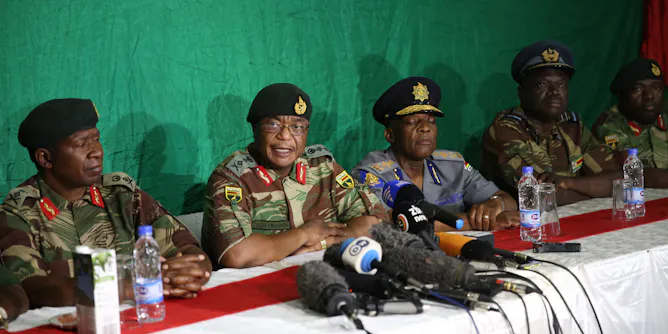
Contrary to popular sentiment that the coup in Zimbabwe would usher in a new era of democracy, the military intervention is much more about a succession crisis in the ruling Zanu-PF.
Articles on Robert Mugabe
Displaying 81 - 100 of 134 articles
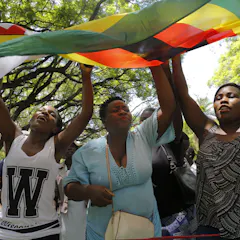
A week after the army issued its limp-wristed and ambiguous statement that Mugabe should go, he remains in place, and a new avenue - impeachment - is being pursued to get rid of him.
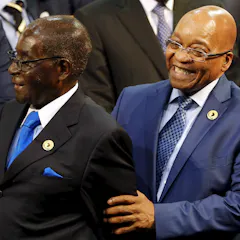
The unfolding misfortunes of Zimbabwean President Robert Mugabe hold key lessons for his South African counterpart Jacob Zuma who faces the possibility of a forced exit.
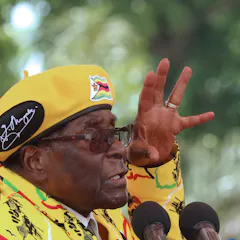
Are we witnessing the end of an era in which dictators stayed in power for decades? If so this must be good not only for Angola and Zimbabwe but for southern Africa as a whole.
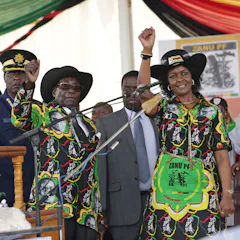
With their cavalier power plays and gross economic negligence, the Mugabes squandered the goodwill of crucial backers.
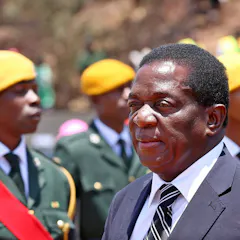
The outside powers jockeying for influence in Zimbabwe want Emmerson Mnangagwa to take the reins, at least temporarily. Why?
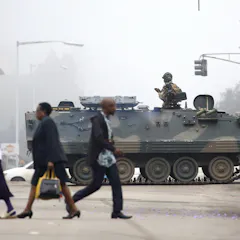
Some observers think Mugabe’s overthrow by the Army might be a good thing for Zimbabwe. An Argentinean expert on Latin America’s bloody military dictatorships disagrees.

The coup in Zimbabwe means Mugabe’s long and disastrous presidency is finally over. The questions that remain are the precise details and mechanics of the deal which secures his departure.
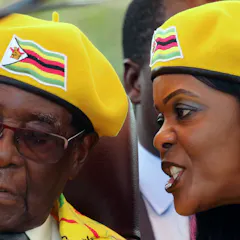
Mugabe and his powerful wife have been overthrown in an apparent coup orchestrated by Zimbabwe’s vice president. Will the country transition into democracy or get strapped with yet another dictator?

The protracted political crisis in Zimbabwe has worsened since President Mugabe fired vice president Emmerson Mnangagwa. Now the military has entered the fray, raising fears a coup is imminent.
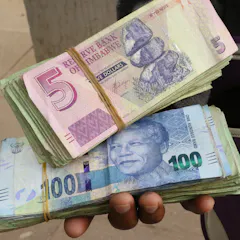
Years of political instability and economic mismanagement under the rule of ZANU-PF have left Zimbabwe’s financial system in chaos. The country is living on borrowed time and borrowed money.

The effects of President Mugabe’s post-independence security clampdown that led to the murder of between 10 000 and 20 000 Zimbabweans, known as the Matabeleland massacre, continue to be felt.
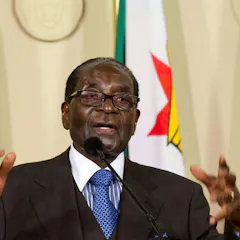
Zimbabwe’s ZANU PF sees itself as having brought democracy to the country and will not leave power. Unless civil society succeeds in pressing for change, the 2018 elections will bring none.
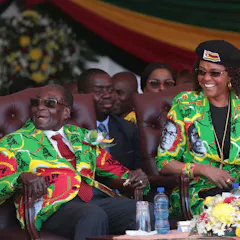
With a nonagenarian president apparently still planning to run for re-election in 2018, Zimbabwe’s runners and riders are making themselves known.
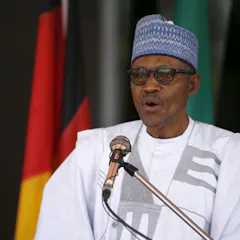
Health care systems in many African countries are very poor. Instead of fixing them, many African leaders seek medical attention abroad incurring huge bills which are ultimately paid by taxpayers.
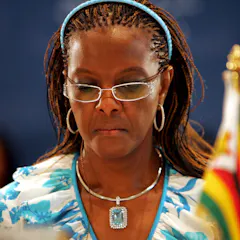
According to South Africa’s department of international relations, Grace Mugabe didn’t have immunity when she entered the country.
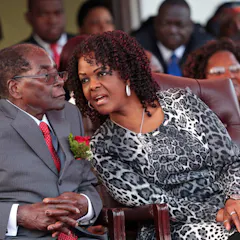
There is no basis in customary, conventional international law or domestic law for the spouse of a head of state to claim - as a right - some form of immunity when visiting a foreign state.
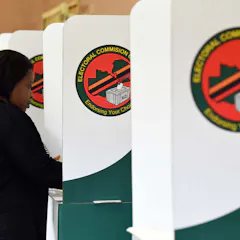
Democracy is in a parlous state in many countries in southern Africa. Autocrats hold onto power, while electorates have little to choose from at the polls.
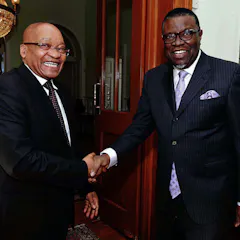
South Africa’s ANC and Namibia’s SWAPO, governing parties, enter crucial leadership elections this year, with presidents Zuma and Geingob both facing challenges.
Three democracies once considered beacons of hope are in varying states of disarray.
Top contributors
-

Research Associate, Dept of Anthropology & Development Studies and Fellow, Clare Hall, University of Cambridge, University of Johannesburg
-
Professor of World Politics, SOAS, University of London
-
Professor of Sociology, University of the Witwatersrand
-
Extraordinary Professor, Department of Political Sciences, University of Pretoria
-
Senior Lecturer, Stellenbosch University
-
Research Fellow, International Studies Group, University of the Free State
-
DLitt et DPhil Student in Politics, University of South Africa
-
Honorary Senior Research Fellow, University of Stirling
-
Emeritus Professor, University of Cape Town
-
Assistant Professor, Harvard University
-
Founding Director of Program on Intrastate Conflict, Harvard Kennedy School
-
Professor of Democracy, University of Birmingham
-
Honorary Professor of International Relations, University of the Witwatersrand
-
Associate Professor of Sociology & Director of the Centre for Data Ethics at the Institute for Intelligent Systems, University of Johannesburg
-
Director and Assistant Professor Measurement & Evaluation School of Professional and Extended Studies, American University