

“Hackathons” can imply breaching security and privacy. To more accurately reflect their creative and constructive intent, they can be referred to instead as “datathons” or “code fests.”
Articles on Rhetoric
Displaying 41 - 60 of 126 articles
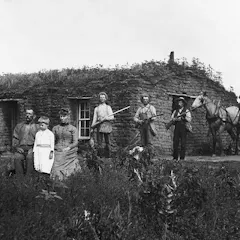
The ways Americans talk about firearms is full of contradictions, two communication scholars explain – and that powerfully shapes the country’s approach to gun policy.

History brought Ukraine’s plight home to people around the world, and helped mobilize political and military support against the Russian invasion.
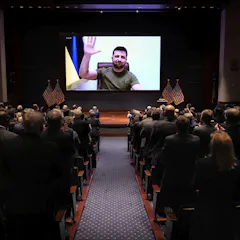
In a speech that touched on America’s darkest days and most inspirational leaders, Ukraine’s embattled president made a powerful call for stronger action on Russia.

If we learn how to disengage from communication circuits that lay the groundwork for fear and aggression, we have a better chance of managing conflict constructively.
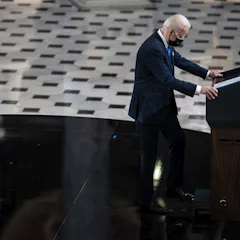
Rioters at the Capitol represented a ‘dagger against the throat’ of American democracy, President Biden said in an address laden with imagery.
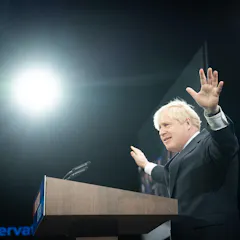
Billed as a speech from a leader making daring decisions to fix the nation, the prime minister’s conference appearance rapidly descended into jokes about beavers.
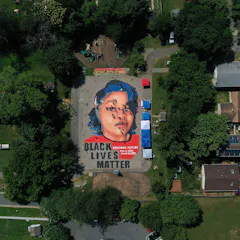
When there is nothing new to say, pegging news stories to the anniversaries of the deaths of Black Americans objectifies the victims and helps make violence ordinary.

We ought to worry that the pandemic has made it even easier to reduce teaching to disseminating knowledge.

Metaphors are not used for their own sake in politics, but as part of a strategy to persuade a particular audience to accept a point of view, and act accordingly

For many extremist groups, a primary goal is to spread their ideology. Costumes and uniforms – even ridiculous ones – are a form of spectacle that can garner attention and interest.
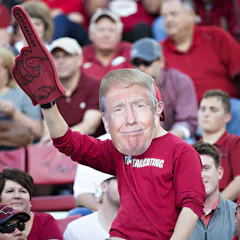
Researchers find that the most devoted fans take their team’s defeats personally and often blame losses on the refs or cheating. Sound familiar?
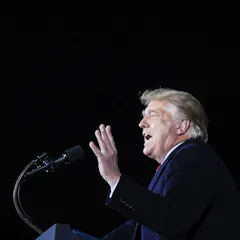
The president’s language sounded less presidential and more inflammatory in the weeks leading up to the riots.
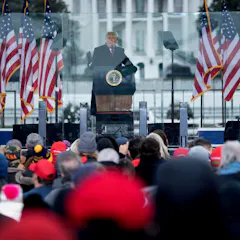
In his January 6 speech in Washington DC, Donald Trump urged his supporters to force their way onto Capitol Hill, is a perfect compendium of his inflammatory populist rhetoric.
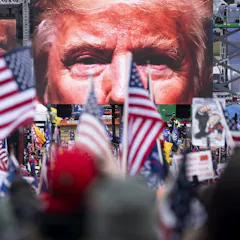
Words have consequences. And decades of research supports the contention that Donald Trump’s words could in fact incite people to mount an insurrection at the US Capitol.
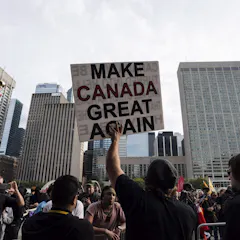
As the raid on the U.S. Capitol has shown, some kinds of rhetoric can set fire to the world — and it exists in Canada, too. Here’s how to tamp it down and focus on positive forms of rhetoric.

Media outlets used visual metaphors to explain to the public how election results would emerge.

False premises, fear-based reasoning and mob thinking are baked into the platform, allowing misinformation to thrive.

Donald Trump said followers of conspiracy theory ‘are very much against pedophilia.’ What he didn’t mention was the demonic imagery and language that peppers QAnon posts.

Some have equated the German word with small-minded cruelty. But the word’s meaning is more nuanced.
Top contributors
-

Professor, Department of Communication Arts, University of Waterloo
-
Professor of Communication and Journalism, Texas A&M University
-
Spécialiste de la politique américaine, Sciences Po
-
Assistant Professor of Writing, USC Dornsife College of Letters, Arts and Sciences
-
Roger J. Kreuz is a Friend of The Conversation.
Associate Dean and Feinstone Interdisciplinary Research Professor, University of Memphis
-
Professor of Communication Studies, Colorado State University
-
Stephanie A. (Sam) Martin is a Friend of The Conversation.
Frank and Bethine Church Endowed Chair of Public Affairs, Boise State University
-
Assistant Professor Rhetoric and Communication, State University of New York, College at Geneseo
-
Associate Professor of Rhetoric, Communication Consultant, University of North Carolina at Chapel Hill
-
Professor of Communication, University of Illinois Urbana-Champaign
-
Adjunct Professor at the School for Conflict Analysis and Resolution, George Mason University
-
Foundation Member of the First Year College, Victoria University
-
Senior Lecturer and Senior Digital Learning Developer, UCL
-
PhD Candidate, Department of Comparative Literature and Culture, Queen Mary University of London
-
Professor of Psychiatry, Medical College, Cornell University