
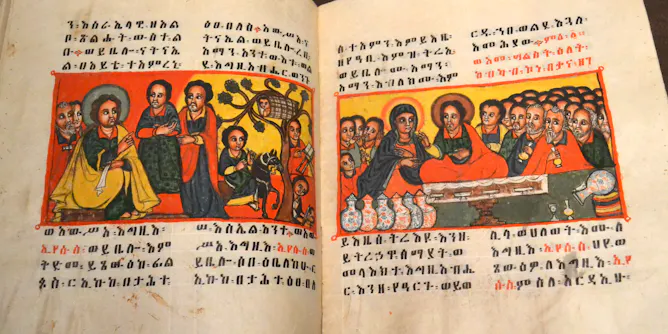
The controversy highlights a broader, escalating global movement demanding the return of African antiquities.
Articles on Repatriation
Displaying 1 - 20 of 43 articles

My research shows that gender-responsive rehabilitation programs are essential for the successful reintegration of ISIS-associated returnees.
Congress passed a law in 1990 mandating the return of all Native American items that federally funded institutions took without consent. Progress since then has been slow.
The government is outsourcing the risks and logistics of returning ISIS families instead of taking a more proactive, humane approach.
Her poem I’ve Come to Take You Home was written into French law. It deals with the repatriation of the remains of Sarah Baartman.

Language shapes power and words like restitution, unlike repatriation, speak directly to justice when it comes to returning cultural heritage.

The home secretary has the power to remove a person’s British citizenship if they consider it ‘conducive to the public good’.
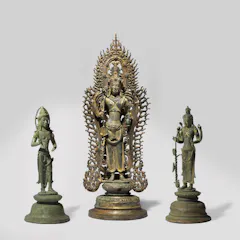
A recent repatriation from Australia to Cambodia shows how this process can reinforce oppressive powers, and further marginalize the historically oppressed.

While the Australian government has frequently helped its citizens flee crises overseas, it is not legally obligated to do so. And repatriating citizens is complex.
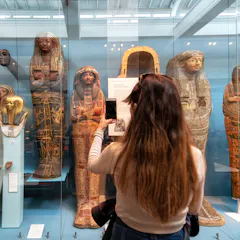
Even with the best of intentions, restitution is not a fast process.
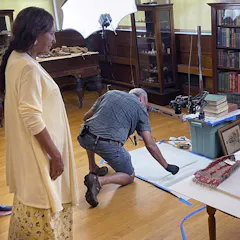
Repatriation is now a legal responsibility, but also a matter of human rights, an anthropologist writes.
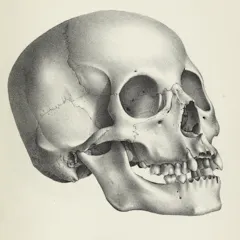
Marked with numbers, demographic information and provenance – though not name – these skulls tell a story of racist hierarchies but also diversity in the early United States.
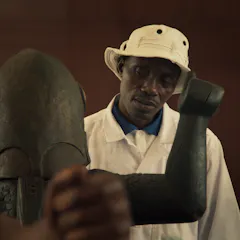
The film restores the agency of the objects at the heart of the Dahomey restitution case by transforming them into a living culture.
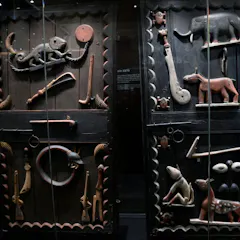
Repatriation of looted African art is no longer a marginalised topic, but reaps few rewards.

In asking how Buddhism gained such a vast material presence, the course helps students understand how a religion manages to survive over time.

The artist says he chose an English civil war-era coin because ‘it is one of the few British things in the British Museum’.
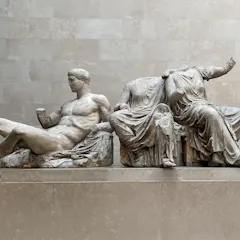
The marbles are a physical manifestation of what it meant to be Athenian during the 5th century BC.

Not all reparations involve money. Returning unique scientific resources is also a way of showing respect and righting past harms.
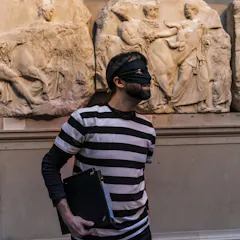
The British Museum is celebrating recovered items in its new exhibition, but it continues to refuse to return historically looted items in its own collection to countries of origin.

The elephant in the room is the existing legal framework, forged in period of decolonisation and diminishing western influence, that forbids the repatriation of antiquities.
Top contributors
-

Lecturer and Senior Research Fellow at the South African Research Chair in International Law (SARCIL), University of Johannesburg
-
Lecturer, International Law, University of Nairobi
-
Melbourne School of Design, The University of Melbourne
-
Lecturer in Geography and Map Curator, The University of the West Indies
-
Professor of Law, University of Waikato
-
Research Associate Professor (tenured), French National Centre for Scientific Research (CNRS), Université Paris-Panthéon-Assas
-
Olkola elder and Chairman of the Olkola Aboriginal Corporation, Indigenous Knowledge
-
Associate Professor, American University School of Public Affairs
-
Professor, University of Birmingham
-
Associate Professor, Faculty of Business and Communications Studies, Mount Royal University
-
Professor in Classics, Trinity College Dublin
-
Assistant Professor in Political Theory, University of Essex
-
Professor of Archaeology and Biological Anthropology, School of Social Science, The University of Queensland
-
Post-doctoral Research Assistant, 3DVisLab, University of Dundee
-
Director & SARChI Research Chair: Political Economy of Migration in the SADC Region, University of Pretoria