

The fight against Islamism is the rationale behind Marine Le Pen’s RN party, but research data suggests that head-covering in keeping with Islamic tradition is not politically motivated.
Articles on Religious identity
Displaying all articles

Surveys about religion often ask a single question about how often people go to services. That means researchers miss an important piece of the puzzle.

Like Bad Bunny’s music, Puerto Rican Muslims’ lives challenge ideas about race, religion and belonging in the Americas.
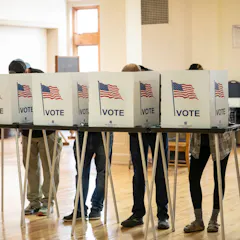
A common assumption holds that nonreligious Americans vote for liberal candidates. The reality isn’t so simple.

Workers from minority religious traditions in the US tend to be more affected by restrictions about bringing up faith at the office.
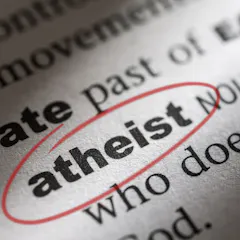
Social factors, from wealth to politics, may shape whether people who do not believe in God identify as an atheist.
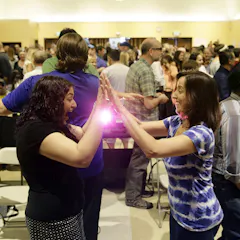
A sociologist of religion explains how atheist churches are helping people find meaning and community – serving many of the same purposes as religious churches.

Colonialism set Nigeria up for failure as a united country. But successive governments since independence have a lot to answer for too.

Muslim teachings on sexual and gender diversity are far more diverse than what many conservative groups would like us to believe.

Muslim women – and those for whom modesty is a guiding vestimentary principle – too often have to choose between modesty and fashionability.
Top contributors
-

Professor of Sociology, West Virginia University
-
Professor of Sociology, West Virginia University
-
Associate Professor, Faculty of Health and Community Studies, MacEwan University
-
Adjunct Research Fellow, Curtin University
-
Associate Professor, Economics, MacEwan University
-
Assistant Professor of Sociology, Purdue University
-
Professor of Sociology, Rice University
-
Chair of Entrepreneurship, Wheaton College (Illinois)
-
Professor of Political Science, University of Notre Dame
-
Packey J. Dee Professor of American Democracy, University of Notre Dame
-
Affiliate Researcher, Religion and Civic Culture Center, USC Dornsife College of Letters, Arts and Sciences; Bayreuth University
-
Assistant Professor of Political Science, Lakehead University
-
chercheure en droit public, Université de Strasbourg
-
Principal Academic in Marketing, Bournemouth University