
To understand what religion looks like in 21st-century America, researchers may need to ask different questions.
Articles on Nones
Displaying 1 - 20 of 29 articles

Protestant churches’ growth in Latin America gets lots of attention, but another important shift is happening, too: people leaving organized religion altogether.

Sociologists who measured supernatural beliefs in the US found that higher education and higher income are associated with lower levels.
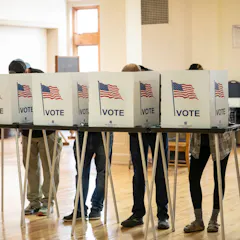
A common assumption holds that nonreligious Americans vote for liberal candidates. The reality isn’t so simple.
Many houses of worship no longer need as much space as they once did, or struggle to keep up with the bills. For some, redevelopment to include housing provides a new way to live out their mission.
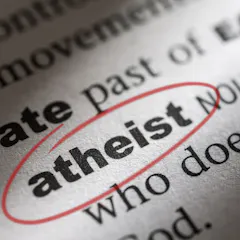
Social factors, from wealth to politics, may shape whether people who do not believe in God identify as an atheist.
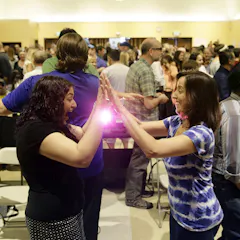
A sociologist of religion explains how atheist churches are helping people find meaning and community – serving many of the same purposes as religious churches.

Stoicism isn’t just a set of ideas; it’s meant to be put into practice. The ancient philosophy is finding new fans through online communities.
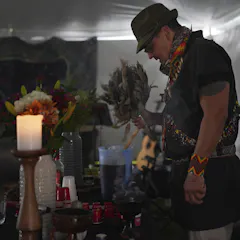
A scholar who studies alternative expressions of spirituality visited secular, atheist and psychedelic churches and interacted with attendees. Here is what he found.

As more Americans step away from organized religion, so do more chaplains – but they are prepared to offer spiritual care regardless of a patient’s beliefs.
Nonreligious voters are poised to make an impact, but sweeping statements about the ‘nones’ don’t tell the full story.
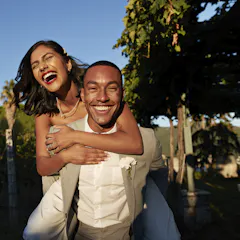
A professor who has researched the Universal Life Church unpacks why many couples now prefer to hand-pick loved ones to perform their ceremonies.

Secularization has fascinated sociologists for 200 years – but that doesn’t mean they always agree on what it is, or how much it’s happening.
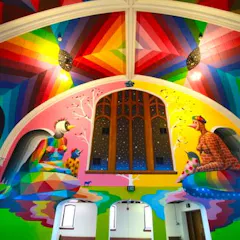
America’s religious landscape is getting more diverse as people find new ways of expressing spirituality.

The ‘Spiritual But Not Religious’ are embracing different forms of spirituality – skateboarding may be one of them.

An anthropologist of Japanese religion met followers of Shinto religion online and found how they were building a community and sharing instructions on practice.

A scholar of Christian spirituality argues that prayers are meant to bring together a faith community – something apps aren’t likely to achieve.
Two sociologists conducted interviews with atheist scientists and found that their views on religion are not as strident as the public perceives. Some even go to church.
Americans are getting more comfortable with new forms of spirituality, but their views of atheists are still complicated.
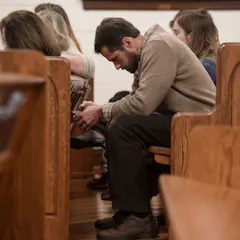
Disaffected young evangelicals and those who left the church describe an out-of-touch institution not in line with their political beliefs, a scholar found
Top contributors
-

Professor of Sociology and President, Bryn Mawr College
-
Foglio Endowed Chair of Spirituality, Michigan State University
-
Associate Teaching Professor in Religious Studies, Arizona State University
-
Professor of Sociology, West Virginia University
-
Professor of Sociology, West Virginia University
-
PhD Candidate, East Asian Languages and Cultural Studies, University of California, Santa Barbara
-
Professor of Sociology, University of Minnesota
-
PhD Candidate, Sociology and Demography, The University of Texas at Austin
-
Centennial Professor of History, Vanderbilt University
-
Assistant Professor of Practical Theology & Spiritual Care, Emory University
-
President, Institute for Advanced Catholic Studies, USC Dornsife College of Letters, Arts and Sciences
-
Professor of East Asian Religions, University of North Carolina Wilmington
-
Postdoctoral Researcher in Religious Studies, University of California, Santa Barbara
-
Director of Research, Special Projects, President's Office, Bryn Mawr College
-
Assistant Professor of Sociology, Purdue University