

The Netflix show is missing a richer and more accurate history of queer and trans life during that period in history.
Articles on Regency era
Displaying all articles
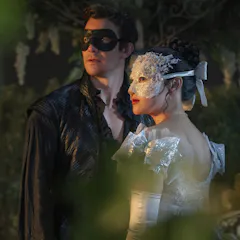
In the case of Elizabeth Chudleigh, it was more like lust at first sight.
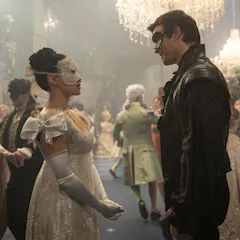
Dancing masters were crucial to transforming girls and boys into ladies and gentlemen.
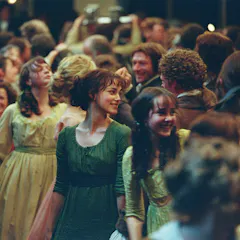
Ball-goers needed months to prepare for these events.

Examining Austen as a radical genius misunderstands her art and misrepresents the imperial culture that she was part of.
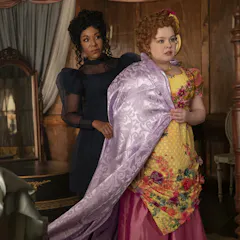
In the Regency period there was advice for women of all sizes.
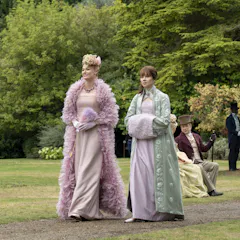
Silk muffs were often made at home and offered women a blank canvas for sartorial self-expression.
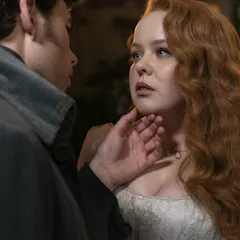
An estimated fifth of Londoners suffered from syphilis in the late 18th century and, behind closed doors, Regency Britons were engaged in extra martial affairs and even polyamory.
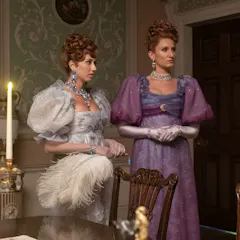
The ladies and gentlemen of the ton would have known a lot more about sex than the show would have you think.
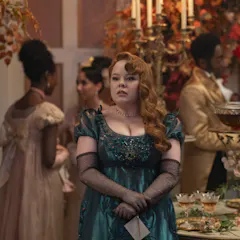
Historical romance allows readers to imagine a better past. For many, this is more important than historical accuracy – which can be ‘the icing on the cake’.
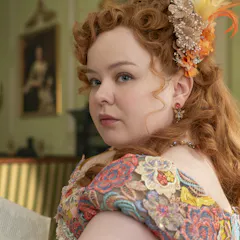
Penelope Featherington enters the third season painfully alone, but will she leave it that way?
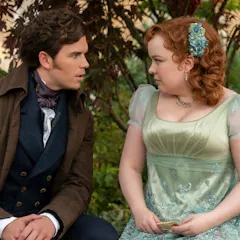
With Bridgerton’s season three set to sweep us off our feet yet again, let’s take a look at how executive producer Shonda Rhimes pulls it off.
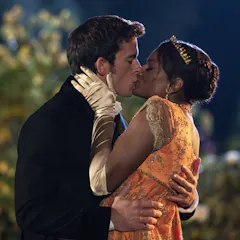
While Netflix’s Bridgerton is both incredibly romantic and erotic, the reality is it’s estimated 1in 5 people in the Regency period in London had syphilis and other STIs.
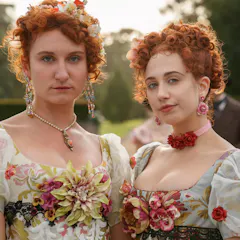
Writers did it themselves back in the 19th-century so modern period dramas should be cut some slack for trying to prioritise modern aesthetic tastes over historical accuracy.
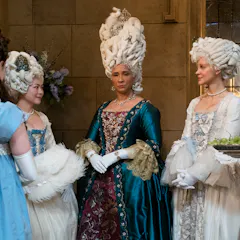
The Regency period was full of gossip and scandal, something Bridgerton gets right. However, it leaves out the period’s grim record on slavery.
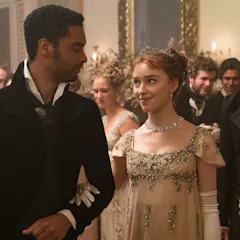
‘Bridgerton’ alludes to and obscures social, racial and political tensions in England’s Regency era, the extraordinary decade that marks the dawn of the modern world.
Top contributors
-

Visiting Fellow, School of History, Classics and Archaeology, Newcastle University
-
Surrey Future Fellow and Lecturer in English Literature, University of Surrey
-
British Academy Postdoctoral Fellow in the Department of History, University of Liverpool
-
Lecturer in Design Cultures, De Montfort University
-
Research associate in material and visual cultures of 18th-century Britain, University of York
-
Senior Lecturer in Communication Studies, Auckland University of Technology
-
Associate Professor, Humanities, Arts and Social Sciences, University of New England
-
Professor, Department of History, University of Glasgow
-
Senior Lecturer in History, University of Essex
-
Associate Professor of Global pre-1800 Literature, University of Winnipeg
-
British Academy Global Professor, Queen's University, Ontario
-
Associate Professor of English and Graduate Coordinator, University of Regina
-
Senior Lecturer, Cultural History, University of New England
-
Doctor of Philosophy, The University of Melbourne