
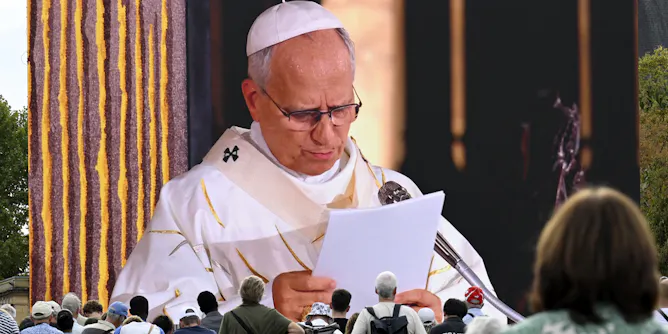
The Pope advocates for a Europe based on multilateralism and overcoming nationalism, while reasserting its Christian roots.
Articles on Realpolitik
Displaying all articles
A political scientist – with a penchant for gaming – explains how Minecraft, League of Legends and Civilization VII can help teach key international relations concepts.

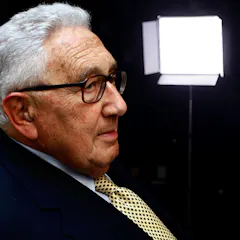
It’s hard to overestimate the role Henry Kissinger played in Chile. A former Chilean diplomat describes the mark that the powerful statesman made in his country and elsewhere in the Global South.

President Emmerson Mnangagwa has not faced official investigation or prosecution over his role in Operation Gukurahundi – 40 years on.
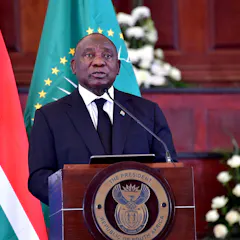
South Africa’s foreign policy under Ramaphosa emphasises economic diplomacy and ‘progressive internationalism’, which promotes global equity and ending the dominance of the global north.
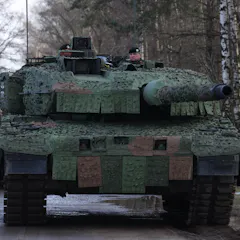
How should the war in Ukraine end? That’s the question dividing two schools of geopolitical thought, but one side seems to be winning the argument.

Henry Kissinger’s influence on US foreign policy was profound. His transactional approach – avowedly values free – included support of murderous and genocidal foreign leaders.

Tensions between the US and South Africa – this time over the terror alert – are nothing new. Their relations have always had highs and lows since South Africa became a democracy in 1994.

Policymakers often think of their decisions about nuclear weapons as moral, a nuclear ethicist explains – which is key to understanding their motives.
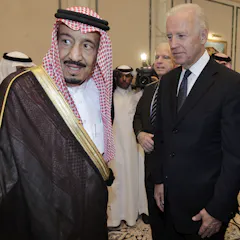
Joe Biden is set to make his first visit as president to the Middle East, during which he will meet the Saudi crown prince the US accuses of ordering the murder of a journalist.

The US frequently chooses to put its own interest ahead of its professed values. That approach to foreign policy is called ‘realpolitik’ and it may lead to an unsatisfying peace deal in Ukraine.

L'approche de Macron à l'égard de la politique africaine s'inspire des stratégies des années 50 en raison notamment des similutudes avec la période qui a suivi la Seconde Guerre mondiale.

Macron’s approach to Africa policy emulates the 1950’s strategies. Why? A big part of the answer can be found in the fact that today’s global circumstances are similar to those of post-World War II.
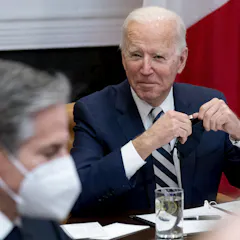
What do Biden’s first 100 days in office mean for the next four years in terms of foreign policy? There are already some clues — but questions too.
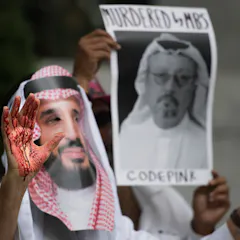
Saudi’s crown prince approved the killing and dismemberment of a Washington Post columnist in 2018, the Biden administration says. So how can the US still see the Saudis as good partners?

The Chinese model of peace differs fundamentally from that pursued by western nations.
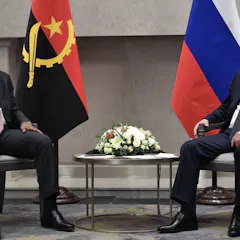
Russia’s President Vladimir Putin has new aspirations in Africa in pursuit of his country’s assertiveness in the global arena.
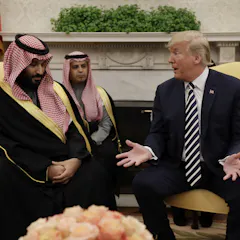
Critics say Trump’s defense of Saudi Arabia in the Khashoggi affair betrays American values. But many presidents have cozied up to dictators, ignoring human rights abuses to serve US interests.

The effects of President Mugabe’s post-independence security clampdown that led to the murder of between 10 000 and 20 000 Zimbabweans, known as the Matabeleland massacre, continue to be felt.
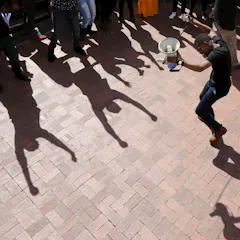
Young black South Africans have been raised to believe that friendship across the races is an indicator of progress. Now, a generation into democracy, they are questioning this.
Top contributors
-

Professor of the Practice of Political Science and International Relations, USC Dornsife College of Letters, Arts and Sciences
-
Research Fellow at the University of the Free State, South Africa and Assistant Professor in the History of International Relations, Utrecht University
-
Honorary Senior Research Fellow, University of Stirling
-
Full professor at the University of Côte d’Azur, director of the master’s programme in “France-Italy Relations”. Associate fellow at the Foundation for Strategic Research (FRS, Paris) and adjunct professor at LUISS University (Rome), Université Côte d’Azur
-
Emeritus Professor of History, University of Toronto
-
Professor in International Politics, University of South Africa
-
Outgoing Interim Director of the Frederick S. Pardee Center for the Study of the Longer-Range Future, Boston University
-
Associate Professor of Political Science, UMass Lowell
-
Ruth First Fellow, Journalism, University of the Witwatersrand
-
Professor of International Relations, University of Otago
-
Associate professor, University of South Africa
-
Sessional Lecturer in History, University of Toronto
-
Associate Professor of Political Science, Texas State University
-
Adjunct senior lecturer, University of Cape Town
-
Professor of Political Science, Boise State University