

People use cognitive shortcuts to make choices that sometimes have outcomes that don’t serve their own interests or preferences. But to call these choices irrational might be missing the big picture.
Articles on Rationality
Displaying 1 - 20 of 21 articles

Those driven by both heart and mind help the most people, even far beyond their own circle.
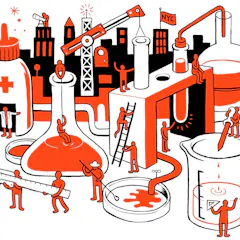
Cultural ideas are inextricably entwined with the people who do science, the questions they ask, the assumptions they hold and the conclusions they land on.
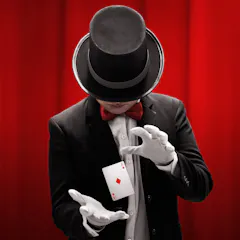
We love to believe we’re rational thinkers, but we’re often guided by invisible hands.

We’re told we need to think critically, to not fall for misinformation. Thankfully, it’s a skill we can practise and become better at.

The more personally we take politics, the more polarised we become.
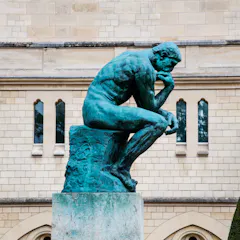
Svend Brinkmann’s idea of thoughtfulness is not just about exercising our rational powers to solve puzzles, but the existential dimensions of thinking.
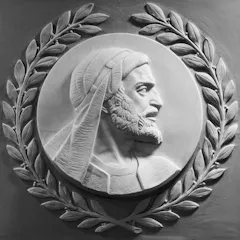
Faith and reason are often treated as opposites. But some philosophers believe they can only strengthen each other, including the Jewish sage Maimonides, who wrote the famous ‘Guide to the Perplexed.’

We don’t always realise it, but emotions play a positive role in decision making.

Climate change is an emergency which will hurt the planet’s most vulnerable people – the only irrational response is cool detachment.

A cold, logical list of attributes sought in a partner is cast aside by the hot emotions that come up in real life. A psychology researcher explains how this ‘hot-cold empathy gap’ works in dating.

Decades of psychological research suggests humans are rather irrational. But a new approach, borrowing an idea from artificial intelligence, challenges this notion.
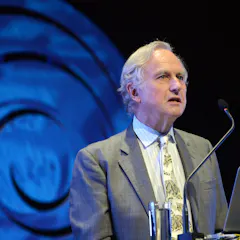
‘I don’t believe in God, I believe in science,’ atheists often argue. But that doesn’t mean their thinking is evidence-based.
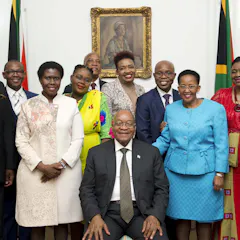
Democracy and good governance require politicians to engage in reasoned debate, informed decision making and measured judgements. This presupposes rationality. Is this always true?

A behavioural psychologists explains how facts fall to the wayside when it comes to how we vote.

What makes cults so attractive to their followers?

How often have you been urged to use common sense during an argument or a debate? The problem is, common sense is an unreliable indicator of truth.
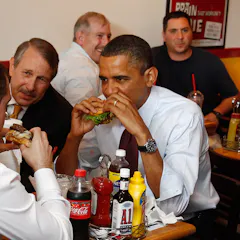
A one-year-old White House team is trying to transform policymaking through a better understanding of how and why people act as they do.

Just the other day I found myself in the waiting room of an automotive dealership. While my car was being serviced, I flipped through a product brochure. One ad for an oil change boasted that it would…
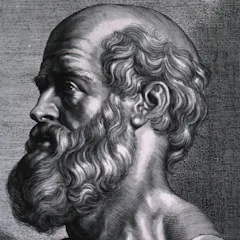
Hippocrates is considered the father of medicine, enemy of superstition, pioneer of rationality and fount of eternal wisdom. Statues and drawings show him with a furrowed brow, thinking hard about how…
Top contributors
-

Senior Lecturer in Philosophy and Education; Curriculum Director, UQ Critical Thinking Project, The University of Queensland
-
Assistant Professor of Psychology, California State University, Los Angeles
-
Senior Lecturer (Associate Professor), Division of Neuroscience and Experimental Psychology, University of Manchester
-
Professor of Behavioural Science, Warwick Business School, University of Warwick
-
Professor and Department Chair of Psychology, Lebanon Valley College
-
Adjunct Associate Professor of Behavioral Science, University of Chicago
-
Associate Professor of Psychology, University at Albany, State University of New York
-
Assistant Professor of Social Psychology, University of Utah
-
Assistant Professor of Psychology, Arizona State University
-
Research Fellow, University of Manchester
-
Senior Lecturer in Social Policy, Centre for Social Research and Methods, Australian National University
-
Senior Lecturer in Secular Studies, Department of Religious Studies, University of Kent
-
Professor and Head of Department of Political and Conflict Studies, Nelson Mandela University
-
Professor of Economics and Public Policy, ANU College of Arts and Social Sciences, Australian National University
-
Assistant Professor of Psychology, Johns Hopkins University