
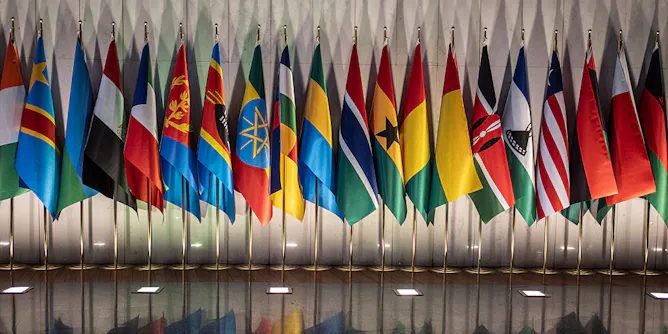
Sovereign debt markets are beginning to develop a way to manage shocks before they escalate into full restructuring episodes.
Articles on rating agencies
Displaying all articles
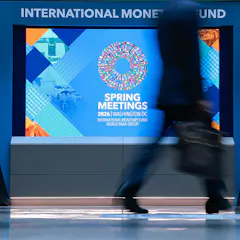
The IMF is not a neutral arbiter on any discussions relating to preferred creditor status. It is itself a direct beneficiary of the creditor hierarchy.

External assessors don’t always have a full view of a country’s creditworthiness.

The flaws in Standard & Poor’s Global’s report could influence investor perceptions and reinforce existing biases against Africa.
Rating agencies shape the policy space for pursuing development goals. Yet they remain private firms, operating under commercial incentives.
The problem with rating models applied to African countries is that they use a narrow definition of risk and don’t take into account qualitative factors.
South Africa needs to use its G20 presidency to press for reforms that could reduce Africa’s borrowing costs and strengthen its financial sovereignty.

Comparative analysis has found inconsistencies in how rating agencies use economic indicators in rating African countries versus other regions.
Moody’s acquisitions are a setback for the development of alternative rating agencies to compete against the monopoly of the ‘big three’.

The legitimacy of SWAPO, the former liberation movement that has governed since 1990, has been eroded amid growing corruption and a deepening economic crisis.
African governments must engage rating agencies better, providing them and investors with credible economic data, and regularly address all concerns being raised.
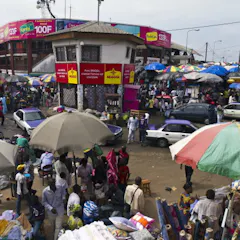
Downgrades have a devastating effect on economies that are already strained. The decision to downgrade during a crisis like the coronavirus pandemic must be challenged.

Rating agencies continue to be found wanting, primarily because of their business model where the institution being rated pays. This brings about a conflict of interest which is not easy to resolve.

An ideological debate is desperately needed to sort out options South Africa could pursue to find a way out of its economic morass.
The ratings agency downgrade decision is not a surprise. It’s a wake up call. South Africa has its work cut out.
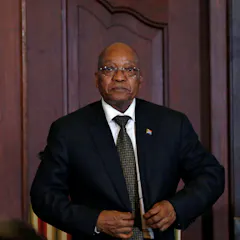
The best chance South Africa has of recovering from sub-investment grade credit rating status is to have leaders who are prepared to break rank with the small-mindedness of the ruling party.
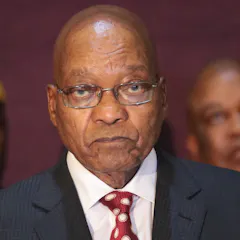
The focus will now be on how the social democratic and left-leaning members of South Africa’s cabinet – the “constitutionalists” – will respond to the reshuffle.

South Africa is breathing a sigh of relief after escaping a credit rating downgrade. But there are still serious concerns around structure of the country’s economy and finances.
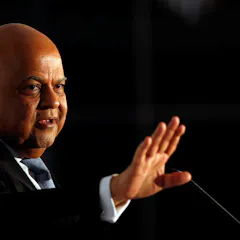
South Africa has made some progress in fixing problems identified by ratings agencies. But there are a number of outstanding issues that might mean the country is given ‘junk’ status.

South Africa’s response to the country’s economic woes has amounted to little more than band-aid treatment. Government must do more to set the economy on a solid growth path.
Top contributors
-

Post Doctoral Researcher, Graduate School of Business (GSB), University of Cape Town
-
Senior Fellow, Centre for Policy Research (UNU-CPR), United Nations University; Aston University
-
Professor of Political Economy, University of the Witwatersrand
-
Lecturer in Economics, Macroeconomics and Mathematical Economics, University of the Witwatersrand
-
Lecturer in Economics, University of the Witwatersrand
-
Professor of Finance & Deputy Head of School, Wits Business School, University of the Witwatersrand
-
Extraordinary Professor, Department of Political Sciences, University of Pretoria
-
Head of Equitable Development, Centre for Policy Research (UNU-CPR), United Nations University
-
Emeritus Associate Professor in Public Law, UCT. Visiting Adjunct Professor, WITS School of Governance; Director, Africa Programme, University of Cambridge Institute for Sustainability Leadership, University of Cambridge
-
Professor of Economics, Finance & Strategy at the Gordon Institute of Business Science, University of Pretoria
-
Head: Wits School of Governance, University of the Witwatersrand