
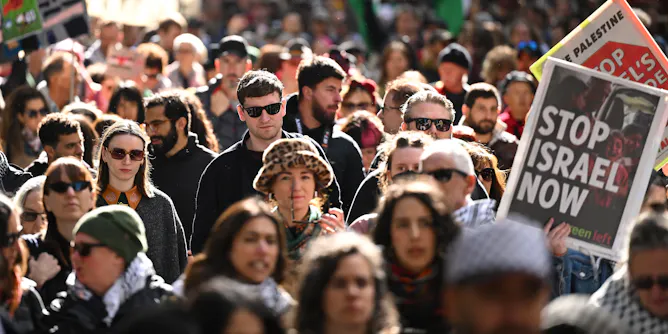
The Federal Court recently found it is not inherently antisemitic to criticise the state of Israel or the Israel Defense Forces.
Articles on Racial Discrimination Act
Displaying all articles

The bill was in the works for years and only passed on its fourth attempt. The debate about it is reminiscent of ongoing discussions about race and migration.

Many people agree freedom of speech has its limits and the law has some role to play in prohibiting harmful speech. But what should these laws look like?

We need a richer account of democracy within which to locate the Voice, to lift the quality of public debate about it.

Australians already enjoy a relatively high level of religious freedom. However, discrimination and vilification on the basis of people’s faith still exists.

Racism thrives online because of a clash between the commercial goals and ethical responsibilities of social media companies. But Australia can take legal and civil actions right now to address this.
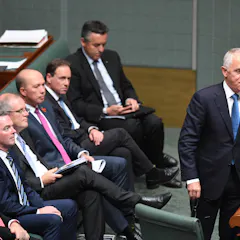
Malcolm Turnbull is now, it seems, wholly owned by the conservatives in the Liberal Party and their strident media allies. His capitulation to them over 18C of the Racial Discrimination Act has been as…
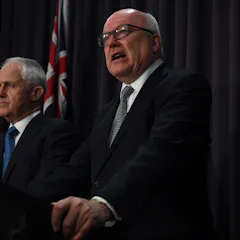
Malcolm Turnbull has announced a watering down of the controversial Section 18C of the Racial Discrimination Act.

The much-anticipated report has offered little in the way of a solution to the disagreement over section 18C, so parliament should leave it as it is.

How do we know what we think we know? Accuracy, care and rigorous method gets us somewhere there, especially on issues like racism.
Neither Galaxy Research nor the Institute of Public Affairs think-tank discussed the most interesting data they garnered from polling on free speech and reform to Section 18C.

Looking back at the Australian Human Rights Commission’s foundation shows that human rights have never been above politics.
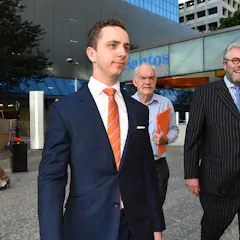
The time is right for a crash course on section 18C of the Racial Discrimination Act, its exemptions and the powers of the Australian Human Rights Commission.
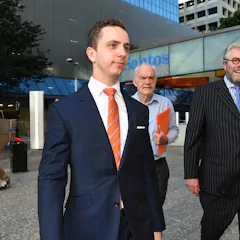
The QUT students case was a litmus case for 18C- and it highlighted its serious flaws.

The ‘good old days’ when we could make racist comments without legal recourse were not that good at all – especially for those on the receiving end.

The debate around amending Section 18C is a furphy: the law is there to guard against the most-damaging vilification, and very few cases end up in court.

The Constitution’s external affairs power does not support Section 18C. And the section also impermissibly infringes the implied freedom of political communication.
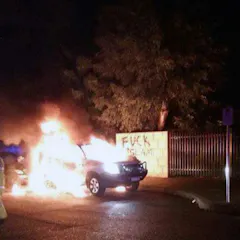
Legislating against racial and religious vilification is highly fraught, as the ongoing debate around Section 18C has demonstrated, and unlikely to become less so any time soon.
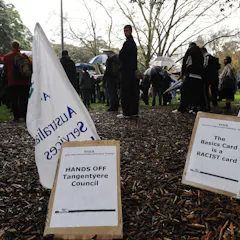
Various studies, culminating in the final evaluation report of income management in the Northern Territory, have found such programs don’t achieve the claimed benefits. Why did the budget extend them?
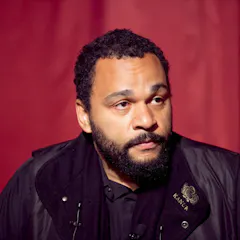
Recent commentary about the so-called “French” idea of free speech is fuelling confusion and misinformation in the debate about Section 18C of the Racial Discrimination Act 1975 in Australia. Human Rights…
Top contributors
-

Professor in Faculty of Law and Justice, UNSW
-
Emeritus Professor of Sociology, University of Technology Sydney
-
Professorial Fellow, University of Canberra
-
Director of Postgraduate Research and Senior Lecturer in Law, Murdoch University
-
PhD Candidate in Law, Murdoch University
-
Research Fellow, School of Law, The University of Queensland
-
Deputy Executive Dean and Associate Dean (Academic), Faculty of Humanities, Arts and Social Sciences, The University of Queensland
-
Lecturer, Graduate School of Business and Law, RMIT University
-
Professor of Political Philosophy, University of Sydney
-
Director, Centre for Western Sydney, Western Sydney University
-
Pro Vice Chancellor Research, Western Sydney University
-
Senior Lecturer, Thomas More Law School, Australian Catholic University
-
Senior Lecturer in History, Australian Catholic University
-
Professorial Fellow, Jumbunna IHL, University of Technology Sydney
-
Researcher, Challenging Racism Project and Diversity and Human Rights Research Centre, Western Sydney University