
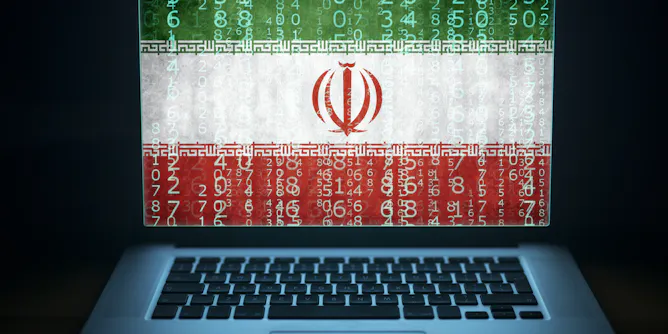
After the assassination of General Qassem Soleimani, further esclation in the conflict between Iran and the US could come in the form of a cyber-attack.
Articles on Qassem Soleimani
Displaying 21 - 36 of 36 articles
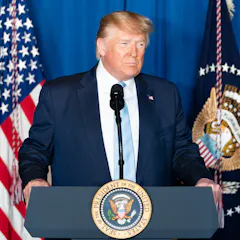
Both President Trump and President Obama used military force without informing Congress, or getting its approval. But the differences reveal more than the similarities.
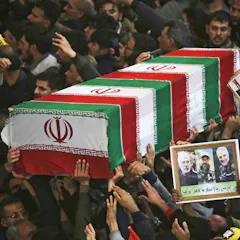
The US and other countries set up the modern system of international law after World War II. Does the US killing of an Iranian general violate those laws? What about Iran’s attack on US bases in Iraq?
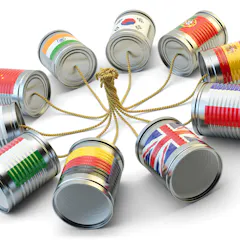
Even when countries have broken ties with each other, they can communicate – as the US and Iran did just a few days ago.
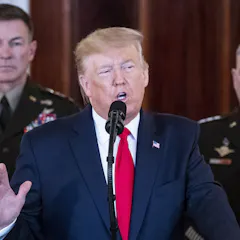
Although neither side apparently wants conflict, tensions remain over the presence of US troops in Iraq and Iran’s decision to walk away from part of the 2015 nuclear deal.
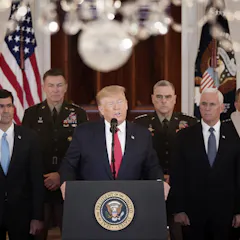
President Trump’s speech about Iran wasn’t just aimed at that country or the US. He also targeted NATO allies, urging members of the alliance to step up and help US efforts in the Middle East.
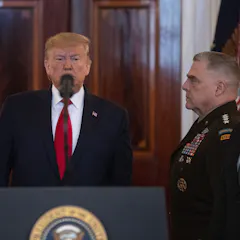
Iran’s missile strikes on Iraqi bases in response to the killing of Iranian general Qassem Soleimani have raised tensions between the U.S. and Iran. But war seems unlikely at this point.

Iran has withdrawn from key elements of the 2015 nuclear deal. The UK should respond with caution – and flexibility.
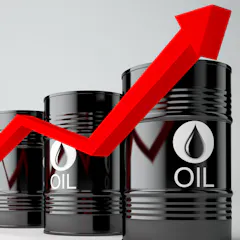
To make sense of the Soleimani assassination, you need to look at the global economics of oil.
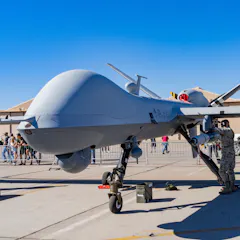
The drone probably used to kill Iranian general Qassem Soleimani doesn’t take away all risks and responsibilities from military personnel.
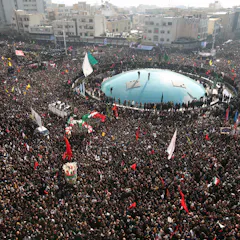
Tehran is making threats but its options are somewhat limited.
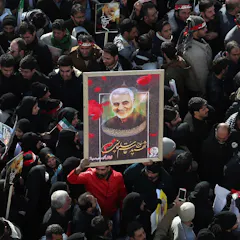
For decades, Iran has built up a network of proxies across the Middle East. Will it now use them to retailiate for the killing of its top general?
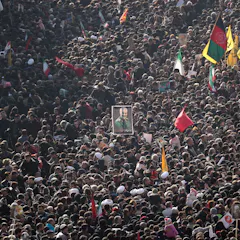
Given the perils of direct confrontation with the US, the most likely recourse for Iran may be to mobilise its proxy militias to attack American assets in Iraq.
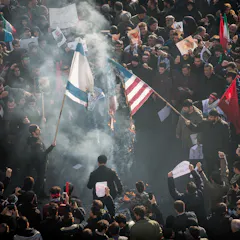
It’s very dangerous to assume that Iran will not escalate the crisis further, much less that the US could limit any violence that might ensue.
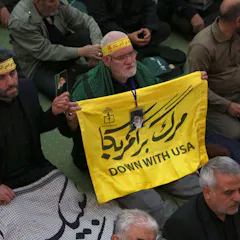
President Trump’s Iran policy took a dramatic turn when the US killed Iran’s top military commander in a drone strike. To avoid war, one foreign policy scholar says Trump has to reverse his stance.
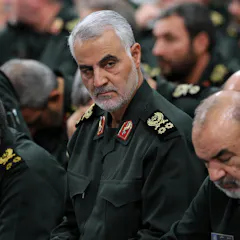
The Trump administration is only the latest to push the boundaries of the law to take out foreign adversaries.
Top contributors
-

Professor of History and International Affairs, University of North Carolina at Chapel Hill
-
Associate Professor in International Relations, Swansea University
-
Professor of International Politics, Clinton Institute, University College Dublin
-
Baranov and Timashev Chair in Data Analytics and Professor of Political Science, The Ohio State University
-
Researcher in Innovation Policy and Economics, Maastricht Economic and Social Research Institute on Innovation and Technology (UNU-MERIT), United Nations University
-
PhD Candidate in political science, Université de Montréal
-
Visiting professor, School of Humanities and Social Sciences, UNSW
-
Associate Professor of Journalism, Penn State
-
Research Scholar, Middle East Studies, Australian National University
-
Associate Professor of History, Toronto Metropolitan University
-
Professor of Middle Eastern Studies and Public Policy and Director of the Interdisciplinary Studies Institute, UMass Amherst
-
Associate Professor of Political Science, Rochester Institute of Technology; Institute for Humane Studies
-
Associate Professor of Political Science, University of Richmond
-
Professor of the Practice of Political Science and International Relations, USC Dornsife College of Letters, Arts and Sciences
-
Assistant Professor of History, University of Tampa