
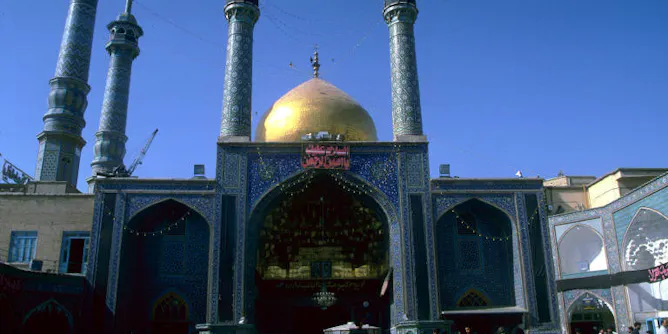
Trump recently warned Iran that the US could target its cultural sites. Many of Iran’s cultural sites carry deep religious meaning for a global Shii community and such a threat risks alienating them.
Articles on Prophet Muhammad
Displaying 21 - 38 of 38 articles
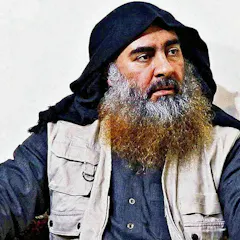
The Islamic State has appointed yet another ‘caliph’ after the death of Abu Bakr al-Baghdadi. What is the idea behind the caliphate?
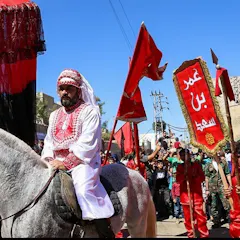
For Muslims, Ashura marks the martyrdom of the Prophet Muhammed’s grandson Hussain.
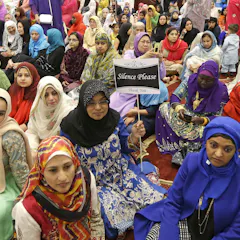
Muslims throughout the world will celebrate the holiday of Eid al-Fitr, a celebration at the end of Ramadan. Here’s an introduction to this important feast and its partner, Eid al-Adha.

Some Islamic nations, including Brunei, have harsh punishments under Sharia. In pre-modern times, Sharia was rarely used as criminal law, and standard of proof for any prosecution was very high.
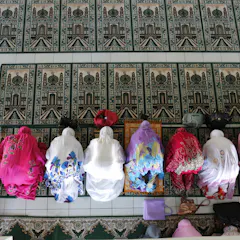
Ramadan is one of the five pillars of Islam – acts that denote the obligations of living a good Muslim life.
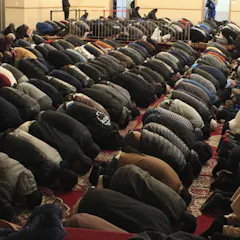
Last Friday, Muslims were killed while praying at two mosques in New Zealand. For Muslims, Friday is the day of gathering, the most important prayer day of the week.
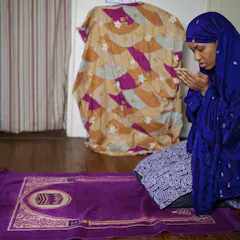
Trump recently tweeted about prayer rugs being left along the border. Many may not know the role and history of Muslim prayer rugs and why they are not likely to be left behind.
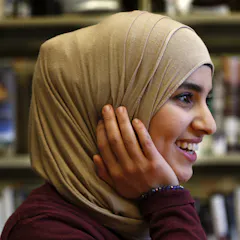
Hijab is not simply about religion – women wear it for a variety of reasons.
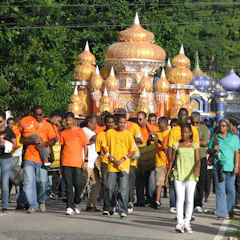
Hosay, a religious ritual performed by Trinidadian Muslims, combines the somber Islamic observance of Ashura, brought by immigrant Indians, and the joy of Trinidad’s famous carnival.
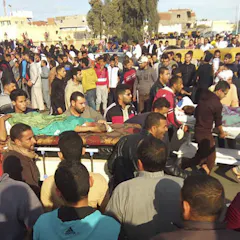
A new attack on a Sufi mosque in Egypt drives home the hatred of Islamic State and other some other Muslim groups for the Sufi traditions of inclusiveness and mystical worship.
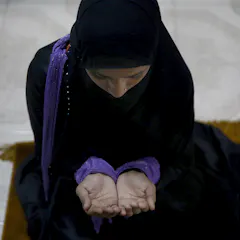
Muslims from the Salafist tradition can often be seen as ‘radical.’ There is not much understanding of Salafism, its history and its diversity. Here’s what it means to be a Salafist.
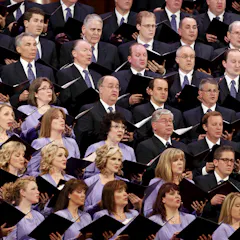
Sacred music joins people in a collective expression - whether of joy, sorrow or protest.
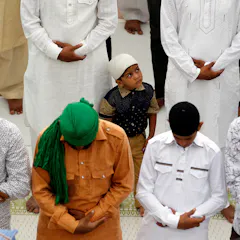
Undertaking a Muslim education – coming to understand the faith’s teachings and its ideas about humanity – can have enormous value for anyone who wishes to tackle social conflicts.
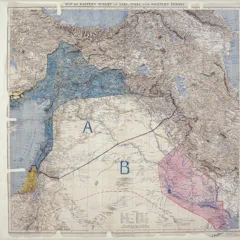
The leaders of Islamic State do not see their caliphate as an exercise in theocracy for its own sake, but as an attempt at post-colonial emancipation.
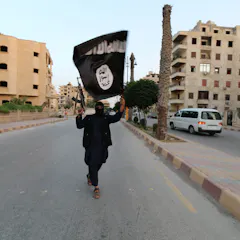
In seeking to link IS to earlier Islamic movements, Western commentators have associated the jihadist group with the medieval Ismailis, made famous in Europe by returning Crusaders as the Assassins.
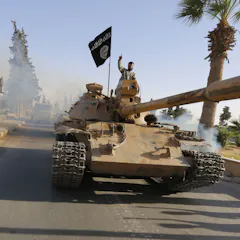
Despite what we’re told, religion isn’t inherently peaceful. People kill in the name of their religion, just as they love in its name.
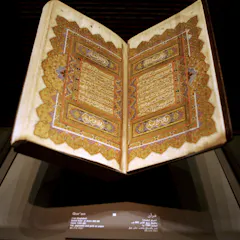
What makes Islamic State different to traditional Islam isn’t necessarily the religious texts the group uses.
Top contributors
-

Affiliate Researcher, Religion and Civic Culture Center, USC Dornsife College of Letters, Arts and Sciences; Bayreuth University
-
Professor of Islamic Art, University of Michigan
-
Assistant Professor of Religion, California Lutheran University
-
Assistant Professor of HIstory, University of Maryland, Baltimore County
-
Co-Director & Head of the Department of Academic Research and Publications, The Institute of Ismaili Studies
-
Distinguished Professor of Philosophy of Education, Stellenbosch University
-
Assistant Professor of Sociology, UMass Amherst
-
Research Fellow, Cambridge Muslim College & Teaching Fellow, SOAS, University of London
-
Professor of Religion, Wesleyan University
-
Professor of Sociology, Drew University
-
Associate Professor of Political Science, UMass Lowell
-
Professor of Political Science, Director of Center for Islamic & Arabic Studies, San Diego State University
-
Associate Professor of Islamic Studies, Charles Sturt University
-
Associate Professor of Religious Studies, Florida International University
-
Philip S. Bernstein Professor of Jewish Studies, University of Rochester