
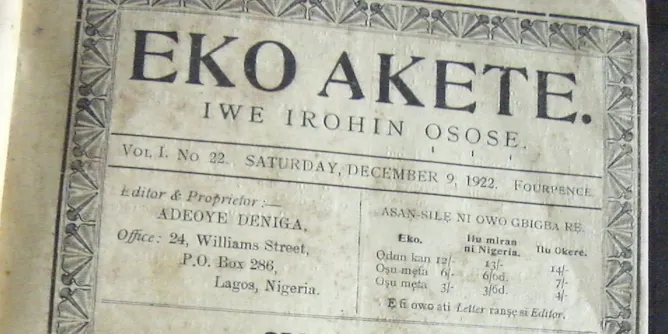
English was imposed as Nigeria’s official language, but the British had no way of controlling what people did with it.
Articles on Printing press
Displaying all articles

Who bears responsibility when false information leads to real harm?

From clay tablets to electronic tablets, technology has played an influential role in shaping human knowledge for centuries.

While the rise of smartphones and typing impacts handwriting, bad penmanship is far from a new phenomenon. People have struggled to read each other’s handwriting for centuries.
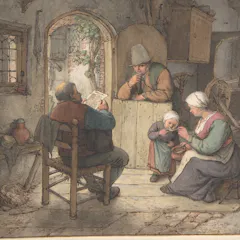
Sharing eyewitness accounts of atrocities is a powerful way of gathering international sympathy, and it has a long history.

Books are one of the oldest forms of communication ‘technology,’ a scholar writes, and understanding how they’ve evolved over time provides insights into their role in society.

How colonial Customs protocols shaped copyright and censorship.

Freedom of speech emerged as a concept after the invention of the printing press, and that’s worth revisiting in the context of social media and Trump’s presidency.

Africa’s current situation has a parallel in European history - the Reformation and the changes it wrought in terms of language exceptionalism.
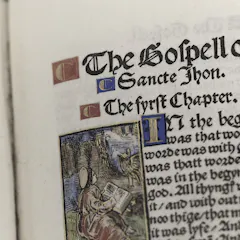
The printing press, like the internet, has been revolutionary. But technology alone is not enough – access to to it must be open to ensure its benefits are felt.

A key to the successful growth of Jesuits were handwritten letters – transported through trade ships from India.
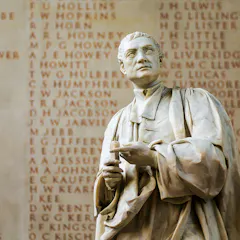
Research shows that students feel motivated when they learn more about the struggles and failures of the world’s greatest scientists.
Top contributors
-

Emeritus Professor of African Linguistics, University of Leipzig
-
HHMI Professor of Biomedical Engineering and International Health, Boston University
-
Edward A. Malloy Chair of Catholic Studies, Professor of Theological Studies, Vanderbilt University
-
Professor of African Literature, University of the Witwatersrand
-
Associate Fellow, University of Cambridge
-
Assistant professor, Radboud University
-
Head of Book Arts, Archives, & Rare Books, University of Richmond
-
Assistant Professor of English, University of Toronto
-
Professor, Political Science, University of Winnipeg
-
Senior Research Fellow, Human-AI Decision Making, The University of Queensland
-
Whitehead Associate Professor of Critical Thought and Associate Professor of Philosophy, Wellesley College
-
Emeritus Professor of African Cultural Anthropology, University of Birmingham