
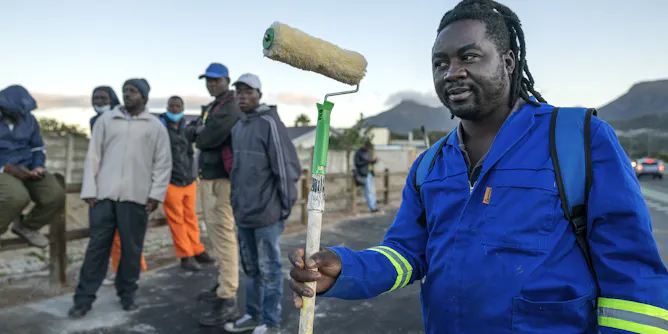
Many formal sector jobs are increasingly precarious and poorly paid, meaning that formal work is not an avenue to greater social equality for many people.
Articles on Poverty
Displaying 361 - 380 of 1031 articles
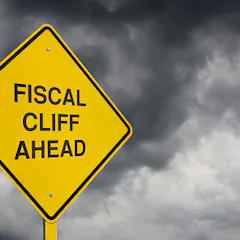
The sums aren’t adding for South Africa on either the spending or revenue side. It’s a problem that’s developed over time with no action being taken.
The risk from heat waves is about more than intensity – being able to cool off is essential, and that’s hard to find in many low-income areas of the world.
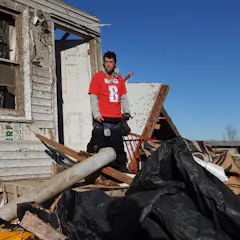
The most affordable homes face the highest risks from disasters for three key reasons.

Adolescence lies between childhood and adulthood, but adolescents are neither big children nor little adults. They have increased food requirements to support their rapid physical growth and maturation.
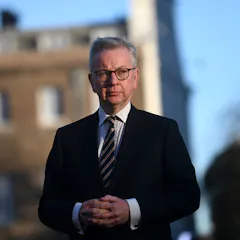
The levelling up secretary has unveiled some very big ambitions, but there are still more questions than answers.
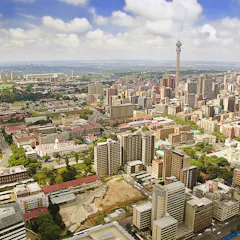
Despite widespread black poverty caused by unemployment, progress has been made towards the goal of a racially equal society.

The answers to Nigeria’s poor social science research output seem to lie in quantity and quality of personnel, time available for research, funding, support institutions and policy.
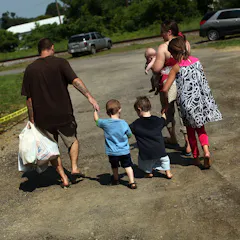
The 2021 child tax credit expansion helped lift millions of families with children out of hunger. After those payments ended in December 2021, those families may again face food insufficiency.

Despite growing public discussion of the risk of civil war in the US, a political violence scholar says widespread civil strife is unlikely to happen – but other political violence is more likely.

COVID-19 greatly disrupted local market dynamics at landing sites, within the communities, and connections to more distant markets.

As the year ends, New Zealand has done well in important global measures of success. But closer to home, the numbers often told a different story.
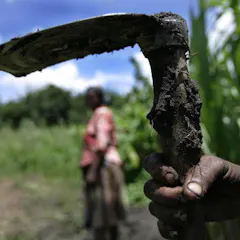
Eliminating the divide between commercial agriculture (mainly white) and subsistence farming (mainly black) requires effective public policy and the right incentives.

Should the U.S. help low-income households afford water service, as it does with heating and groceries? Chile does. An economist explains how it works there and how it could work here.
Ghanaian postcolonial intellectuals viewed terms such as development, neo-colonialism, self-reliance, and indigeneity as central to discussions of global inequalities.
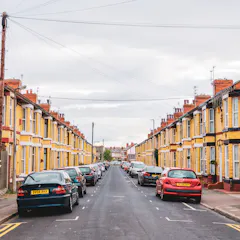
Britain’s economic system is built on inequality. Few governments have attempted to rectify this.
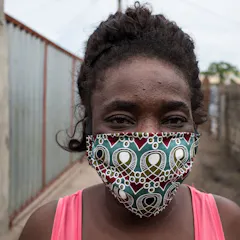
Study shows that agriculture, one of the most important sectors, did not decline in 2020 compared to its historical trend. Service sectors were hit hard in each of the five countries.
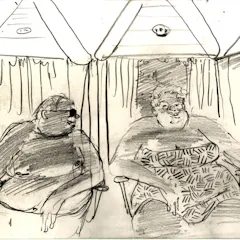
These ten drawing show the realities of life at the English seaside in 2021.
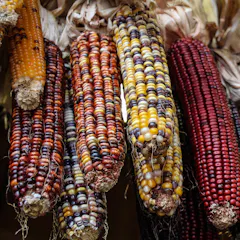
Our food systems are failing to feed all of us.
In this episode of Don’t Call Me Resilient, we pick apart what is broken and ways to fix it with two women who battle food injustice.
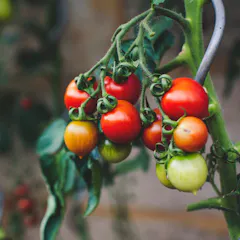
The COVID-19 pandemic has highlighted the problem of food insecurity for many people, especially racialized and Indigenous households.
Top contributors
-

Professor of Social Development Studies, University of Johannesburg
-
Professor of Economics & Business, Allegheny College
-
Professor of Political Studies, University of Johannesburg
-
Professor, Crawford School of Public Policy, Australian National University
-
Professor, Sol Plaatje University
-
Pro Vice-Chancellor, Climate, Sustainability and Inequality and Director, Southern Centre for Inequality Studies, University of the Witwatersrand
-
Senior Fellow, Department of Agricultural Economics, Stellenbosch University
-
Director of the Roy McKenzie Centre for the Study of Families and Children, Te Herenga Waka — Victoria University of Wellington
-
Professor of Economics, Fordham University
-
Senior Research Fellow, World Institute for Development Economics Research (UNU-WIDER), United Nations University
-
DSTI/NRF Research Chair in Welfare and Social Development, University of Johannesburg
-
Distinguished Research Fellow, Human Sciences Research Council
-
Honorary Research Fellow, City Political Economy Research Centre, City St George's, University of London
-
Dean of the Faculty of Economic and Management Sciences, University of Pretoria
-
Senior Researcher, Southern Centre for Inequality Studies, University of the Witwatersrand