

Last year’s COVID-19 restrictions were a relief to some people who have experienced family trauma because it spared them difficult holiday visits with relatives. Now, it’s back to holidays as usual.
Articles on Post-lockdown
Displaying all articles

Experts at the Doherty Institute have updated their modelling to heighten caution around reopening for business and play.

Ready to party post-pandemic, but at the same time feeling shy? Here’s how social isolation affects the brain – and what research suggests about the effects of resocialization.

As a society, we have to choose between liberty, equality and mortality. We can’t have all three.
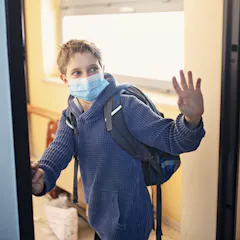
After more than a year of isolation and empty schedules, some kids might be apprehensive or anxious about interacting with the outside world. Psychology experts provide tips to ease the transition.

The study found people bounce back from their mental sluggishness soon after emerging from isolation.

Women felt more worn out by restrictions – while men complained of boredom

As research shows, divorce doesn’t have to mean an unhappy childhood.
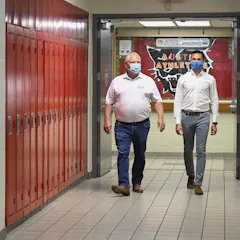
With sufficient testing and co-ordination, reopening schools and businesses in areas without active outbreaks can be as effective as a wide lockdown in minimizing COVID-19 cases, according to a new model.

As we clear the path towards a COVID-normal, mental illness prevention must be prioritised. Including it as a focus of the National Preventive Health Strategy could be a start.
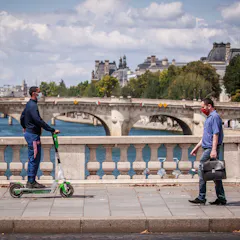
We need to keep social distancing and avoiding indoor spaces, even if the official rules have changed. A microbiologist explains why.

Melbourne isn’t the only place suffering under a second lockdown. It’s happening across the world as the virus surges in countries that were initially successful in flattening the curve.
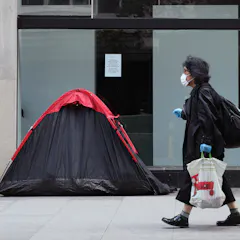
Pandemic is once in a generation opportunity to help homeless people stay off the streets for good – we must not waste this.

Research shows children who go camping do better at school and are healthier and happier.
Top contributors
-

Lecturer in Psychology, University of the West of Scotland
-
Postdoctoral Fellow, School of Environmental Sciences, University of Guelph, University of Guelph
-
Research Fellow in Applied Moral Philosophy, University of Oxford
-
Professor and Director of Doherty Epidemiology, The University of Melbourne
-
Chen Su Lan Centennial Professor in Medical Ethics, National University of Singapore; Distinguished Visiting Professor in Law, University of Melbourne; Uehiro Chair in Practical Ethics, The University of Melbourne
-
Professional Research Fellow, Victoria University
-
Senior Lecturer in Education and Childhood Studies, Liverpool John Moores University
-
Professor, Health Policy, Victoria University
-
Ph.D. Student in Clinical Psychology, University of Miami
-
Professor of Public Policy and Director of the Policy Institute, King's College London
-
Senior Lecturer in Psychology, University of Glasgow
-
Course Leader and Senior Lecturer at Staffordshire Business School, University of Staffordshire
-
Research Fellow in Health and Education at the Mitchell Institute for Education and Health Policy, Victoria University
-
Associate Professor, Director, MScA Couple and Family Therapy, School of Social Work, McGill University
-
Professor of Applied Mathematics, University of Waterloo