
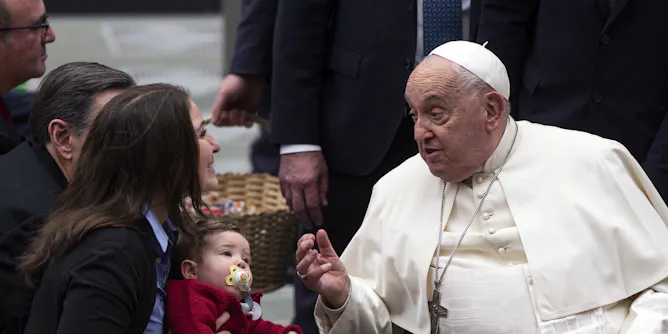
Pope Francis died on Easter Monday, a day after greeting crowds at St Peter’s Square. From the very start of his papacy, he seemed determined to do things differently.
Articles on Pope Francis
Displaying 41 - 60 of 246 articles

At the centre of the social and ecological polycrisis is a religious crisis of the human heart.
His attempts at modernisation won him fans and made him enemies.
Pope Francis has died at the age of 88, the Vatican has announced. 10 years ago, his encyclical, Laudato Si’, was published. This environmental text sought to move the Catholic Church and its concern with the Earth back into a leading role.

The Catholic Church opposes assisted suicide and euthanasia, but it also doesn’t support treatments that prolong suffering in the face of unavoidable death.
The pope’s embrace of literature and history is a sharp contrast to some of his predecessors, a medievalist explains.
Mobility matters because it allows us to live independently and participate fully in our everyday activities for as long as possible.
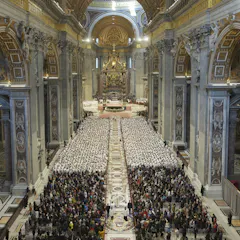
The pope leads the Catholic Church, but some 2,000 other people work at the Holy See and city-state.
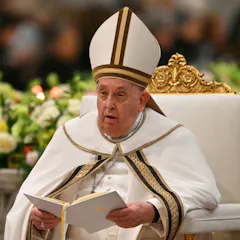
Pope Francis transformed the church from an institution in which a few called the shots to a church of the people of God.
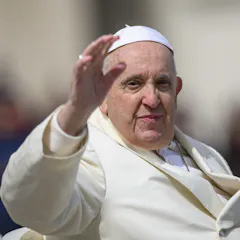
A scholar of global Catholicism writes how Francis has opened the church to the outside world in ways no pope had done before.
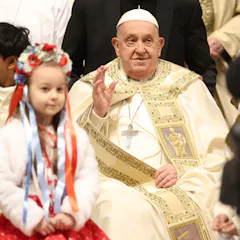
This isn’t a medical term – but it’s being used to describe a complex condition.
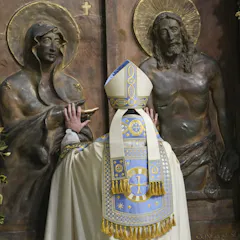
The Catholic Church’s Holy Years have biblical roots, but have been evolving for nearly 1,000 years.

A group of 16 Discalced Carmelite nuns executed during the Reign of Terror in the French Revolution were canonised by Pope Francis on December 18.

Francis’ vision for a ‘synodal’ church was built on trust and relationships − a dance where partners work together.
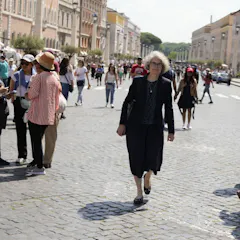
Women’s formal involvement in bishops’ synods has grown slowly over the decades. Even when they were excluded, Catholic women found ways to learn about proceedings – and weigh in, often critically.
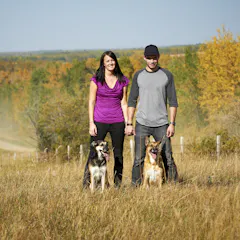
Compared with voters who are trying to have kids or haven’t decided yet, those who definitely don’t want to have kids – known as the ‘child-free’ – have a different set of political priorities.

The first papal visit to the young nation since its independence has generated widespread excitement. Behind the T-shirts and fervour, the visit is politically significant.

Pope Francis’ longest overseas journey yet proves there is great power in papal travel – and that it’s changing to meet the demands of the modern world.

Timor-Leste is proud of being rated as the strongest democracy in Southeast Asia, but as it prepares to receive Pope Francis, tensions between activists and the authorities are rising.
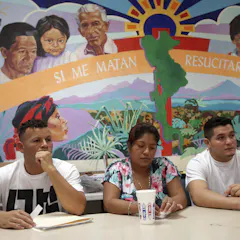
Religiously affiliated organizations can clash with politicians on humanitarian aid to migrants, raising issues around religious freedom and hospitality to newcomers.
Top contributors
-

Professor of Religious Studies, College of the Holy Cross
-
Professor Emerita of Religious Studies, College of the Holy Cross
-
Professor of Public Theology and Director of The Bernardin Center, Catholic Theological Union
-
Holcim (US) Professor of Sustainable Enterprise, Ross School of Business, School for Environment & Sustainability, University of Michigan
-
Research Professor, World Christianity and African Studies, DePaul University
-
Professor in Historical & Contemporary Ecclesiology, Trinity College Dublin
-
Professor of History, Australian Catholic University
-
Assistant Professor, Case Western Reserve University
-
Associate Professor of Religious Studies, University of Dayton
-
Distinguished Professor of Humanities Emerita, College of the Holy Cross
-
Gudorf Chair in Catholic Intellectual Traditions, University of Dayton
-
Professor of Law, University at Buffalo
-
PhD Candidate, Department of Politics, Languages & International Studies, University of Bath
-
President, Institute for Advanced Catholic Studies, USC Dornsife College of Letters, Arts and Sciences
-
Senior Lecturer, School of Humanities and Social Science, University of Newcastle