
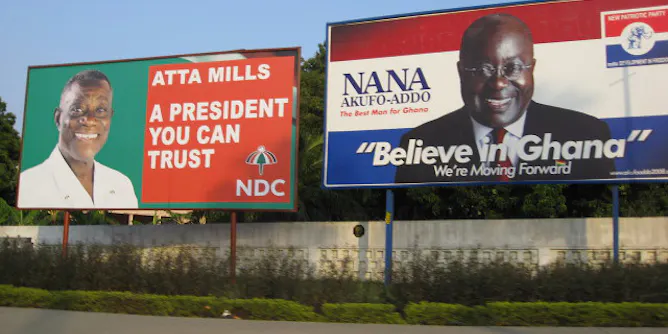
Minority parties in Ghana have found ways to stay relevant in elections despite their declining electoral numbers
Articles on Political patronage
Displaying 21 - 40 of 50 articles

The black middle class are angry at their exclusion from mainstream economic activity.
Much deeper social forces underlie the struggles within the governing ANC and society over the shape of the economy.
A great deal of analysis on South Africa and the ruling ANC seems to be based on wishful thinking, not concrete reality.
President Emmerson Mnangagwa’s decision to double the price of petrol shows very poor judgement and bad leadership.
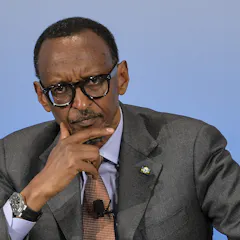
The Rwandan model can’t be replicated easily given that it depends heavily on political dominance and tight, centralised control of patronage networks.
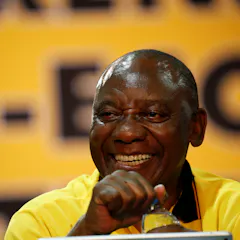
South Africa’s ruling ANC has a new leader - Cyril Ramaphosa. But this doesn’t mean that the country is out of the woods. Political instability remains a real possibility.
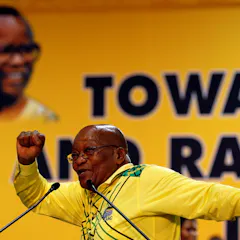
Zuma’s last address to South Africa’s governing party, the ANC, as its president, betrayed his strange way of dealing with issues. He came across as delusional and self-indulgent.
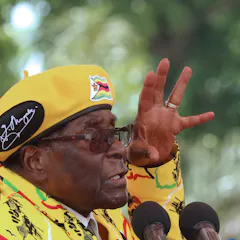
Are we witnessing the end of an era in which dictators stayed in power for decades? If so this must be good not only for Angola and Zimbabwe but for southern Africa as a whole.

For the first time since its unbanning the ANC needs to find a new direction. Its supporters and South African voters are no longer content with resolutions that promise to end to corruption.
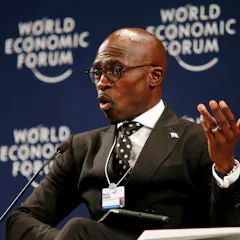
Privatisation talk in South Africa shows how state owned enterprises are being used as tools for enrichment by the connected and less as key elements of development.
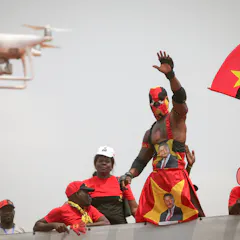
Angola’s recent election results showed the ruling MPLA losing support across the country. If opposition claims are to be taken seriously, the losses could be more severe than they appear.
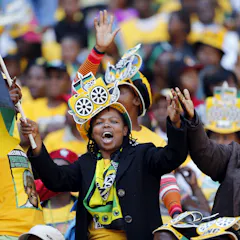
The possibility that South Africa’s ruling ANC could lose power in 2019 runs like a tragic thread through its policy conference documents. It agrees that its actions have repelled many supporters.
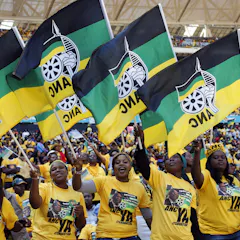
Democracy in South Africa is meaningless if it doesn’t improve the lives of the people. To do this, the governing ANC must be led by conscientious, competent and interested leaders.
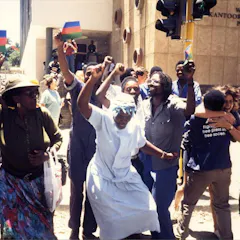
Namibia contributes a positive image to Africa in governance and other indicators. But the reality for most of the country’s 2.3 million people isn’t quite as rosy.
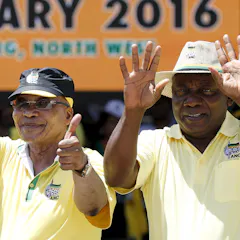
After two decades of political dominance, the electoral performance of the ANC is at its lowest since it became the governing party of South Africa in 1994. But is the party really unraveling?
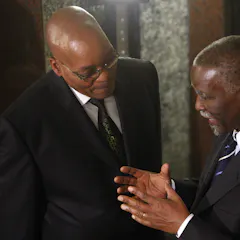
The fallout at the meeting of South Africa’s governing ANC clearly exposed how the party’s factionalism has spilled over into government. This is likely to paralyse governance even further.
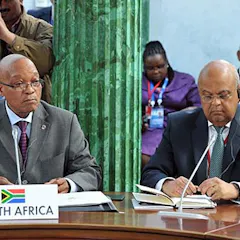
The use of the prosecuting authority and the police in ANC succession struggles has a long history. What’s different in the Zuma era is the symbiosis between elite police and the prosecution service.
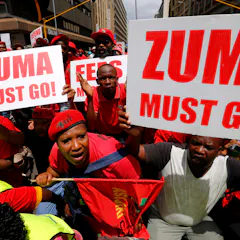
For the moment President Zuma’s supporters control the governing ANC’s levers of power. But an unprecedented number of people in the ANC are turning against him. How long will the centre hold?
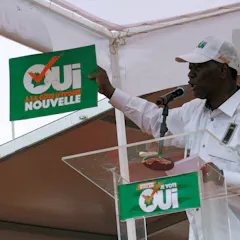
The proposed new constitution would allow Alassane Ouattara to remain as president. Opposition parties see this move as a constitutional “coup” that will also protect his allies.
Top contributors
-

Professor of Political Studies, University of Johannesburg
-
Political Scientist, University of the Western Cape
-
Professor of Public Affairs, Tshwane University of Technology
-
Professor in Political Science, University of South Africa
-
Associate Professor of Political Science, University of Johannesburg
-
Visiting Professor and Professor Emeritus, University of the Witwatersrand
-
Senior Lecturer in Anthropology, University of Johannesburg
-
Professor of Democracy, University of Birmingham
-
Losophone Research Specialist/Adjunct Professor in African Studies, Carleton University
-
Associate Professor, UCT School of Economics; South African Reserve Bank Research Chair in Financial Stability Studies, University of Cape Town
-
Senior Lecturer in Anthropology, University of Pretoria
-
Associate Professor, Stellenbosch University
-
Founding Director of Program on Intrastate Conflict, Harvard Kennedy School
-
Professor of Sociology, University of the Witwatersrand
-
Executive director and CEO: School of Business Leadership, University of South Africa