

Pi gets a lot of attention this time of year, but there are plenty of other mathematical constants just as deserving of recognition.
Articles on Pi
Displaying all articles
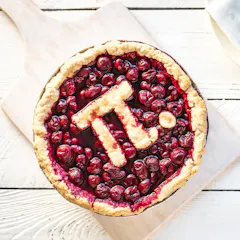
Pi has spawned its own literary style, where the number of letters in consecutive words is dictated by the decimal expansion of pi.
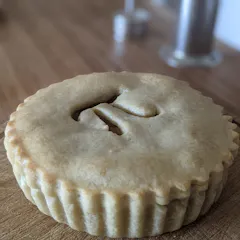
Calculating pi with unprecedented accuracy has zero scientific usefulness. But as a show of computing muscle and a mathematical curiosity, it’s endlessly intriguing.
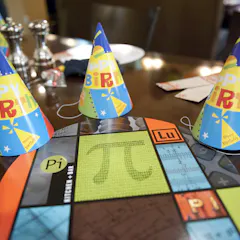
It’s March 14, the day we irrationally celebrate the ratio of a circle’s circumference to its diameter. Here’s a roundup from our archive of what we know about pi.
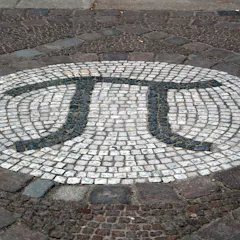
We know pi appears when we talk about circles. But it appears in many other places, too. Why, pi, why?
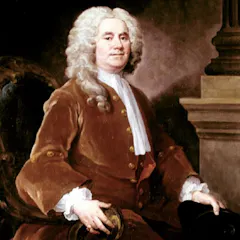
This Pi Day we should celebrate William Jones, the 18th century Welsh farm boy who named the mysterious number.
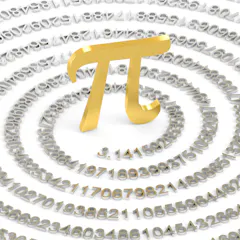
Mathematicians have long been revealing the beauty in the one of nature’s most mysterious numbers.
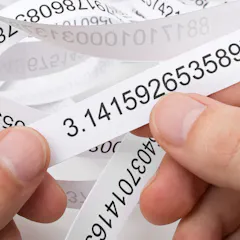
On international Pi Day it’s time to look at Pi’s position in unique formula that’s praised much for its beauty in uniting several mathematical constants.
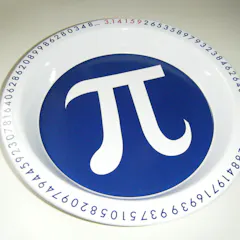
On the occasion of Pi Day, a look at the history of calculating the actual, and increasingly exact, value of pi (π).
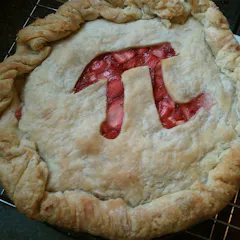
3/14 on the calendar approximates the first three digits of the mathematical constant π. Math nerds will celebrate with baked goods, but π is a deeper, nobler entity.

The number pi (π = 3.14159265358979323846…), unique among the pantheon of mathematical constants, captures the fascination of the public and professional mathematicians. Three years ago one of the authors…
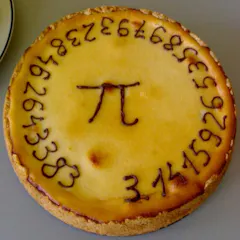
Some people have argued that Pi’s days are numbered and that other tools, such as tau, could do its job more efficiently. As someone who has studied Pi throughout his entire working life, my response to…
Top contributors
-

Laureate Professor of Mathematics, University of Newcastle
-
Professor of Mathematics, The University of Texas at Austin
-
Assistant Professor of Mathematics and Statistics, Georgia State University
-
Professor of Mathematics, George Washington University
-
PhD; Lawrence Berkeley Laboratory (retired) and Research Fellow, University of California, Davis
-
Emeritus Professor of Education, Bangor University
-
Professor of Mathematics and Statistics, University of Maryland, Baltimore County
-
Lecturer of Mathematics, Edith Cowan University
-
Acting Director of Research, Reader in Global Development, Newcastle University
-
Mathematician, University of Portsmouth