
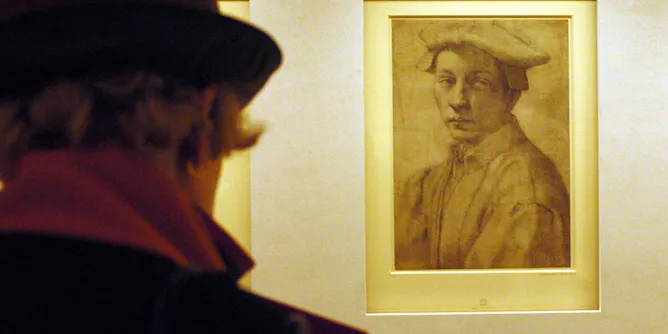
A red chalk sketch for the Sistine ceiling fetched an eye-popping sum at auction, reflecting the artist’s lifelong belief that drawing and design – not painting – were the wellspring of all great art.
Articles on Leonardo da Vinci
Displaying 1 - 20 of 44 articles
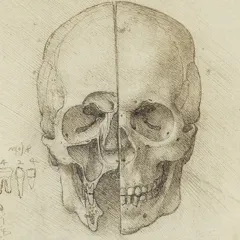
The Italian Renaissance artist created groundbreaking depictions of humans at a time when the inner workings of the body remained a mystery.

Freud wanted to know how da Vinci combined supreme artistic accomplishments with a technological imagination that seemingly anticipated modern science and engineering.
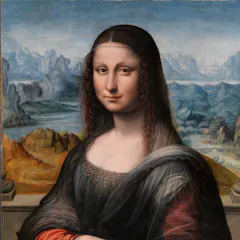
The Mona Lisa has traditionally been associated with Lisa Gherardini, the wife of a Florentine silk merchant. But there’s plenty of evidence pointing to a different identity.
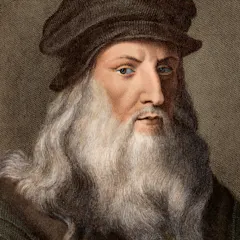
A document, which dates to 1452, shows that da Vinci’s father emancipated an enslaved woman named Caterina – Leonardo’s mother.

Pi gets a lot of attention this time of year, but there are plenty of other mathematical constants just as deserving of recognition.

It has long been thought the ancient Greeks used the Golden Ratio to beautify their art and architecture. Turns out that’s not really true.

The condition challenges the centuries-old idea that all great artists are able to envision what they’re drawing.

The reproduction of Leonardo da Vinci’s work is set to fetch a lot at auction. But why would a fake cost so much?
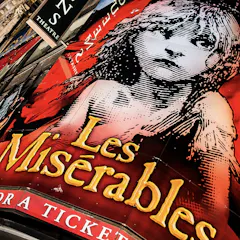
A formula found often in nature, many artists believe that following the golden ratio leads to the most aesthetically pleasing work. It can also accidentally turn up in musicals.
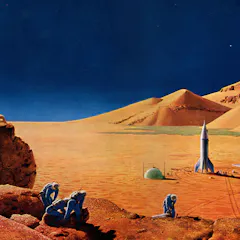
While the 50th anniversary of the first Moon landing is an opportunity to celebrate a remarkable technological achievement, it’s worth reflecting upon the creative vision that made it possible.
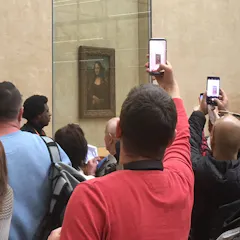
Leonardo da Vinci’s Mona Lisa is the world’s most visited artwork. Its appeal rests partly on several mysteries.
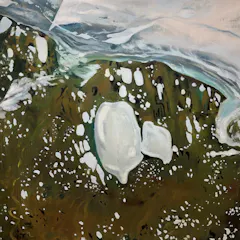
What do earthquakes, wealthy Italian families and your circulatory system have in common? Scientists use fractals, self-similarity and power laws to translate from local to global scales.
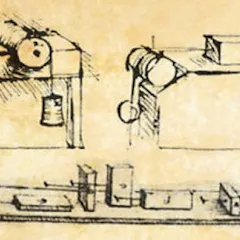
Once called ‘the most important subject no one has heard of’, tribology is now a key part of the fourth industrial revolution.
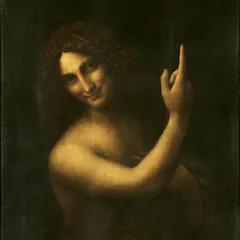
On the 500th anniversary Leonardo’s death and in appreciation of his rich and varied contributions, how can our educational systems inspire the same imaginative qualities in students today?
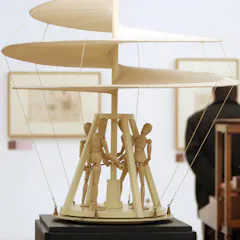
Leonardo’s range of knowledge fascination with flying led directly to the development of modern aircraft, nearly four centuries later.
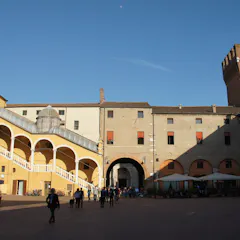
Leonardo da Vinci’s ideal city contained design features and engineering works not realised until hundreds of years after he died.
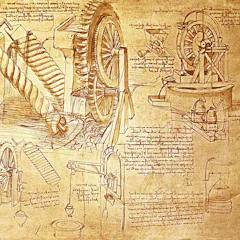
Engineer, artist, mathematician, thinker: Leonardo da Vinci was all these and more.
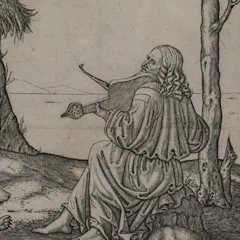
A lot has been said about Leonardo and music, much of it speculation. But what do we know for sure?
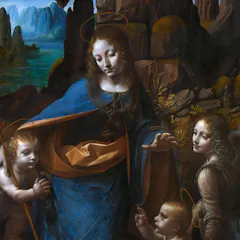
Leonardo da Vinci emphasized the naturalness of the relationship of Jesus and Mary in his art, while also inviting viewers into a religious message.
Top contributors
-

Director, Gender and Women's History Research Centre, Australian Catholic University
-
Associate Professor in History of Art, University of Nottingham
-
Reader in Experimental Psychology, Sheffield Hallam University
-
Mathematics Subject Group Leader, Sheffield Hallam University
-
Principal Research Fellow - Materials, Sheffield Hallam University
-
Senior Lecturer in Economics, RMIT University
-
Emeritus Professor of the History of Art, University of Oxford
-
Subject Leader in Creative Computing, Bath Spa University
-
Senior Research Professor, Heriot-Watt University
-
Professor of Computer Science and Director of the Art & AI Lab, Rutgers University
-
Professor of Physical Oceanography, The University of Western Australia
-
Professor of geophysical fluid dynamics
-
Associate Research Fellow, University of Exeter
-
Chancellor's Professor of Medicine, Liberal Arts, and Philanthropy, Indiana University
-
Professor Emeritus of Art History, University of Sussex