

Drug prices in Australia are three times higher than in New Zealand. A key reason is the lack of transparency about taxpayer subsidies for Big Pharma and the companies’ own finances.
Articles on Pharmaceutical Benefits Scheme
Displaying 21 - 40 of 44 articles

Wider availability of the cystic fibrosis drug Kalydeco since May 1, 2017 means younger patients can now access it.

Australia is spending more than A$500 million a year too much for pharmaceuticals because of a little known loophole that allows drug companies to overcharge the government.

Should new understandings of how cancers develop and could be targeted mean we should change the way the scheme registers cancer drugs?
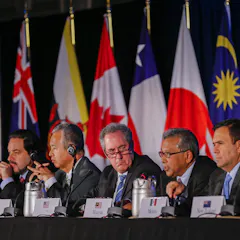
Before the last round of negotiations, only a handful of issues remained in the way of concluding the TPP. A potential deal-breaker for Australia was intellectual property protections for biologics.
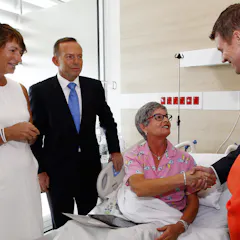
Australians are picking up some of the slack of government belt-tightening by paying more for health, with experts concerned this could reduce the equity in Australia’s health system.
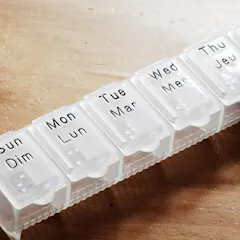
The off-label use of medicines is not illegal and it doesn’t mean regulators have specifically “disapproved” its use. But there are a number of issues to consider before using a medicine off-label.
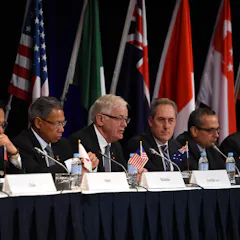
Over the next few weeks, the trade minister will be under intense pressure to renege on the government’s commitment to reject anything in the Trans Pacific Partnership that could undermine the PBS.

Despite numerous leaks about impending changes to medicines policy, the budget showed savings of just $252.2 million over five years from adjusting the price of a small number of PBS-listed drugs.

The government is locked in a major battle with pharmacists as it looks for $3 billion in budget savings from the pharmaceutical supply chain.

The latest part of the TPP to be leaked is its investment chapter. And like almost everything we know about the secretive negotiations for the agreement, it provides plenty of cause for concern.

Australians make an average of 14 visits to the pharmacy for medicines and advice every year but most don’t know about the agreement that governs how we buy government-subsidised medicines from them.

Apart from proposing a co-payment for visiting doctors, the last federal budget also contained a proposal to increase the level of co-payments for medications. The government seems to have given little…
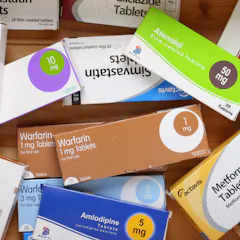
Ten years on from the Australia-US Free Trade Agreement, Australia is entering another round of negotiations towards the new and controversial Trans-Pacific Partnership. In this Free Trade Scorecard series…

Ten years on from the Australia-US Free Trade Agreement, Australia is entering another round of negotiations towards the new and controversial Trans-Pacific Partnership. In this Free Trade Scorecard series…

Ten years on from the Australia-US Free Trade Agreement, Australia is entering another round of negotiations towards the new and controversial Trans-Pacific Partnership. In this Free Trade Scorecard series…

When it comes to pharmaceuticals expenditure, the National Commission of Audit’s proposals rate highly on any policy change scale. Its two main recommendations are designed to reduce the overall cost to…
Last week, Treasurer Joe Hockey made a “case for change” in the way government spends money. His focus was largely on macro policy settings, such as pension entitlements, including access to schemes such…

Generic drugs are copies of brand-name drugs whose patent has expired, allowing consumers (and governments) to buy a replica drug at a fraction of the price. But a recent US investigation has found consumers…

The Consumers Health Forum has just launched a website containing information about the cost of generic drugs in Australia compared to other countries. Each day, Australians pay A$3 million more for these…
Top contributors
-

Professor of Health Economics, The University of Melbourne
-
Professor of Public Health, La Trobe University
-
Professor of Pharmaceutical Chemistry, Macquarie University
-
Professorial Fellow, University of Canberra
-
Associate Lecturer and Registered Pharmacist, University of Sydney
-
Adjunct professor, Department of Health Policy & Management, George Washington University
-
Professor of Health Economics, The University of Melbourne
-
Research Fellow, Quality Use of Medicines and Pharmacy Research Centre, Adelaide University
-
Adjunct Professsor, School of Psychology, Faculty of Health and Medical Sciences, Adelaide University
-
Senior Research Fellow (Neurological), George Institute for Global Health
-
Professor of Health Economics, Flinders University
-
Associate Professor in Pharmacology, Flinders University
-
Respiratory and Sleep Medicine Physician; Clinical Lecturer, University of Sydney
-
Senior Research Fellow, Monash University
-
Adjunct Professor, Murdoch University