
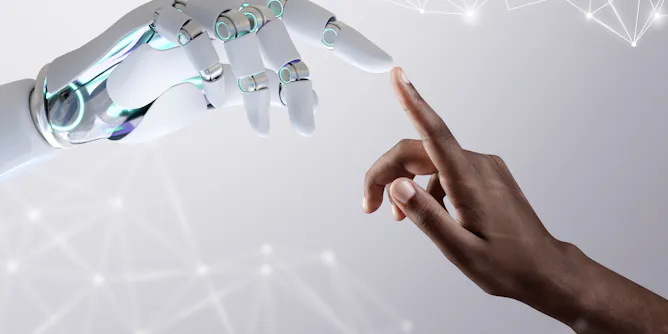
User-generated data can be used to build AI clones who can sound and behave like the source individual.
Articles on Personal data
Displaying 21 - 40 of 55 articles
Does privacy law in Canada do enough to protect us from entities like tech platforms, retailers, the police, hackers and criminals?
Keeping biomedical data private is important, but so is sharing it for research. Game theory can help researchers accomplish both.
The commitment applies to the social network, but not necessarily to the metaverse.

Many people are feeling the urge to quit Facebook. It’s not hard to do, technically speaking. It’s a good idea, however, to pause first and look back on your digital memories.
Who can see your information and why is it important to take part?
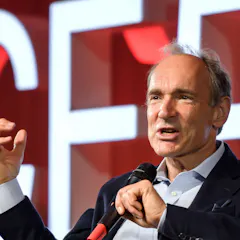
The web’s inventor believes the liberation of our data will help redistribute power on the internet.

Instagram’s Shop button signals the growing commodification of human interactions on social media.

Australia has hesitated in the past to adopt a strong privacy framework. A new government review provides an opportunity to improve data protection rules to an internationally competitive standard.
Our current digital era and reliance on technology favours information as a form of capital.

For decades experts have puzzled over why most people claim to have privacy concerns, but few actually do enough about it.

Mood tracking apps are sophisticated tools that track, measure and improve our emotions. But doing so may make our emotional data vulnerable to interested third parties.

While some online services such as banking do warrant using your true information, many sites shouldn’t require the same level of disclosure. Here’s how to protect yourself in such cases.
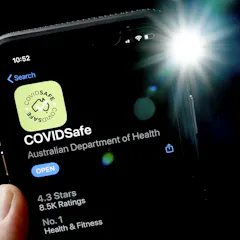
The COVIDSafe app hasn’t come out of nowhere. The promises of ‘smart city’ data collection may be seductive, but we must always weigh up what we’re being asked to give up in return.

Collecting census data online creates new risks to the accuracy and integrity of the information. Here’s what to be aware of.
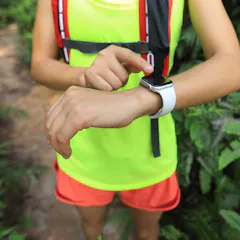
The use of online health platforms is on the rise, allowing us to track and share our personal data. While such platforms have promise, significant scientific, ethical and privacy questions remains.

Data privacy regulations are being adopted to protect internet users. Today, humans need to read those rules to ensure compliance. New research suggests machines could interpret them in real time.
A new digital ID system will gather piles of personal information in one place – and you won’t have full control over who has access

Predicting life expectancy remains in the realm of science fiction, but it may soon be possible. Are we prepared for such information? And who else would benefit from this knowledge?
A proposed bill would force tech companies to tell users how much their data is worth. But how can a single number capture data’s power to predict your actions or sway your decisions?
Top contributors
-

Affiliated Faculty Member, Institute for Computational and Data Sciences, Penn State
-
Honorary Senior Fellow, The University of Melbourne
-
Senior Lecturer, Department of Computing and Communications, The Open University
-
Postdoctoral Research Fellow, University of Toronto, University of Toronto
-
Dean of Global Business, The Fletcher School, Tufts University
-
Researcher, Digital Wellbeing, Western Sydney University
-
Associate Professor of Cyber Risk and Policy, Deakin University
-
Lecturer, Business School & Centre for Policy Futures, The University of Queensland
-
Associate Professor, Faculty of Law & Justice; Lead, UNSW Public Interest Law & Tech Initiative, UNSW
-
Professor and Canada Research Chair in Communication Policy and Governance, McMaster University
-
Professor, Computer Science, Vancouver Island University; University of Saskatchewan
-
Research Associate, National Research Centre on Privacy, Harm Reduction and Adversarial Influence Online, Rephrain, University of Bristol
-
Doctoral Researcher at the Oxford Internet Institute, University of Oxford
-
Reader, University of Glasgow
-
Research fellow, The University of Queensland