

There are more than 30 different types of contraceptive pills. But brand names such as Microgynon, Levlen, Yaz and Brenda give little indication of the ingredients, dose or who should use them.
Articles on PBS
Displaying 41 - 60 of 95 articles

The HIV prevention drug Truvada (PrEP) will be listed on the Pharmaceutical Benefits Scheme from this Sunday, moving Australia closer to achieving its goal of ending new HIV transmissions by 2020.

It’s exciting to think we’re on the brink of a genomic revolution in health care. But just because new technology becomes available, it doesn’t mean it should automatically be publicly funded.

Some argue the current system of subsidising drugs in Australia needs changing to accommodate new cancer therapies. But two recent drug listings show the current system is working perfectly well.

Have you ever wondered why some drugs are so cheap, and others so expensive? Here’s why.

How, why and when do people lie – and what happens as a result?

Australia has been subsidising drugs to cure hepatitis C since March 2016. Unlike in many other countries, these are available to everyone with the disease and are much cheaper for our government.

Cyntoia Brown was just 16 years old when she shot and killed a man in 2004. Under Tennessee law, she won’t be eligible for parole until she is 67 years old. Is such a harsh sentence constitutional?

The fund is nothing more than a rebadging exercise in the hope people might think it is a new policy. And it’s being used to airbrush public hospitals out of the Medicare picture.

An independent expert provides his pick of the most notable drugs added to the PBS on May 1, 2017.

When the Corporation for Public Broadcasting was founded 50 years ago, it was supposed to reflect the nation’s disparate voices.

As the Trump administration settles into office, regulators and lawmakers have big plans for shifting the country’s media landscape, with potentially profound effects on the public.

A Grattan Institute report released today, Cutting a better drug deal, calls for a major shake-up of pharmacies and pharmaceutical pricing.

Australia is spending more than A$500 million a year too much for pharmaceuticals because of a little known loophole that allows drug companies to overcharge the government.

Health policy was an important factor in the election outcome, but one of the most important issues in the health sector – the impact of out-of-pocket costs – was mostly ignored.

With the presidential debates being derided as evidence we live in a “post-fact” political world, why aren’t the moderators “truth vigilantes”?

If Australia’s new prime minister wishes to lead a successful 21st-century government, he must tackle the rise in chronic disease and use data to constantly improve the system.
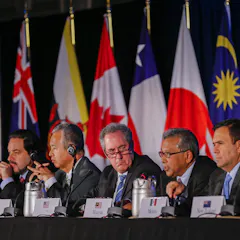
Before the last round of negotiations, only a handful of issues remained in the way of concluding the TPP. A potential deal-breaker for Australia was intellectual property protections for biologics.
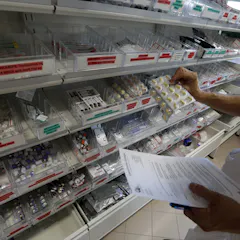
Most of us would agree that cancer drugs should be listed on the PBS, no matter how dear. But our health system can’t afford all of them. How then are decisions about which drugs to subsidise made?

The off-label use of medicines is not illegal and it doesn’t mean regulators have specifically “disapproved” its use. But there are a number of issues to consider before using a medicine off-label.
Top contributors
-

Honorary Enterprise Professor, School of Population and Global Health, and Department of General Practice and Primary Care, The University of Melbourne
-
Professor of Pharmaceutical Chemistry, Macquarie University
-
Professor of Health Economics, The University of Melbourne
-
ARC Future Fellow, Australian National University
-
Professor of Health Economics, Flinders University
-
Professor of Health Economics, University of Technology Sydney
-
Professor of Trade Law and Taxation, Queensland University of Technology
-
Professor of Health Economics, The University of Melbourne
-
Professor of Journalism, Media and Communication, Queensland University of Technology
-
Dean, University of Wollongong
-
Professor of Public Health, La Trobe University
-
Senior Research Fellow, University of Technology Sydney
-
Research Fellow, Flinders University
-
Associate Professor of Media Studies, University of Colorado Boulder
-
Professor of Health Economics, Deputy Director of CHERE, University of Technology Sydney