

Previous enquiries into inappropriate behaviour have painted a concerning picture.
Articles on Parliament
Displaying 81 - 100 of 179 articles
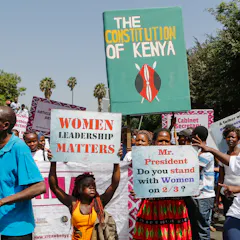
For 10 years, Kenya’s legislators have failed to enact a law to implement a two-thirds gender rule set down in the 2010 constitution, despite numerous court rulings.
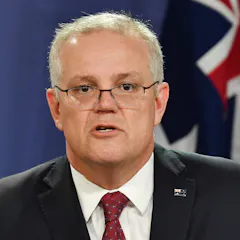
Biosecurity and public health laws have given federal and state governments enormous powers to battle coronavirus. If we’re not careful, though, some powers could remain long after the pandemic.

During the MMP era, the average vote share of the highest-polling party has been steadily climbing — with big implications for New Zealand democracy.

Former Nationals leader Barnaby Joyce has condemned the slimmed down, part-virtual COVID parliament as living “in a half life” and compromising democratic rights.
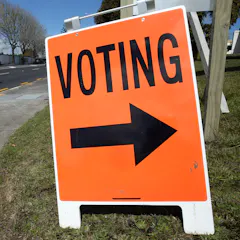
Elections belong to citizens, not politicians. There is no reason to deny or unduly delay this basic democratic right.
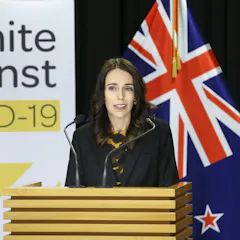
Delaying the election would be a balancing act between public health and political calculation.

The logistics of the House and Senate sittings are being negotiated by the government and opposition.

There are many ideas on how Indigenous recognition can be achieved in line with the Uluru Statement from the Heart. We need to keep exploring them until we find one that will work.

The government wants more power over university appointments, using financial management as the reason.
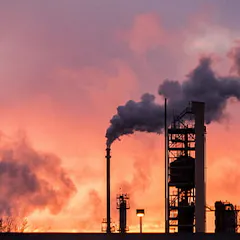
Oversight over how Ghana’s oil wealth is spent has become more important than ever.

To boost inclusivity among its ranks, the House of Commons needs parliamentary reform of its voting procedures to allow electronic online voting, or e-voting, for its members.

The Greens’ new leader has his work cut out to make sure the party is not just viable, but grows.

Crowd-based prediction markets have even been shown to outperform intelligence analysts.
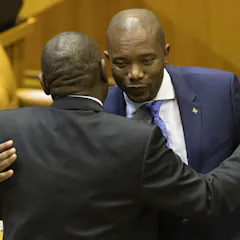
South Africa’s parliamentary system would make it difficult to achieve a fusion of parties.
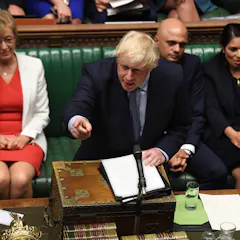
The UK court decision against Boris Johnson’s move to prorogue, or suspend, parliament could set an important precedent for Australian governments that try to do the same thing.
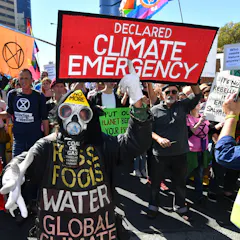
Because climate change is so heavily politicised, the declaration of a national emergency would be a disaster for the major parties – and for bringing greater awareness to the problem.
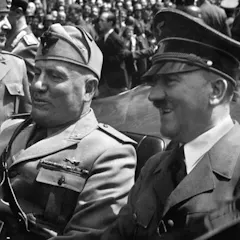
Parliaments were and remain institutions of frustrating negotiation and very often unpalatable compromise. They also represent an imperfect but significant check on the abuse of power.
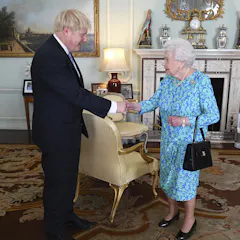
The U.K. prime minister sought to suppress Parliamentary opponents, saying he – not they – represents the will of the British people. It put Queen Elizabeth II in a real bind.
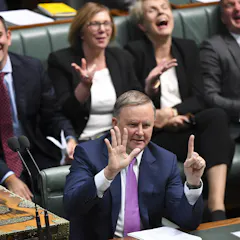
Question time is meant to be about accountability. But in practice, it is an opportunity for ministers to strut their stuff and for everyone to shout as loudly as they can.
Top contributors
-

Professorial Fellow, University of Canberra
-
Professor Emerita in Constitutional Law, University of Sydney
-
Professor of Sociology, University of the Witwatersrand
-
Partner, Government & Public Sector, Providence / Honorary Fellow, Australian National University
-
Associate Professor in Politics and International Relations, School of Social Sciences, Monash University
-
Honorary Research Fellow in Politics, University of Stirling
-
Lecturer in Constitutional and Administrative Law, and Public Procurement, Bangor University
-
Professor of Politics, Te Kunenga ki Pūrehuroa – Massey University
-
Professor of Comparative Politics, University of Warwick
-
Enseignant et chercheur en sociologie politique, Université de Lomé
-
ANU Law, Australian National University
-
Hurst Senior Professorial Lecturer, Co-Director Transatlantic Policy Center, American University School of International Service
-
Lecturer, Department of Political Science and Public Administration, Kyambogo University
-
Senior Lecturer in Politics, University of Manchester
-
Senior Research Associate, University of Johannesburg