

Some experts believe what we are sometimes seeing today is not true gentle parenting, but rather an anxious drift into permissive parenting.
Articles on Parenting styles
Displaying 1 - 20 of 22 articles

For effective child-rearing outcomes, parenting should not be seen as fixed styles — authoritative or permissive — but as a flexible, adaptive process shaped by environment.
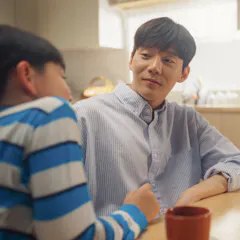
People sometimes question the difference between a family meeting and, say, dinner.

A philosophy professor looks at the learning styles of different creatures to gain insight into curiosity among human beings.

In some regions of the country, mothers and fathers have different approaches than their counterparts in other regions.

It doesn’t work, so why do so many parents do it?

Children’s show Bluey is not just a gem of Australian art - its messages are also remarkably consistent with scientific literature on parenting.

In many households, Christmas means visits from relatives eager to smother kids with kisses. But respectful parenting means giving the kids fair warning so they can decide whether that’s ok.

Until Canadians challenge the normalization of violence against children, we will continue to support, or at least tacitly condone, something that by all accounts is harmful.

Parent blaming has taken a new turn – no longer just criticised for failing to attend to their child’s every need, parents are now being condemned for ‘over-parenting’.

An author picks her best reads for a scientific approach to raising children.

Utah’s new ‘free-range’ parenting law restores certain rights to parents regarding when they can leave their children unattended. But does the law go too far or not far enough?

Tantrum throwing peaks at age two, as children experience the perfect storm of not being able to express themselves verbally while simultaneously developing their sense of autonomy and independence.
Opening the minds of worried new parents to other ways of raising children may assuage fears that if they fail to ‘do the right thing,’ their children will be doomed.

For decades, parents have fretted over ‘screen time,’ limiting the hours their children spend looking at a screen. But as times change, so does media… and how parents should (or shouldn’t) regulate it.

With emotionally charged rhetoric from both sides of the aisle and many parents in a heightened state of distress, children are more vulnerable than ever to anxiety. What can parents do?

Parents need to focus on context and consistency.

Telling parents how to love their child undermines parental confidence.

While some parents are investing in tutoring and preparing for examinations from an early age, others are strongly rejecting this approach. Why is this?
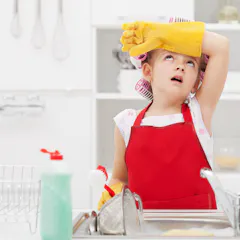
Decreasing levels of empathy in young people are partly due to changes in parenting styles that came about in the 1980s.
Top contributors
-

Senior Lecturer in Education, Queensland University of Technology
-
Associate Professor of Law, University of Idaho
-
Professor of Psychiatry, Medical College, Cornell University
-
Associate professor, Brock University
-
Professor Emerita of Anthropology, African Studies, and Gender and Women's Studies, University of Illinois Urbana-Champaign
-
NHMRC Early Career Fellow, The Kids Research Institute Australia
-
Senior Lecturer in Developmental Psychology, Anglia Ruskin University
-
Emeritus Professor of Sociology, University of Kent
-
Researcher and Lecturer, University of Kent
-
Associate Professor, School of Humanities and Social Sciences, Deakin University
-
Senior Lecturer in Chinese language and culture, University of New England
-
Assistant Professor of Cybersecurity Education, University of South Florida
-
PhD Researcher in Developmental and Educational Psychology, University of Bath
-
Associate professor in Social and Political Sciences, University of Technology Sydney
-
Senior lecturer, The University of Queensland