

Most research on kids’ screen time has focused on a child’s behavior. Far less attention has gone to parents and their role in their children’s media use.
Articles on Parenting stress
Displaying all articles

When both parents appeared equally available, schools were 40% more likely to call students’ moms, rather than their dads.

Women often see their choice of school as a reflection of whether they are good moms, while parents of color feel pressure to find a racially inclusive school.

A paradigm shift toward more social support is in order. It may sound countercultural, but really it’s a return to how people have raised children for thousands of years.
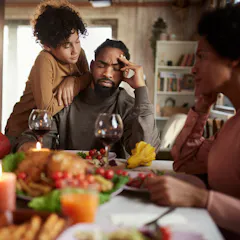
Future-oriented thinking, rather than careening from moment to moment, can help parents have more meaningful moments with their children.
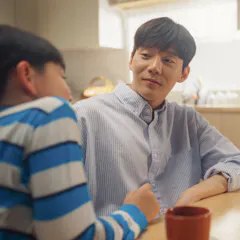
People sometimes question the difference between a family meeting and, say, dinner.

How you tell the story of a momentous event can help you make sense of what happened. Research finds new moms’ and dads’ narratives around childbirth held clues about their transition to parenthood.
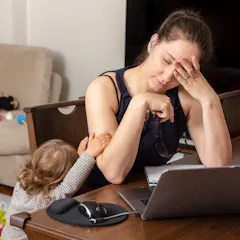
There are four signs of parental burnout and four positive things parents can do to take care of themselves as well as their kids.

The best way to manage anger is to try to reduce the likelihood that these situations will arise. But even so, having a plan for what can you do when anger strikes is important.

Dutch parents worked more and had less leisure time – particularly if they were women.
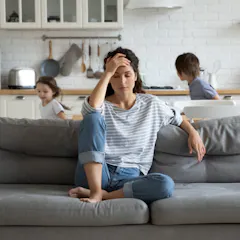
Family stress can go through the roof when managing social isolation or pandemic anxiety. A researcher of parent-child relationships offers practical tips to make time together more enjoyable.

A linguist explains the physical technicalities and sociological meanings of creaky voice’ – a sound found in diverse gender and age groups, yet often associated particularly with younger women.
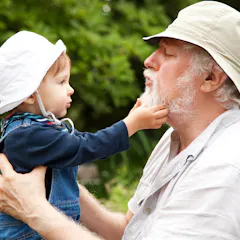
New research shows that parenting stress is lowest if grandparents do some of the care - as opposed to more formal arrangements.
Top contributors
-

ARC Senior Research Fellow and Senior Lecturer in Sociology, The University of Melbourne
-
Professor of Sociology and Social Policy, The University of Melbourne
-
Senior Lecturer in Psychology, University of the Sunshine Coast
-
Doctoral Candidate in Clinical Psychology, University of Oregon
-
-
PhD Candidate, Department of Linguistics and Applied Linguistics, York University, Canada
-
Professor of Comparative Social Policy in relation to Social Inequalities, Utrecht University
-
Director, Parenting and Family Support Centre, The University of Queensland
-
Assistant Professor, Department of Psychology, University of Manitoba
-
Professor of Psychology, USC Dornsife College of Letters, Arts and Sciences
-
Honorary Principal Fellow, School of Psychology, The University of Queensland
-
Assistant professor, School of Economics, Utrecht University
-
Associate Professor of Public Health, Michigan State University
-
Assistant Professor of Public Health, Michigan State University
-
Associate Professor of Social Work, Hope College