
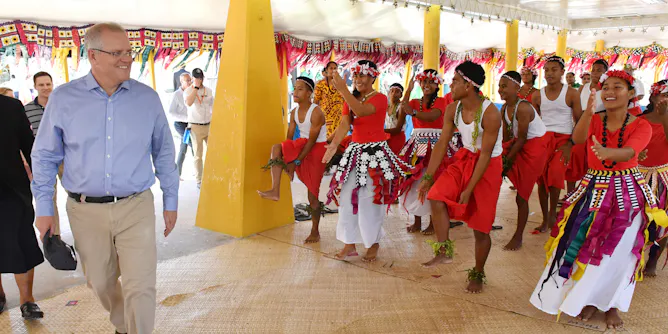
We talk about the Pacific ‘neighbourhood’, but too often Australia’s approach to the region has been of saying what we’re going to do, rather than how – and listening to the people it most affects.
Articles on Pacific step-up
Displaying all articles

The Pacific will remain a priority, no matter which party wins the election. But there could be subtle differences in tone and priorities.
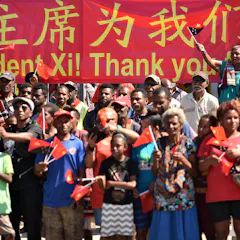
China made a huge splash in PNG in late 2018 with infrastructure investments and loan pledges. But since then, it has struggled to make inroads due, in part, to anti-Chinese sentiment.
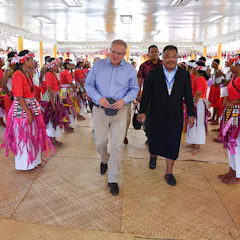
The crisis is a chance to change the Pacific Step-up from something Australia does “to” or “for” the region to something it does “with” it.
Interviews in three Pacific nations revealed concerns over a lack of balance in the Australia-Pacific relationship and a certain level of racism and disrespect directed towards islanders.
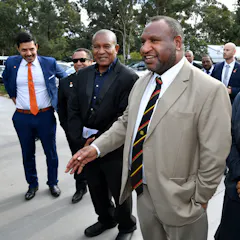
With an overwhelming referendum result, Bougainville has just taken an important step to becoming an independent nation.
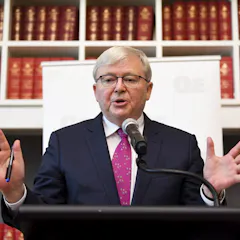
Launching journalist Peter Hartcher’s Quarterly Essay, Red Flag: Waking up to China’s challenge, Rudd said “we have become too China-dependent. We need to diversify further”.
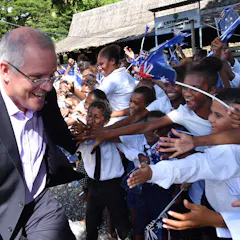
New research shows that funding for DFAT has hit a new low of 1.3% of the federal budget. Scaling back has a real effect on Australia’s influence around the world.
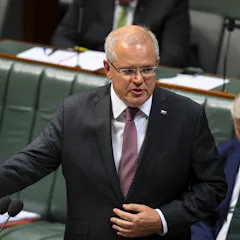
Morrison stressed “that we will never feel corralled into any sort of binary assessment of these relationships” - assessments that said “pro-United States or pro-China”.
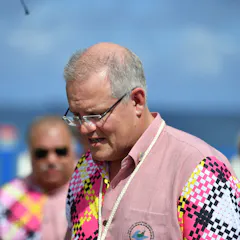
Australia ensured its official communique watered down commitments to respond to climate change, gaining a hollow victory.
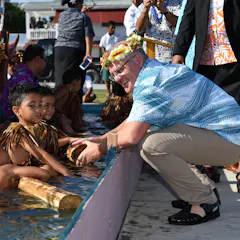
It’s becoming increasingly obvious that Australia’s inability – or refusal – to take firmer action on climate change is undermining its entire ‘Pacific step-up’.
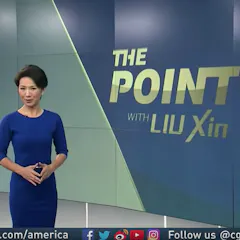
Soft power is a country’s ability to gain influence through attraction. Australia’s soft power in the Pacific began waning when it axed the Australia Network in 2014. And China is filling the gap.
Top contributors
-

Associate professor, Griffith University
-
Adjunct Professor, School of Historical and Philosophical Inquiry, The University of Queensland
-
Professorial Fellow, University of Canberra
-
Senior Lecturer in Security Studies, Te Kunenga ki Pūrehuroa – Massey University
-
Director - Whitlam Institute, Western Sydney University
-
Associate Professor of International Relations, Department of Politics, Media and Philosophy, La Trobe University
-
Lecturer in Journalism, University of Technology Sydney
-
Honorary Fellow, Asia Institute, The University of Melbourne