
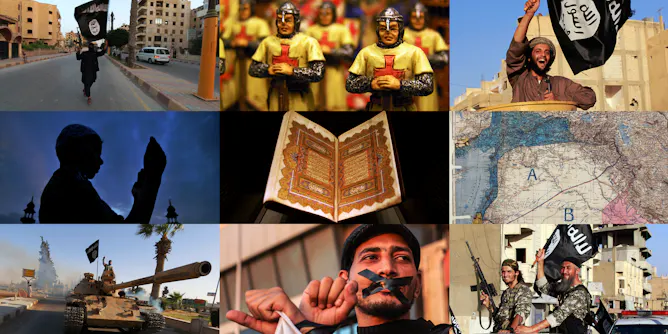
Our series on understanding Islamic State attempts to catalogue many of the forces and events that can arguably have played a part in creating the conditions necessary for these jihadists to emerge.
Articles on Ottoman Empire
Displaying 41 - 47 of 47 articles
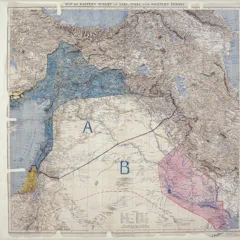
The leaders of Islamic State do not see their caliphate as an exercise in theocracy for its own sake, but as an attempt at post-colonial emancipation.
These two powers have lurched between friendship and war for centuries.
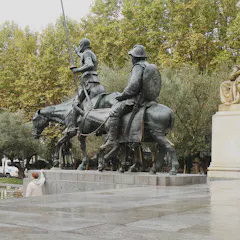
Over 500 years ago, first Jews and then Muslims were expelled from Spain. This summer, Spain’s Parliament invited the former back but not the latter. Here’s what Cervantes might say to his countrymen.

On the 100th anniversary of the Armenian genocide, we asked scholars to reflect on the significance of Armenian insistence on remembering and Turkey’s insistence that the genocide never happened.
Abu Bakr al-Baghdadi proclaimed Islamic State (IS) as a Muslim caliphate on June 29, 2014, with himself as caliph, a term reserved for a successor to the prophet Muhammad (PBUH). His would be the newest…
The Yazidi people have faced persecution and sexual violence. Here is their story.
Top contributors
-

Director of International Studies, Colorado State University
-
Instructor in History and Ethics, Lebanese American University
-
Professor of International Studies, University of Washington
-
Henry J. Leir Professor of Practice in Economics of the Middle East, Brandeis University
-
Philip S. Bernstein Professor of Jewish Studies, University of Rochester
-
Assistant professor, historien spécialiste de l'Afrique du Nord moderne, Université de Princeton, Fellows 2017- IEA Paris, Institut d'études avancées de Paris (IEA) – RFIEA
-
Affiliate Researcher, Religion and Civic Culture Center, USC Dornsife College of Letters, Arts and Sciences; Bayreuth University
-
Professor of Philosophy, Lebanon Valley College
-
Visiting Professor of Film, Brown University
-
Professor of Art History, Columbus State University
-
Marie Skłodowska-Curie Research Fellow, University of Warwick
-
Professor Emeritus, Department of Anthropology, California State University, Chico
-
Tenure Track in Global History, Tampere University
-
Honorary Professor, Faculty of Medicine, University of British Columbia, University of British Columbia
-
Professor of International Relations, Keele University