
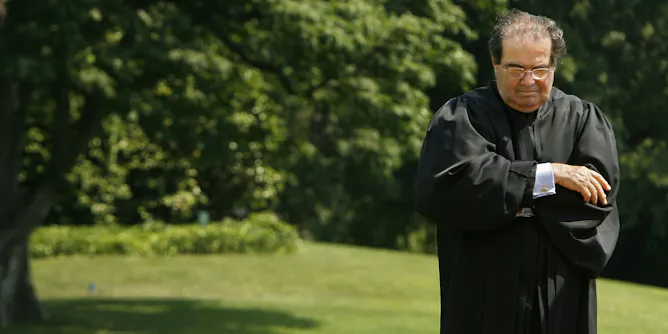
A majority of Supreme Court justices follow originalism, the mode of constitutional interpretation championed by late Justice Antonin Scalia. A former Scalia law clerk explains what originalism means.
Articles on Originalism
Displaying 1 - 20 of 21 articles
Jackson’s concurrence traces the 14th Amendment to work done by people ‘beyond Congress’ and Black Americans who ‘helped galvanize the push for full equality.’
The high court recognizes a person’s right to self-defense with firearms but has also upheld the government’s power to enforce limits on that right.
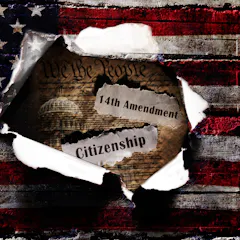
Advocates for each side will provide a different explanation for who falls under ‘the jurisdiction’ of the United States.
With partisan advantage, clashing perceptions of reality and revolutionary readings of the Constitution all in play, the Supreme Court’s cases this year reach far into American politics and culture.

Research shows that Supreme Court justices affiliated with the group are more consistently conservative than other justices, meaning they seldom deviate from their voting behavior.
A leading expert in the selection of federal judges analyzes the Trump and Harris records regarding judicial nominations. There’s a big difference in their approaches.

Lawyers, advocacy groups and think tanks are soliciting historians’ expertise on the history underlying certain Supreme Court cases. Yet this history-for-hire approach raises questions.
Only 50 years ago, originalism was considered a fringe movement, hardly taken seriously. Now its adherents dominate the Supreme Court.
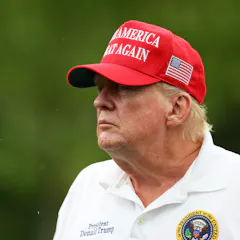
US law actually bars former President Donald Trump from holding office ever again. The recent Georgia indictment of Trump helps make the case.
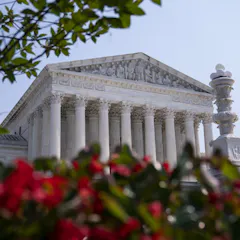
Major Supreme Court decisions and reversals last term are leaving some people, including this scholar on constitutional politics, wondering – what’s going on with the court?

The judicial theory has been a major talking point during the Supreme Court’s last term. But what does it actually mean?
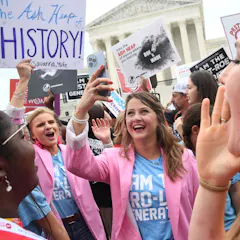
A Supreme Court scholar untangles the ideas that undergird the historic ruling overturning the Constitutional right to an abortion.
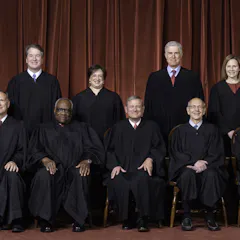
In a 6-3 conservative majority, the more important divisions may be among the six Republican-appointed justices.
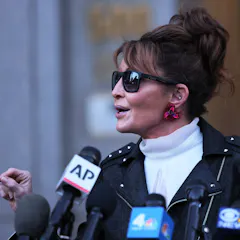
Under the Sullivan standard, a public official has to prove that there was ‘actual malice’ in defamation cases. That could be challenged in the Supreme Court.
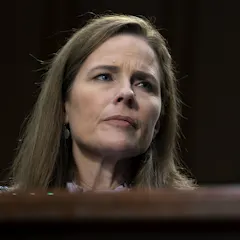
The judicial theory has been a major talking point during the past three Supreme Court nominations. But what does it actually mean?
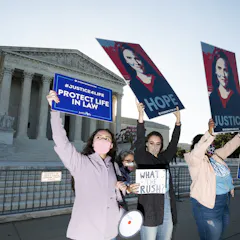
Special interests use the court as a public policy battleground. Here’s a rundown of how that works and which groups are likely to appear before a conservative court with Amy Coney Barrett on it.
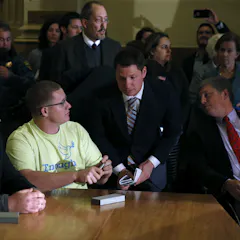
Electors may not vote their consciences, which means the Electoral College will continue to operate how most Americans think it does.
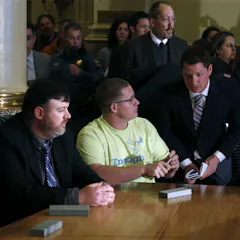
Many Americans are surprised to learn that Electoral College members do not necessarily have to pick the candidate their state’s voters favored. Or do they?
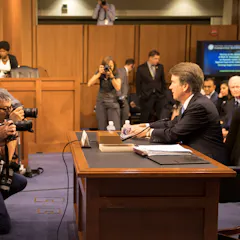
Kavanaugh thinks judges ‘must be an umpire – a neutral and impartial arbiter.’ So does Chief Justice Roberts. But more liberal jurists believe that the application of the law is inherently subjective.
Top contributors
-

Professor of American Civics, University of Tennessee
-
Professor of Legal Studies and Political Science, UMass Amherst
-
Associate Professor of Law, Arizona State University
-
William Nelson Cromwell Professor of Jurisprudence and Political Science, Amherst College
-
Program Manager, Public Scholarship and Engagement, University of California, Davis
-
Professor of Philosophy, UMass Lowell
-
Professor of Communication, Radford University
-
Distinguished Practitioner in Residence, Loyola University Chicago
-
Professor of Political Science, USC Dornsife College of Letters, Arts and Sciences
-
PhD student in Political Science, UMass Amherst
-
Professor of Law, Vanderbilt University; Institute for Humane Studies
-
Professor of Law, Vanderbilt University
-
Assistant Professor of Political Science, University of Maryland, Baltimore County
-
Co-Director, National Security and Civil Rights Program, Loyola University Chicago