

Portugal’s remarkable public health strides after changing its approach to drugs may not be replicable in other countries absent broader systemic reforms.
Articles on Oregon
Displaying 1 - 20 of 45 articles

The proportion of a watershed that is logged isn’t the only factor that determines flood risk. The landscape and climate matter too.
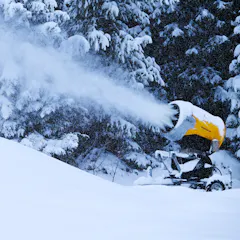
Here’s what snow forecasters are watching, and why skiers and other snow lovers shouldn’t lose hope.
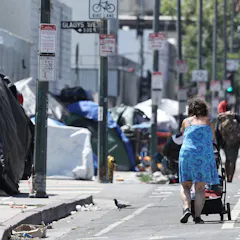
More than one year after the Supreme Court’s Grants Pass v. Johnson ruling, a geographer who researches homelessness finds that the ruling is leading to more places criminalizing homelessness.
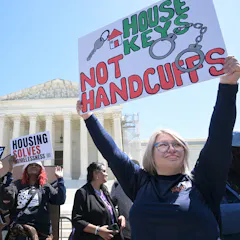
In a major homelessness ruling, the Supreme Court holds that cities and municipalities can punish people for sleeping outside, even when they have nowhere else to go.

Researchers found a sharp rise in calls to US poison centers about magic mushrooms coincided with their decriminalization in several US cities and states.
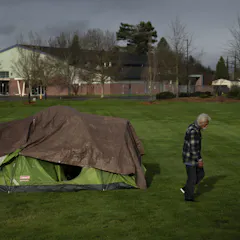
Legal precedents hold that criminalizing someone for their status, such as being homeless, is cruel and unusual punishment. But what if that status leads to actions like sleeping in public spaces?
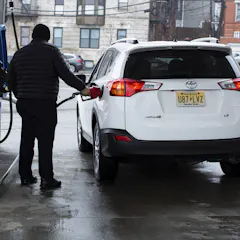
The Garden State is the only one in the country that forbids self-service gas stations − and that’s not likely to change anytime soon.

An estimated 95% of US cities provide economic development tax incentives to woo corporate investors, taking billions away from schools.
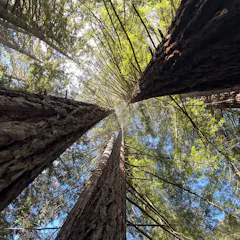
Redwoods grow in networks that house unique communities of plants and animals high in the air. They offer life lessons about adapting over time.
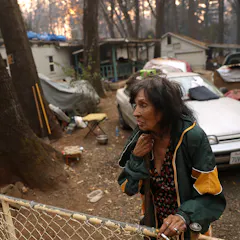
Alarmingly, about half the people exposed to wildfires in Washington and Oregon were those least able to afford to protect their homes, evacuate safely and recover.
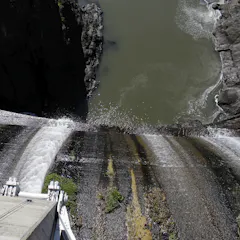
The largest dam removal project is moving forward on the Klamath River in California and Oregon. Tribal nations there have fought for decades to protect native fish runs and the ecology of the river.

Colorado, Washington, Alaska and Oregon all experienced big increases in both deposits and lending shortly after legalizing marijuana for recreational use.

Maine and Oregon have enacted laws that require makers of consumer product packaging to pay for recycling or disposing of it. Will other states follow?
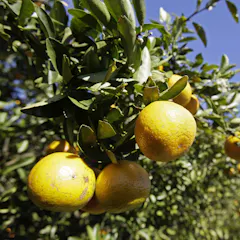
What kind of evidence does it require to get a widely used chemical banned? A professor of medicine and former state regulator explains how the case for chlorpyrifos as a threat to public health developed.
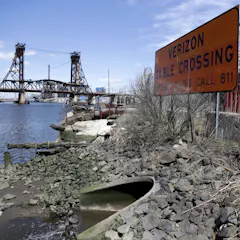
U.S. opportunity zones can positively impact real estate development and help local communities. But to fully realize the program’s potential, it needs reform.
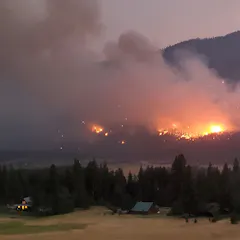
More than 40 fire scientists and forest ecologists in the US and Canada teamed up to investigate why wildfires are getting more extreme. Climate change is part of the problem, but there’s more.

In principle, some portion of the shoreline is public land along virtually all US coasts. But these can sometimes overlap with private property interests, creating confusion and conflict.
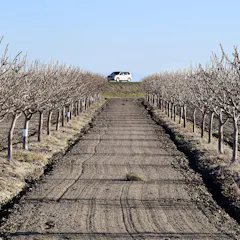
The US has one of the highest groundwater use rates in the world. When wells run dry, households may opt to conserve water, find new sources or sell and move.
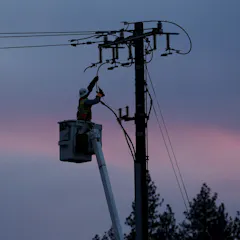
In an era of climate change and extreme weather, a microgrid — a self-sufficient, energy-generating distribution and control system — puts communities on the path to self-reliance.
Top contributors
-

Professor of the Practice of Law, University of Southern California
-
Associate Professor of Sociology, School of Public Policy, Oregon State University
-
Faculty, Graduate Program on the Environment, Evergreen State College
-
Research Associate Professor, Epidemiology, UMass Amherst
-
Ontario Research Chair in Bioethics and Public Policy, Queen's University, Ontario
-
Postdoctoral Fellow, The University of Texas at Austin
-
Associate Professor of Law, Bond University
-
Wallace Stegner Professor of Law, University Distinguished Professor, University of Utah
-
Assistant Professor of Criminal Justice, Seattle University
-
Assistant Professor of Geology and Geological Engineering, Colorado School of Mines
-
Professor and Director, Criminal Justice Reform Clinic, Lewis & Clark
-
W. M. Keck Professor of Environmental Analysis and History, Pomona College
-
Professor of Law, Vanderbilt University
-
Associate Professor of Political Science, University of Oregon
-
Professor of Economics, Boston University