
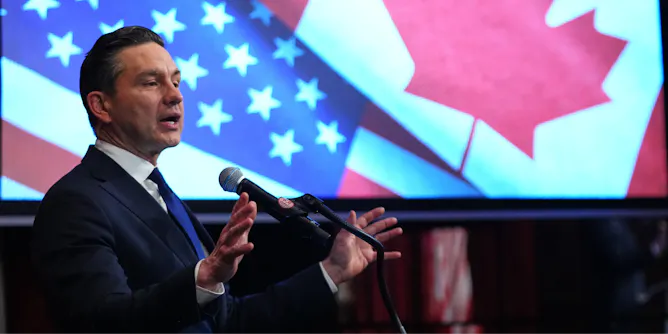
By promoting politically expedient misinformation on a show like Joe Rogan’s, Pierre Poilievre appears intent on pushing dangerous and misleading claims that resonate only with his base.
Articles on Oil sands
Displaying all articles
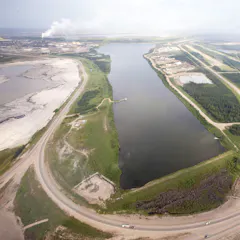
As toxic water continues to spill from tailings ponds across mining developments, decades of scientific research provides evidence of how wildlife will be affected.

Images of the 2011 tsunami did not look as I had expected, and pointed to the sublime, when experience exceeds our frameworks of understanding. My exhibit ‘Salients’ treats this theme.

Calls to export Canadian oil and gas to Europe are repackaging ethical oil rhetoric. But Canada and Russia share similarities in energy policy making.
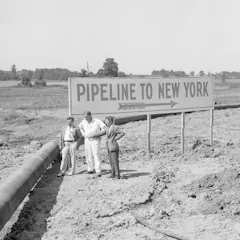
Proposals for new oil and gas pipelines can generate intense debate today, but during World War II the US built an oil pipeline more than 1,300 miles long in less than a year.
Throughout human history, clay has played a role in many different industries. Its unique properties make it suited for a wide applications in widely ranging industries.

A web of local environmental action campaigns launched against oilsands pipelines a decade ago helped bring an end to Keystone XL.
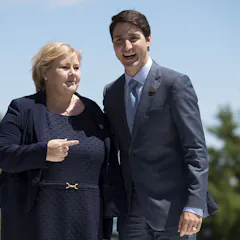
Canada and Norway face epic challenges in weaning themselves from petroleum dependence.
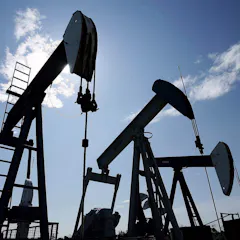
Alberta oil is the collateral damage of the oil war between Russia and Saudi Arabia, with COVID-19 launching an additional attack. The province’s oil industry will struggle to recover.
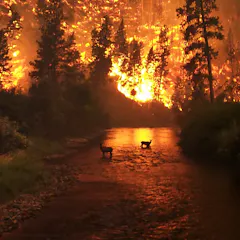
The Earth is on the edge of being pushed over a planetary threshold that could lead to a “Hothouse Earth.” But if we take the risks seriously there is room for a more benign future.

Canada wants to move towards a green economy and meet its Paris Agreement targets, but it has also just taken ownership of a pipeline. How can the federal government deal with this paradox?

Canada has a long history of building energy pipelines against a backdrop of environmental uncertainty. Decades ago, the opposition came from local groups. Now it’s a global issue.
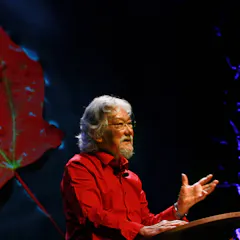
David Suzuki may be best known as an environmental activist and the face of CBC’s ‘The Nature of Things,’ but he’s also a globally recognized scientist.

Science advisers can make important contributions to environmental policy and decision making by government. But we should expect even more.
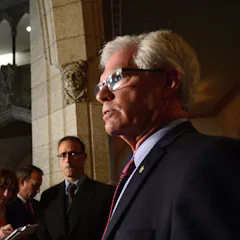
With TransCanada’s decision to cancel the Energy East pipeline project Canada’s energy policies are under attack.
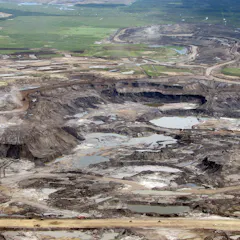
The Trump administration may reverse a recent push to require oil companies to disclose more information about climate change risks to investors. Is that a good thing?
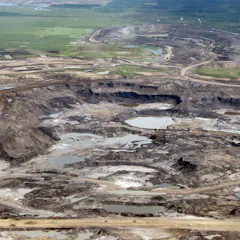
The SEC and others are pressing Exxon to disclose more climate change risks to investors. But new research suggests shareholders are already pricing in those costs on their own.
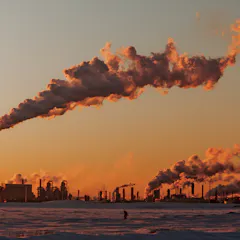
This month Canada revealed its post-2020 climate target as 30% below 2005 levels by 2030. But current policies make it unlikely Canada will achieve the target within the country.

In Nebraska, the intensity of the Keystone XL debate is second only to that over the chance that the Nebraska Cornhuskers will win the Big Ten football championship. Raging for several years now, controversy…
Top contributors
-

Director, Energy, Climate Justice, and Sustainability Lab, and Research Professor, New York University; Tufts University
-
Associate Professor, School of Professional Communication, Toronto Metropolitan University
-
Distinguished Emeritus Professor of Management, University of California, Davis
-
SSHRC Postdoctoral Fellow, School of Political Studies, L’Université d’Ottawa/University of Ottawa
-
PhD Candidate, Environmental Assessment & Policy, University of Saskatchewan
-
Professor of Political Science, University of Nebraska Omaha
-
Director, Queen's Institute for Energy and Environmental Policy, Queen's University, Ontario
-
Professor and Canada Research Chair in Predictive Aquatic Toxicology, University of Saskatchewan
-
Emeritus Robert Reford Professor and Professor of Medicine, McGill University
-
Professor Emeritus of Geography and Environmental Studies, Wilfrid Laurier University
-
Professor of Humanities and Chair of the Department of Engineering and Society, University of Virginia
-
Postdoctoral Researcher in Freshwater Ecology, Carleton University
-
Lead Researcher, Northern Alberta Institute of Technology
-
Associate Professor, Communication Studies & Media Arts, McMaster University
-
Applied Research Chair, Oil Sands Sustainability, Northern Alberta Institute of Technology