
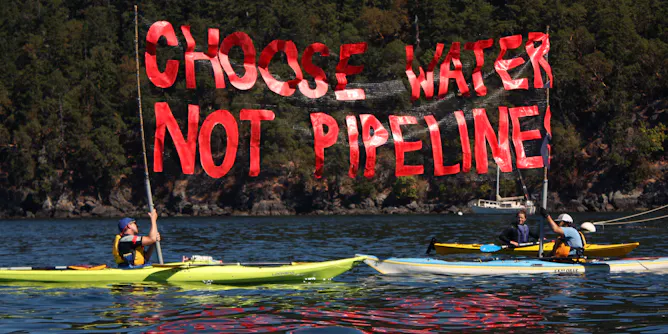
Legal experts see a current lawsuit against the environmental group Greenpeace as a classic example of using litigation to stifle public criticism.
Articles on North Dakota Access Pipeline
Displaying 1 - 20 of 24 articles

In most cases, it’s reasonable to expect that groups of protesters will abide by the law. But there are times when doing so diminishes the effectiveness of the protests.
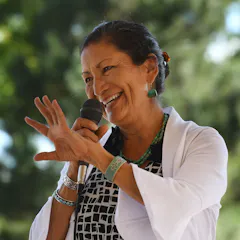
If confirmed, US Rep. Deb Haaland of New Mexico would be the first Native American to run the agency that interacts with tribal nations. But her agenda extends far beyond Indian Country.
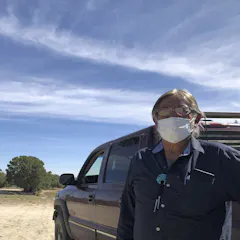
Many Native American tribes are reporting high COVID-19 infection rates. State and federal agencies are impeding tribes’ efforts to handle the pandemic themselves.
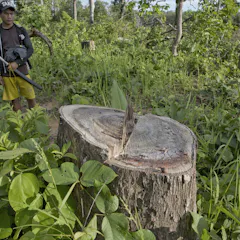
Reporters who cover environment and natural resource issues are commonly threatened and harassed around the world. Some have been killed for coverage that threatens powerful interests.

A false divide between ethics and economics has diluted the immense potential power of the world’s biggest sovereign wealth fund.
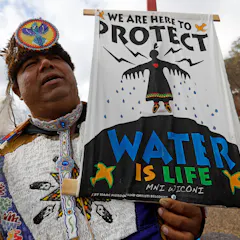
For the Blackfeet, Lakota and other Native American people, water does more than sustain life – it’s the place of the divine.
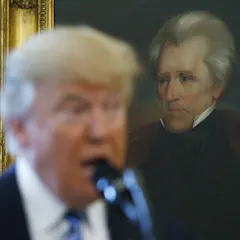
Comparisons often ignore the troubling history of how Jackson treated Native Americans. An expert on Native American history draws parallels to the new administration.

A new federalism? Trump’s decision to green-light the Dakota Access Pipeline and early battles with states show a disregard for the sovereignty of domestic government bodies.

Pope Francis appears to have defended Native American protests on the North Dakota pipeline issue. Indigenous cultures have a right to defend ‘their ancestral relationship to the Earth,’ he said.
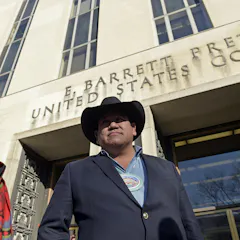
More than an easement: A scholar of Native American law lays out the legal arguments in the Dakota Access Pipeline and why they matter to all of us.
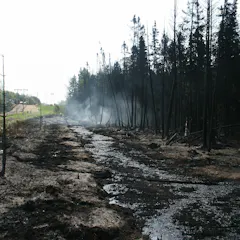
An anthropologist of the American West argues that protecting nature and our cultural heritage are good for business but few recognize how they are threatened by ‘jobs-creating’ oil pipelines.
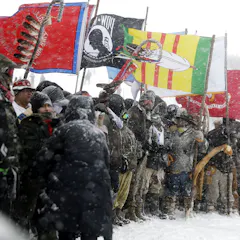
A Native American scholar explains why so little has changed despite the apparent victory of protesters opposing the North Dakota Access Pipeline protest.

The ideology of ‘manifest destiny’ has underpinned centuries of discriminatory legislation and violence against the US’s indigenous people.

Standoff over North Dakota pipeline and Chief Sitting Bull’s Standing Rock is another broken promise made to Native Americans.
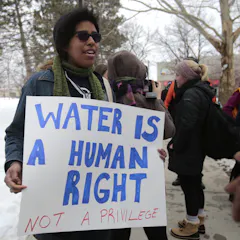
The hostility of Scott Pruitt, Trump’s nominee to head the EPA, toward climate change rules is well-known. But his anti-regulatory stance could easily set back years of work on environmental justice.
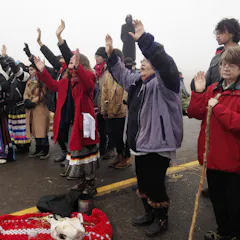
Thousands of people, both those within Native American communities and their non-Native allies, felt called to go to Standing Rock. What was the motivation?
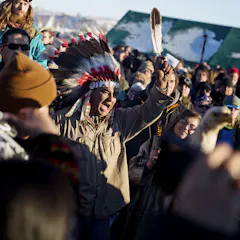
The protesters have scored a big victory in the Dakota Access Pipeline conflict, but it’s served only to illuminate the sharp divisions over energy policy in the US.
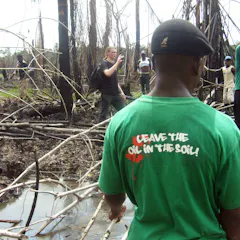
Global indigenous and human rights movements that oppose the oil, coal and gas industries are charting a path for a fair and just transition to a low carbon energy future.
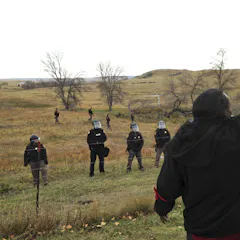
What sacred sites have been damaged by The North Dakota Access Pipeline? We can’t really know for certain – and our legal system is partly to blame.
Top contributors
-

Professor of History, University of Illinois Urbana-Champaign
-
Professor of Environment and Sustainability, University of Michigan
-
Associate Research Professor of Anthropology, University of Colorado Denver
-
Lynton K. Caldwell Professor of Public Affairs, Indiana University
-
Professor of Journalism and Chair, Knight Center for Environmental Journalism, Michigan State University
-
Professor of Sociology and Indigenous Peoples, University of Essex
-
Lecturer in International Studies, University of Washington
-
Professor, Environment and Development Sociology, The University of Queensland
-
Associate Professor of Law, Albany Law School
-
Professor of Law, University of Tromsø
-
Senior Lecturer in Film Studies, University of St Andrews
-
Professor of Law, Drake University
-
Assistant Professor, Heriot-Watt University
-
Professor, Critical Indigenous Studies and Director of The Centre for Global Indigenous Futures, Macquarie University
-
Assistant Professor of Native American Studies, Colorado State University