
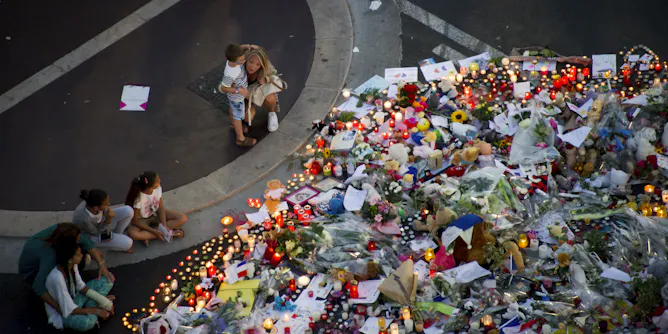
Plots involving just one person are difficult to disrupt before the fact, but we’re learning more about what turns people into lone attackers.
Articles on Nice attack
Displaying 1 - 20 of 31 articles
With terrorists striking again in Spain and in Finland, one cannot help but ask – again – why people want to follow the Islamic State. Some new theories are emerging.
Al-Qaeda and Islamic State have both encouraged would-be terrorists to use cars and trucks as weapons.
Attacks like the one in Berlin harm democracy because they spread fear and self-censorship among citizens.
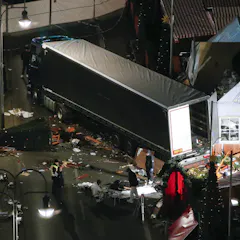
We have become used to hearing stories of ‘increased chatter’ and ‘high alerts’ when it comes to terrorism. Doesn’t that mean intelligence agencies should know enough to prevent attacks?

Lone offender – sometimes called “lone wolf” – attacks may become a more prevalent threat. What can we understand about them and the people who carry them out?
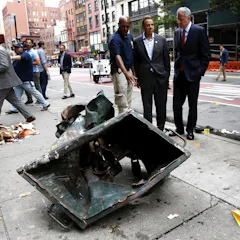
A year of violence continues with bombs in NYC and a stabbing in Minnesota, leaving many asking, why? A psychologist explains what research has revealed about the minds of violent extremists.

How literary analysis led one scholar to develop a theory of how immigrants become connected to their host society – and therefore unlikely to attack it.
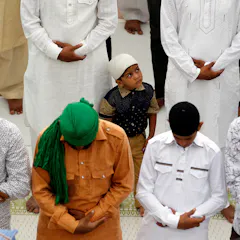
Undertaking a Muslim education – coming to understand the faith’s teachings and its ideas about humanity – can have enormous value for anyone who wishes to tackle social conflicts.
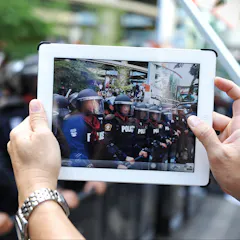
Viral posts don’t always tell the truth -– so how can we stop them spreading?

While the French public comes to terms with a series of appalling attacks, politicians seize the opportunity to position themselves ahead of next year’s Presidential election.
Most cults build upon or modify existing religious doctrine, yet how they express these beliefs varies from group to group.

The people who killed a priest in Rouen were driven by a warped agenda, not their social and economic backgrounds.
The French novel uniquely blends social critique, personal struggle, entertainment and aesthetics – underpinned by an irony that winks at human weakness. Can it help us in these dark days of extremist violence?
The UK’s experience with its Prevent strategy over nearly a decade urges caution in how Australia should approach its own efforts to counter the threat of radicalisation.
The scheme will seek to identify people not on the radar of counter-terrorism authorities.
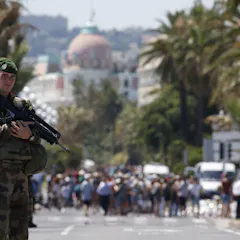
The far right isn’t afraid to admit to fear in the wake of brutal attacks like the one in Nice. More mainstream politicians would be wise to follow suit.
Tragic and violent events are increasingly being live streamed to the world. Are we learning something from these graphic visuals – or are we wallowing in voyeurism and confirming our prejudices?
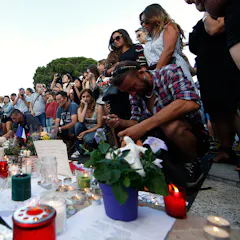
Our complex modern society is very vulnerable to everything from the attack in France to power failures. The good news is we can fix this.
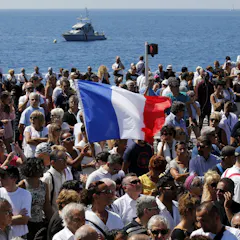
Social media campaigns such as #PrayForNice have been accused of being discriminatory for focusing on Western attacks, but research shows that familiarity and location are more relevant.
Top contributors
-

Professor of Philosophy of Education, Stellenbosch University
-
Professor of Intelligence Studies, University of South Florida
-
Professor, Strategic and Defence Studies Centre, Australian National University
-
Professor of History, University of California, Irvine
-
Professor of Human Centred Computing, University of Oxford
-
Distinguished Professor of Philosophy of Education, Stellenbosch University
-
Professor of Politics, University of Leeds
-
Associate Professor, Griffith Criminology Institute, Griffith University
-
Senior Lecturer in International Relations and Politics, Aston University
-
Professor of Psychology, University of Maryland
-
Professor in The Division of Global Affairs and The Department of Political Science, Rutgers University - Newark
-
Senior Lecturer Criminology, Murdoch University
-
Professor of Modern Middle Eastern History, University of California, Los Angeles
-
Professor of Communication and Middle East Studies, Georgia State University
-
Professor of Politics, University of Sydney